
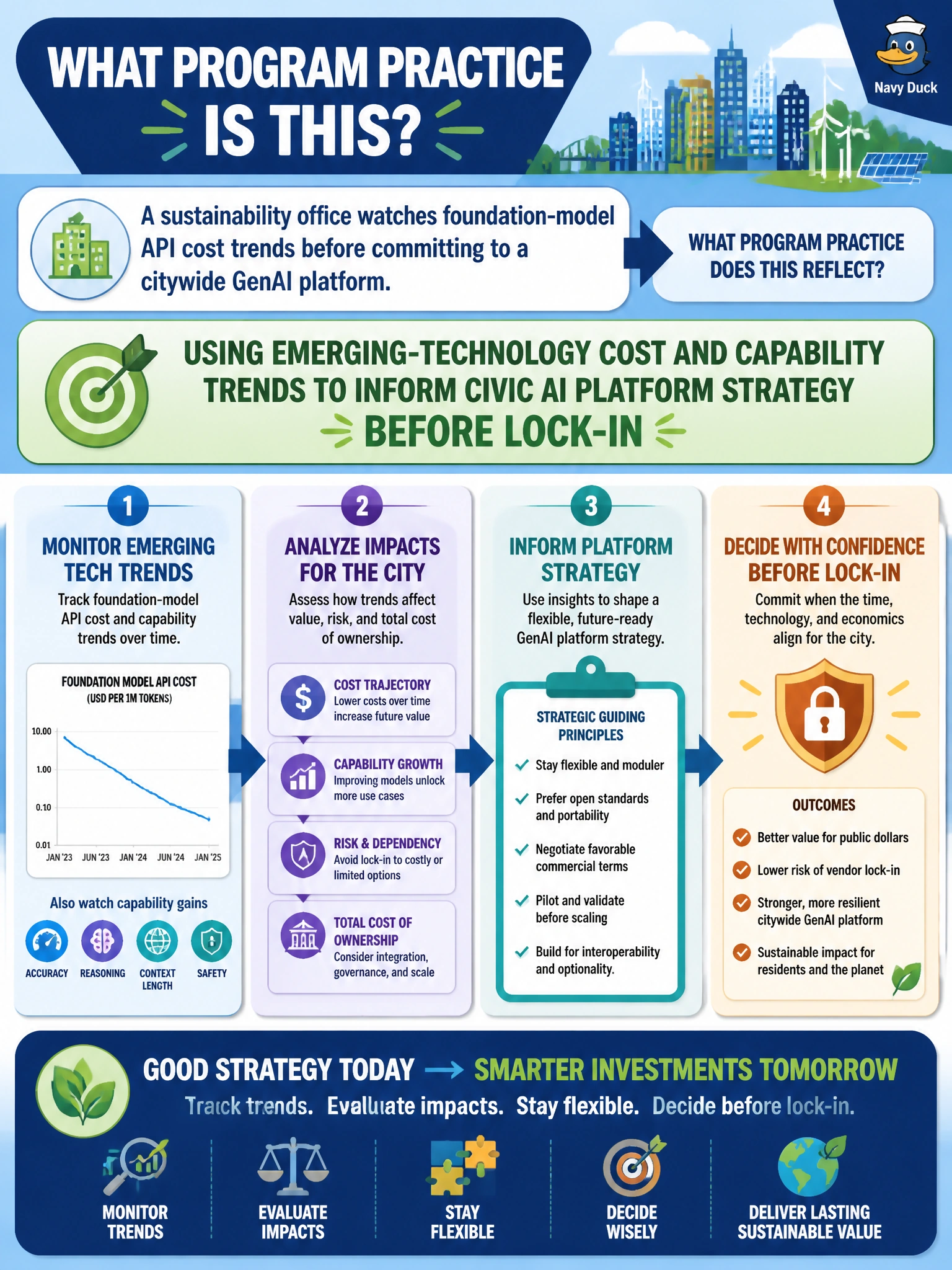
A sustainability office watches foundation-model API cost trends before committing to a citywide GenAI platform. What program practice does this reflect?
Select an answer to reveal the explanation.
Short Explanation
Citywide GenAI can look cheap on day one and spicy on the utility bill by June. Watching cost trends before you marry a platform is just smart civic shopping—same instinct as checking fuel prices before buying a fleet.
Full Explanation
A sustainability office watching foundation-model API cost and capability trends before committing to a citywide GenAI platform is practicing informed emerging-technology strategy. Market pricing, rate limits, and model releases should shape build-versus-buy choices and architecture so the city avoids premature lock-in. Municipal usage can make token economics material at scale; capability shifts can obsolete early design decisions, so trend watching is fiduciary diligence, not delay for its own sake. Signing a perpetual all-department contract based only on a single free trial week underweights production scale, compliance obligations, support, and price volatility. Assuming API prices never change once a vendor logo appears on a slide ignores commercial dynamics common in foundation-model markets. Selecting platforms solely by which vendor brought the most conference swag abandons technical fitness, security, and total-cost criteria. Exam caveat: trend-informed platform strategy beats trial hype, static price myths, or swag-driven selection. Operational check: model token and cost scenarios by department workload, require exit clauses and data portability, re-evaluate pricing and capability roadmaps on a fixed cadence, pilot with metered budgets and red-team security review, and only then advance toward citywide GenAI platform commitments.