
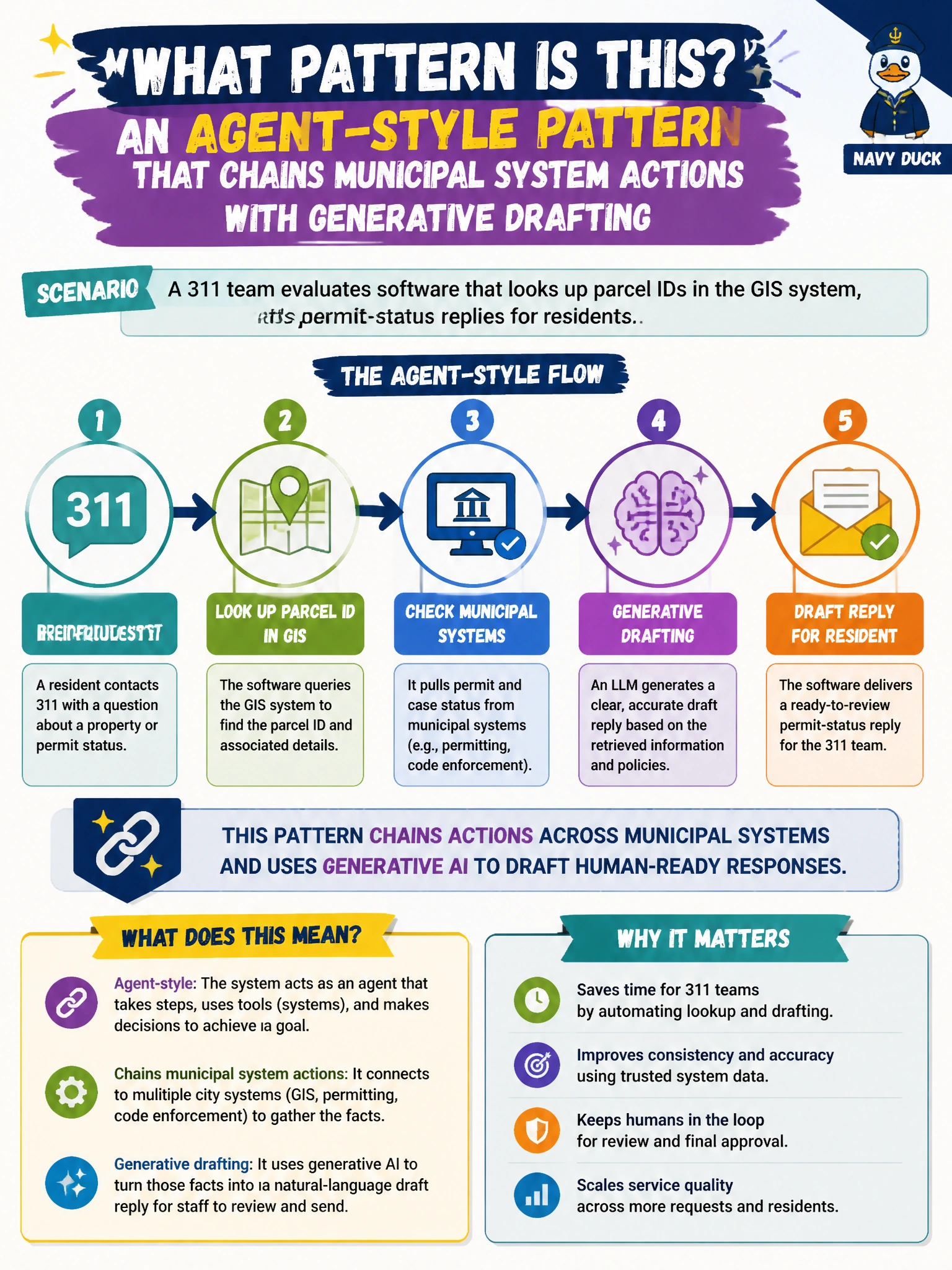
A 311 team evaluates software that looks up parcel IDs in the GIS system, then drafts permit-status replies for residents. What pattern is this primarily illustrating?
Select an answer to reveal the explanation.
Short Explanation
First it fetches the parcel, then it writes the reply—like a clerk who checks the map drawer before typing. That tool-using, multi-step flow is an agent pattern, not a lonely chart or a sidewalk camera model.
Full Explanation
A workflow that fetches parcel data from municipal systems and then drafts a resident reply is an agent-style pattern: chaining tool or system actions with generative drafting across steps toward a goal. Civic agents coordinate lookups, policy constraints, and language under oversight, which differs from single-shot templates, pure descriptive charts, or vision-only models. Program managers should plan identity integration, step-level audit trails, and human approval gates for each tool the agent may invoke before production exposure. A single static PDF mail merge with no system lookups lacks live tool use and adaptive multi-step chaining; it cannot verify current parcel facts. Descriptive analytics of parcel counts by district only summarizes inventories and neither retrieves a specific parcel nor composes a tailored reply. A deep learning vision model scoring sidewalk cracks addresses infrastructure imagery inspection, not multi-system resident correspondence or parcel-record grounding. Exam caveat: multi-step tool use plus drafting signals agents; static merge, analytics-only, or vision models do not satisfy that pattern. Operational check: allow-list municipal APIs the agent may call, log each tool invocation and draft version, require clerk send-approval for outbound messages, define stop conditions when parcel data conflicts, and prohibit the agent from inventing property facts when systems return empty or contradictory results.