
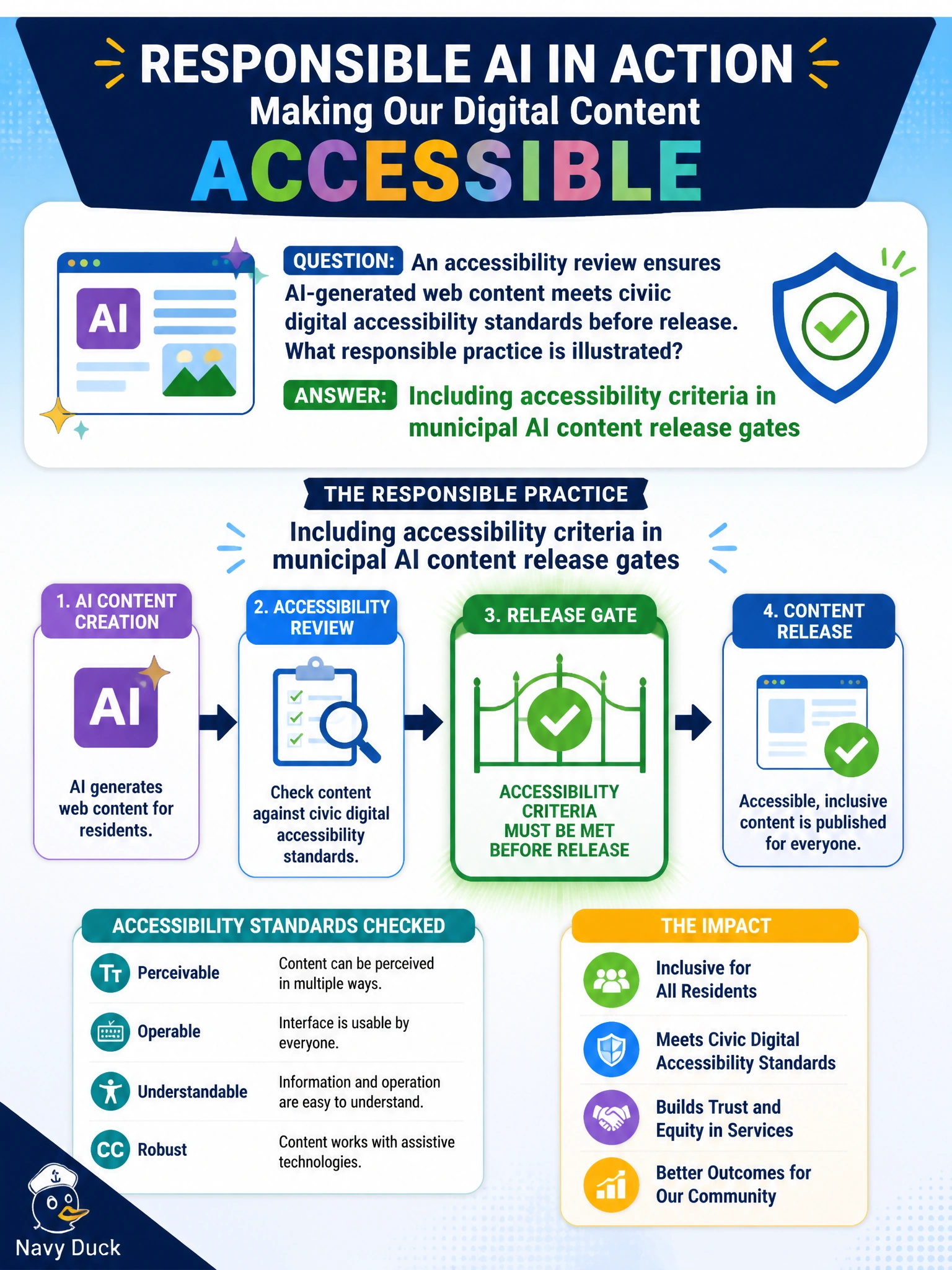
An accessibility review ensures AI-generated web content meets civic digital accessibility standards before release. What responsible practice is illustrated?
Select an answer to reveal the explanation.
Short Explanation
If AI-written web pages lock out residents who use assistive tech, that is a failure. Accessibility belongs in the release gate. You'll still lock people out if you've only gated readability thresholds, since it's not the same as meeting accessibility criteria.
Full Explanation
An accessibility review ensuring AI-generated web content meets civic digital accessibility standards before release illustrates including accessibility criteria in municipal AI content release gates. The correct answer is including accessibility criteria in municipal AI content release gates. AI can produce pages with missing alt text, poor heading structure, low-contrast suggestions, or non-descriptive links that fail WCAG-aligned civic standards. If accessibility is not a release gate, residents who use screen readers, captions, or keyboard navigation are effectively excluded from city services—violating inclusion commitments and often legal accessibility duties.
Including readability thresholds in municipal AI content release gates fails because readability measures reading ease, not WCAG technical accessibility; content can pass a grade-level threshold while still missing alt text, heading structure, contrast, or keyboard support. Including assistive technology logs in municipal AI content release gates fails because attaching test logs does not verify the content passes accessibility criteria; civic content must meet standards for commonly used assistive technologies before publication, not merely document test environments. Including accessibility fix schedules in municipal AI content release gates fails because a timetable for future fixes does not ensure content meets standards before release; allowing publication with known defects creates a period of exclusion that often never gets prioritized.
Exam caveat: accessibility gating is not anti-AI. The tested practice is applying the same accessibility standards to AI-authored content as to human-authored content; AI may help generate compliant drafts, but humans (or automated checkers plus human review) must verify before release.
Operational check: add automated accessibility scans and manual spot-checks to the AI content release checklist, reject pages that fail heading, alt-text, contrast, or keyboard criteria, train content owners on fixing AI accessibility defects, and re-scan after major regenerations before going live.
Prefer to study offline? Printable PDF study book + test engine ($7.50, unofficial). These questions stay free here.