
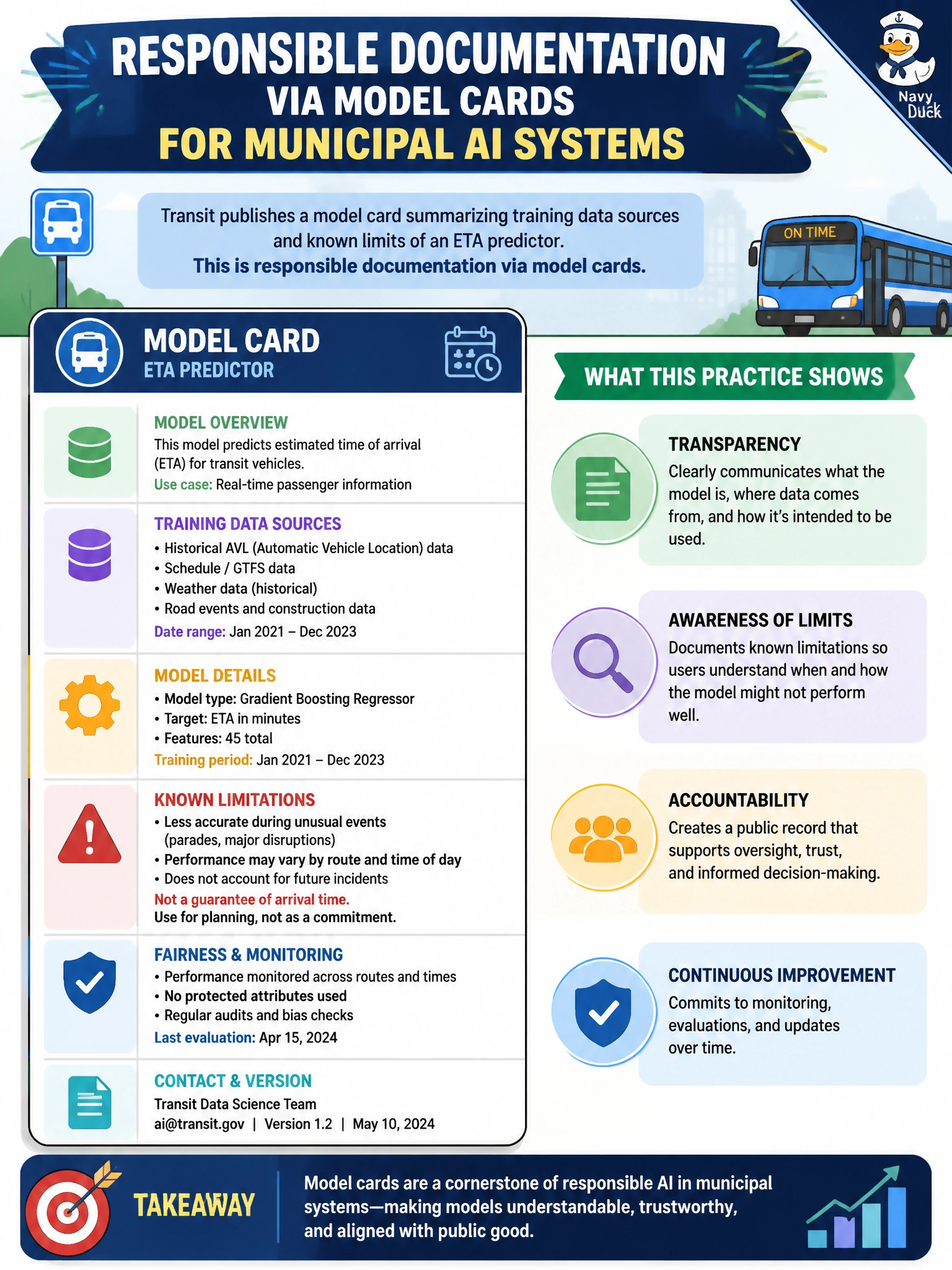
Transit publishes a model card summarizing training data sources and known limits of an ETA predictor. What responsible practice is illustrated?
Select an answer to reveal the explanation.
Short Explanation
A model card is like a nutrition label for the ETA tool—it tells you what data went in and where it can fail. Publishing that builds trust. Hiding limits isn’t responsible documentation.
Full Explanation
Transit publishing a model card that summarizes training data sources and known limits of an ETA predictor illustrates responsible documentation via model cards for municipal AI. The correct answer is responsible documentation via model cards for municipal AI systems. A model card is a structured public or internal artifact describing intended use, data provenance, performance, and failure modes. For rider-facing ETAs, documenting that the model underperforms in rare weather, special events, or low-frequency routes sets expectations, supports oversight, and helps operators know when to fall back to schedule-based messaging instead of presenting brittle predictions as certainty. Responsible reporting via model cards for municipal AI systems is about reporting, not documenting the ETA predictor's training data sources and known limits, so it misnames the documentation practice being tested. Responsible monitoring via model cards for municipal AI systems implies ongoing monitoring of performance, not the documentation act of publishing a model card that describes the ETA predictor's data sources and limits to riders and overseers. Responsible sharing via model cards for municipal AI systems implies sharing artifacts, not documenting the model, and it does not capture creating a model card that explains how the resident-facing ETA AI behaves and where it breaks. Exam caveat: a model card is documentation, not proof the model is fair or safe by itself. The tested practice is transparent description of sources and limits; cards must stay current when models retrain, or they become misleading artifacts. Operational check: publish or internally file a model card covering data sources, update cadence, known failure conditions, and human fallback rules; require card refresh on each significant retrain; and train customer-service staff to explain ETA uncertainty without overclaiming model precision.
Prefer to study offline? Printable PDF study book + test engine ($7.50, unofficial). These questions stay free here.