
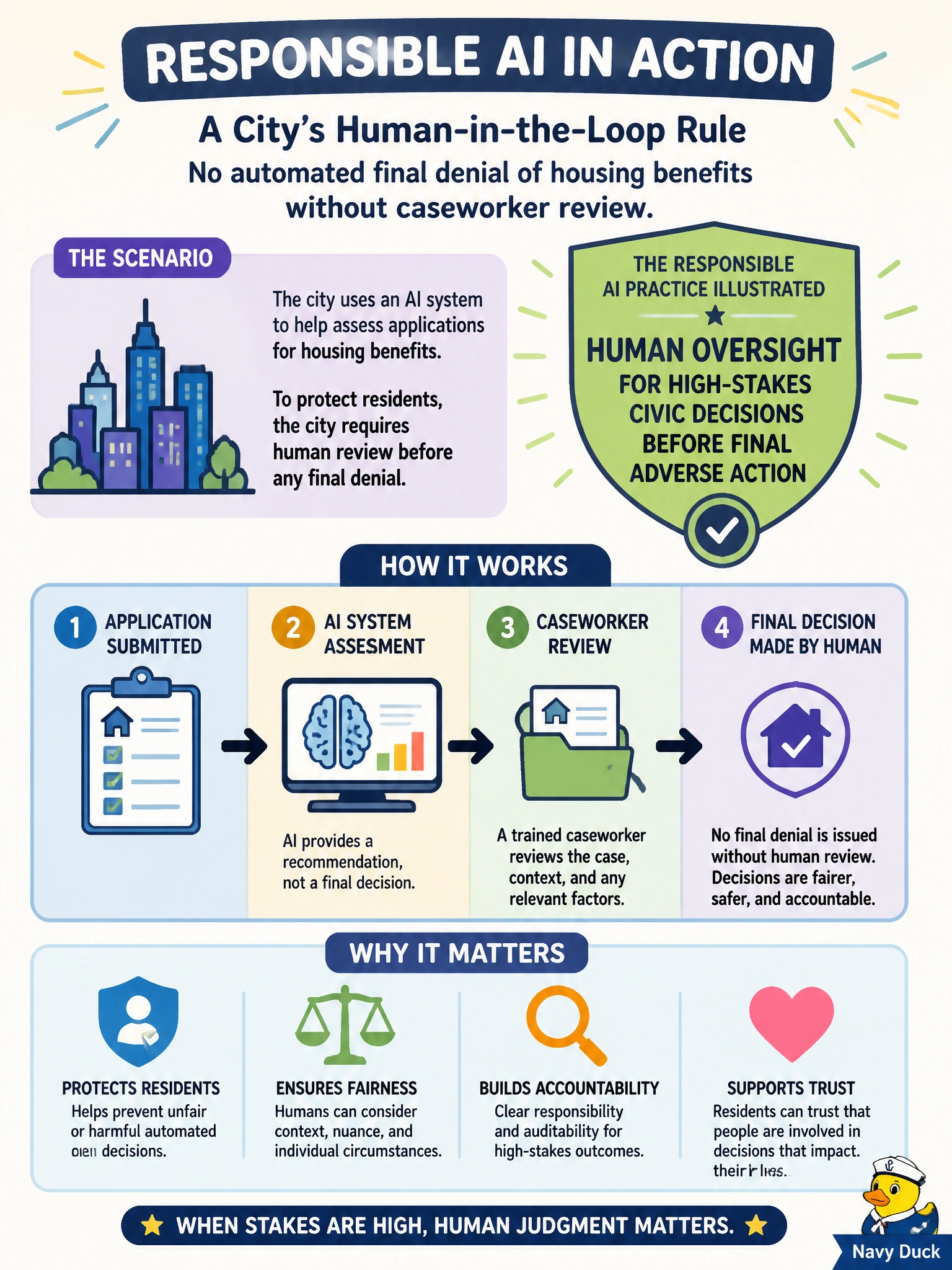
The city adopts a human-in-the-loop rule: no automated final denial of housing benefits without caseworker review. What responsible AI practice is illustrated?
Select an answer to reveal the explanation.
Short Explanation
When housing benefits hang in the balance, a human still needs to look before a final no. That is human-in-the-loop oversight. Disaggregated fairness audits are useful, but they don't provide a human caseworker before the final no.
Full Explanation
Adopting a human-in-the-loop rule that no automated final denial of housing benefits occurs without caseworker review illustrates human oversight before final adverse action in high-stakes civic decisions. The correct answer is human oversight for high-stakes civic decisions before final adverse action. Housing benefits affect shelter and livelihood; automated scores can err from biased training data, incomplete applications, or brittle rules. Requiring a named caseworker to review before a final denial preserves due-process-style accountability, creates an appealable human decision, and prevents the city from treating a model confidence score as a substitute for judgment.
Disaggregated fairness audits across demographic groups in quarterly reviews fail to answer the question because audits monitor disparities after decisions are made; they do not provide the human-in-the-loop review required before a final adverse denial. Plain-language denial notices with appeal steps for affected residents fail to answer the question because notices and appeals come after a denial; they do not supply the caseworker review that must happen before a final adverse action. Caseworker override tracking to monitor model performance over time fails to answer the question because tracking overrides is a monitoring activity, not the required human review that must occur before a final denial.
Exam caveat: human-in-the-loop is not rubber-stamping. The tested practice is meaningful review before adverse final action; if reviewers always click approve under quota pressure, the control is theater. Also distinguish assistive recommendations from final adjudications.
Operational check: configure the housing system so automated denial cannot finalize without caseworker attestation, log the human decision and rationale, train reviewers on known model failure modes, measure override rates by demographic group, and publish a clear resident appeal path independent of the vendor.
Prefer to study offline? Printable PDF study book + test engine ($7.50, unofficial). These questions stay free here.