
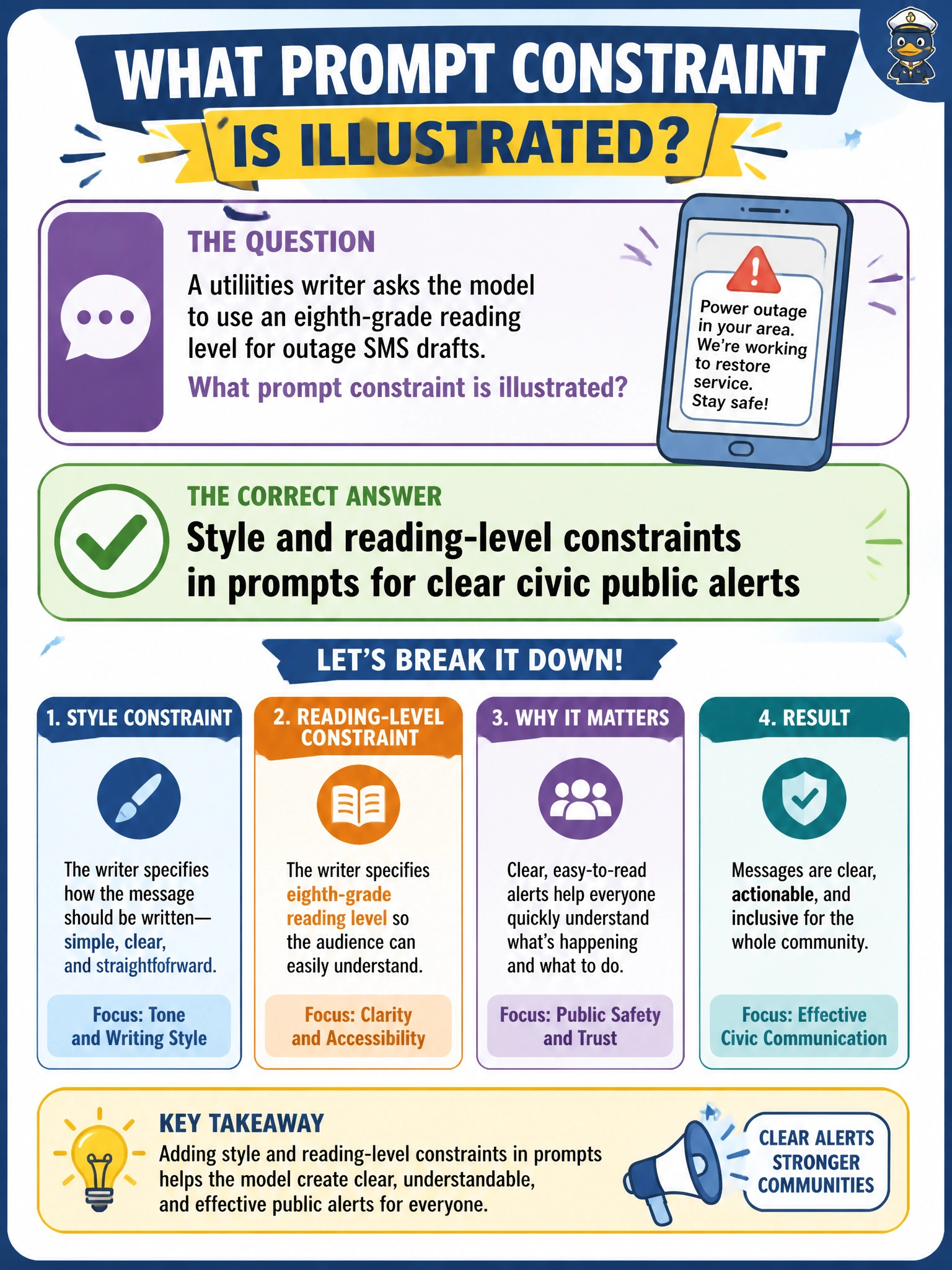
A utilities writer asks the model to use an eighth-grade reading level for outage SMS drafts. What prompt constraint is illustrated?
Select an answer to reveal the explanation.
Short Explanation
Outage texts have to land on phones in plain English. Put the reading level in the prompt so the draft stays short and clear. You'll get plain wording residents will grasp, since format alone won't make it readable without plain style.
Full Explanation
A utilities writer asking for an eighth-grade reading level on outage SMS drafts illustrates style and reading-level constraints in prompts. Public alerts must be understandable on a phone screen under stress, often for residents with varied literacy and limited English proficiency. Encoding reading level and plain style in the prompt produces drafts closer to resident-ready clarity than applying format and reading-level constraints in prompts for clear civic public alerts, which focus on layout or structure like headings and fields rather than plain eighth-grade style wording for comprehension. Clear civic alerts reduce call-center volume and improve compliance with boil-water or safety instructions.
Targeting format and reading-level constraints in prompts for clear civic public alerts misses the constraint type: even though it mentions reading level, formatting controls layout or structure for consistent presentation, not plain eighth-grade style language for stressed residents on phones. Applying length and reading-level constraints in prompts for clear civic public alerts misses the constraint type: even though it mentions reading level, length limits control word or character count to fit SMS, not accessible eighth-grade style wording for quick public comprehension. Using tone and reading-level constraints in prompts for clear civic public alerts confuses how it sounds with how readable it is: even though it mentions reading level, tone sets a reassuring or official voice for trust, not plain eighth-grade style prose for residents.
Exam caveat: plain language must not omit mandatory safety facts; simplify wording while preserving accurate restoration windows, affected areas, and official contacts.
Operational check: prompt with reading-level and length limits, require inclusion of verified outage fields from OMS/SCADA extracts (never invented ETAs), A/B test comprehension with community reviewers where feasible, and have the PIO approve final SMS before send on official channels.
Prefer to study offline? Printable PDF study book + test engine ($7.50, unofficial). These questions stay free here.