
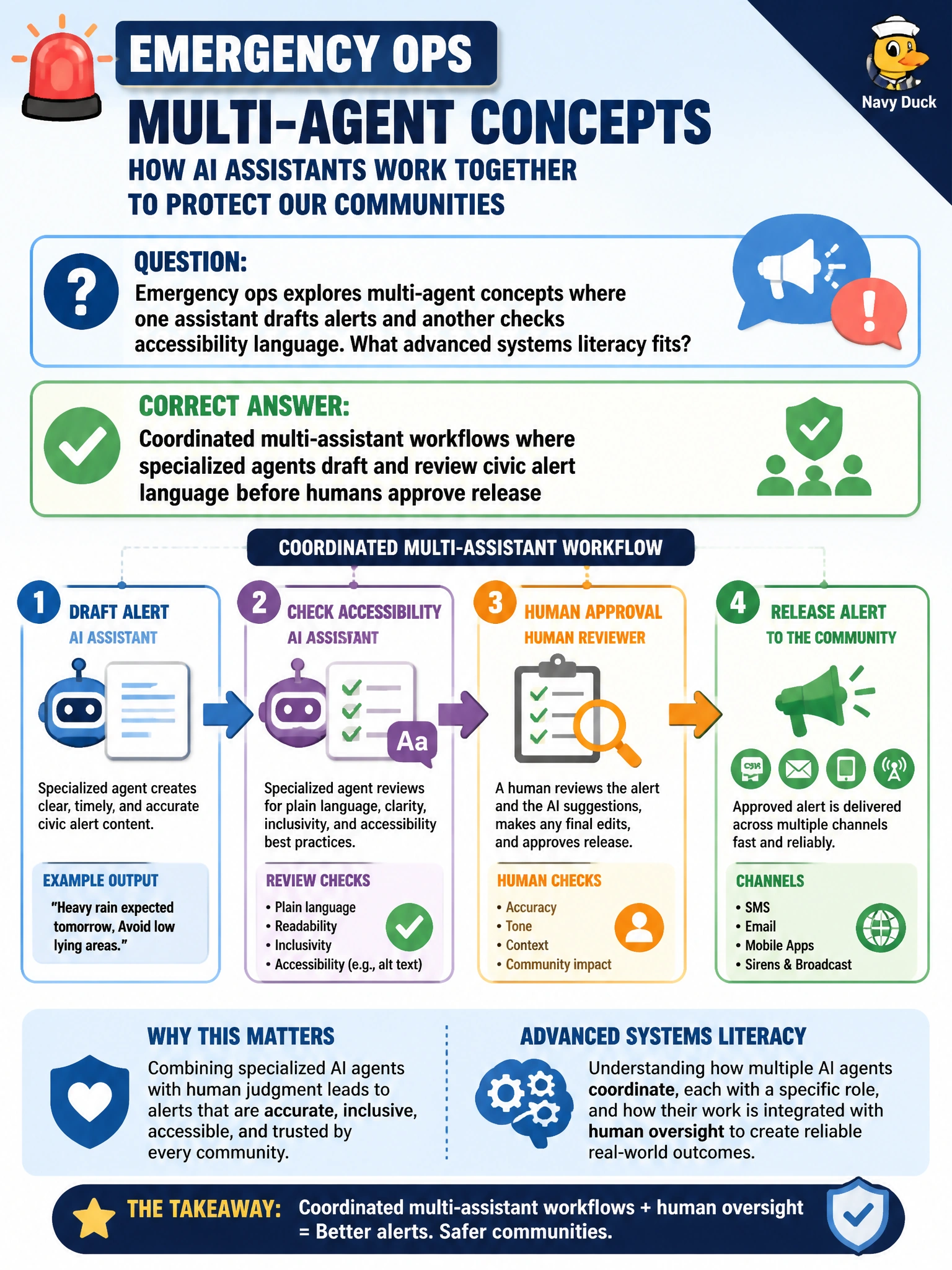
Emergency ops explores multi-agent concepts where one assistant drafts alerts and another checks accessibility language. What advanced systems literacy fits?
Select an answer to reveal the explanation.
Short Explanation
One helper drafts the alert; another nags about accessibility wording—then humans still hit send. That multi-agent sketch is workflow literacy, not autopilot life-safety command. You'll lose that separate check if agents just co-edit the same draft at once, since it's simultaneous tinkering without a distinct accessibility review.
Full Explanation
Advanced systems literacy includes multi-agent or multi-assistant workflows in which specialized helpers collaborate under human approval. Emergency operations exploring one assistant that drafts alerts and another that checks accessibility language is illustrating coordinated specialization—draft versus review—before humans release life-safety or public-warning content. The pattern is workflow design literacy, not unsupervised command of incidents.
Competitive multi-assistant drafting where parallel agents propose alternate alert phrasings for scoring before humans approve release misses the specialized check the scenario is about: parallel proposals scored against each other is competition, not the draft-versus-accessibility-review collaboration every channel needs before release. Hierarchical manager-assistant delegation where a lead agent assigns alert sections to subagents before humans approve release misdescribes the workflow: top-down allocation of sections by a lead agent is not the peer specialization where one assistant drafts and another checks accessibility language before humans approve release. Shared-memory collaborative drafting where agents co-edit a common alert draft through simultaneous revisions before humans approve release blurs the specialized roles at issue, since simultaneous co-editing is not the same as a separate accessibility review, and urgent alerts are the messages residents who need plain language, captions, or alternate formats can least afford to miss.
Exam caveat: multi-agent diagrams on slides do not by themselves create safety; roles, escalation, and kill-switches must be operationalized. Operational check: keep human final approval for alert release, define which agent outputs are advisory only, test accessibility checks on sample alerts, and document that incident command authority is never delegated to unsupervised agents.
Prefer to study offline? Printable PDF study book + test engine ($7.50, unofficial). These questions stay free here.