
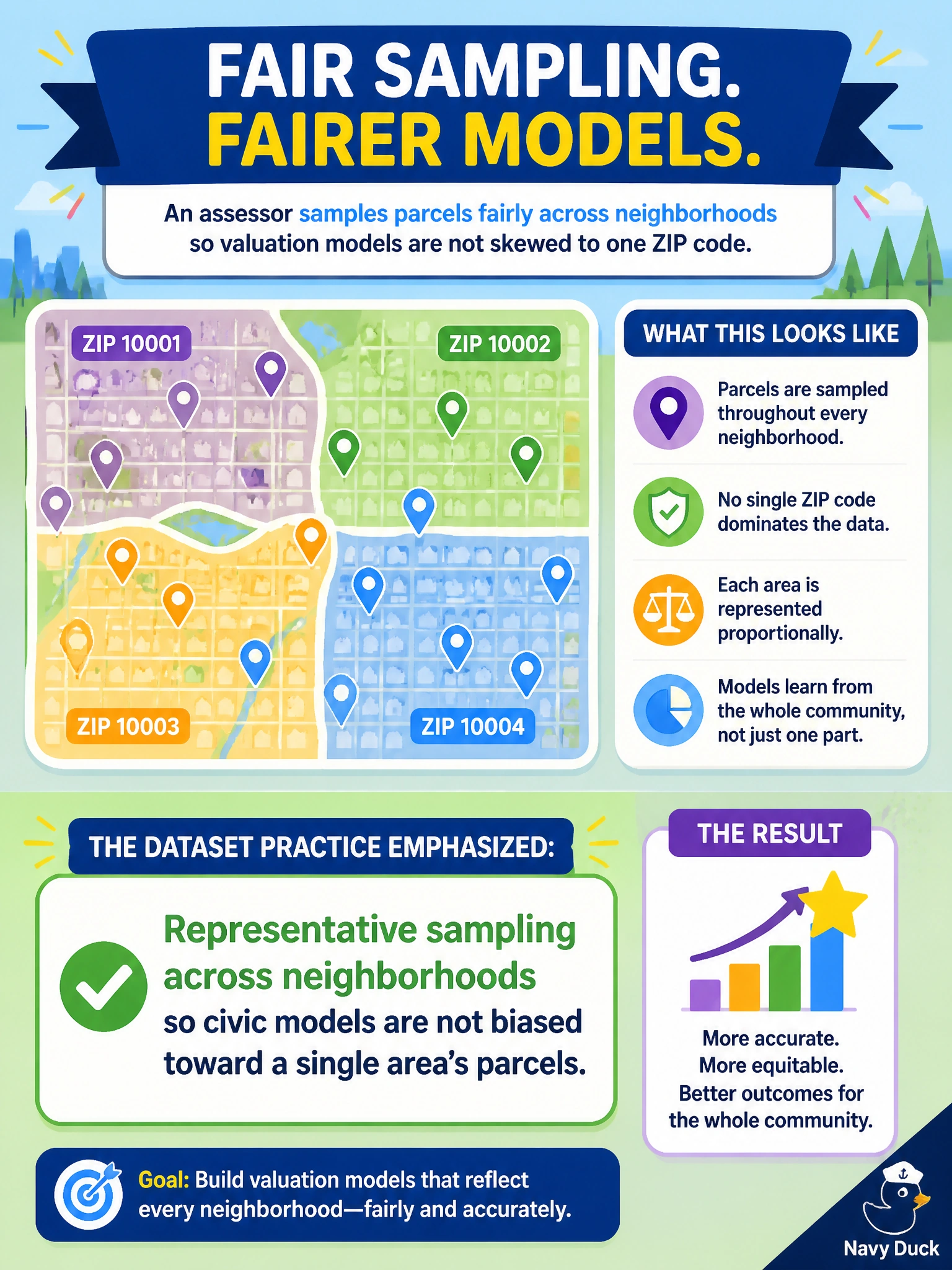
An assessor samples parcels fairly across neighborhoods so valuation models are not skewed to one ZIP code. What dataset practice is emphasized?
Select an answer to reveal the explanation.
Short Explanation
If you only stratify across neighborhoods by lot size, you'll still chase lot-size balance and miss fair representative coverage. Fair sampling across neighborhoods keeps valuation AI from going lopsided. Oversampling parcels for extra detail won't ensure fair coverage, and weighting by sales volume still lets busy markets dominate while quiet neighborhoods get shortchanged.
Full Explanation
Assessor valuation models that train on parcel samples skewed to one ZIP code can encode neighborhood bias and misvalue housing stock elsewhere. Representative sampling across neighborhoods emphasizes that civic training datasets should reflect the geographic and housing diversity the model will face in production, reducing skew toward a single area’s parcels, photo quality, or price dynamics. Fair sampling is a dataset practice that supports equitable municipal assessment support tools. Stratified sampling across neighborhoods by lot size so civic models are not biased toward a single area’s parcels narrows the focus to lot-size balance within areas rather than ensuring fair representative coverage across neighborhoods as a whole. Weighting sampled parcels across neighborhoods so civic models are not biased toward a single area’s sales volume still adjusts influence by sales volume rather than ensuring fair parcel representation—it over-weights neighborhoods with high sales volume and under-represents areas with fewer sales rather than reflecting the jurisdiction's actual housing distribution across neighborhoods. Oversampling parcels across neighborhoods for detail so civic models are not biased toward a single area’s parcels adds extra detail examples rather than ensuring fair representative coverage; location still strongly influences value, and adding volume without geographic sampling discipline invites hidden geographic bias. Exam caveat: representation is necessary but not sufficient; even balanced samples need careful features and monitoring for disparate error rates across neighborhoods after deployment. Operational check: compare training parcel counts and strata against the jurisdiction’s neighborhood inventory, document sampling ratios, and evaluate model error by geography before assessor pilots expand.
Prefer to study offline? Printable PDF study book + test engine ($7.50, unofficial). These questions stay free here.