
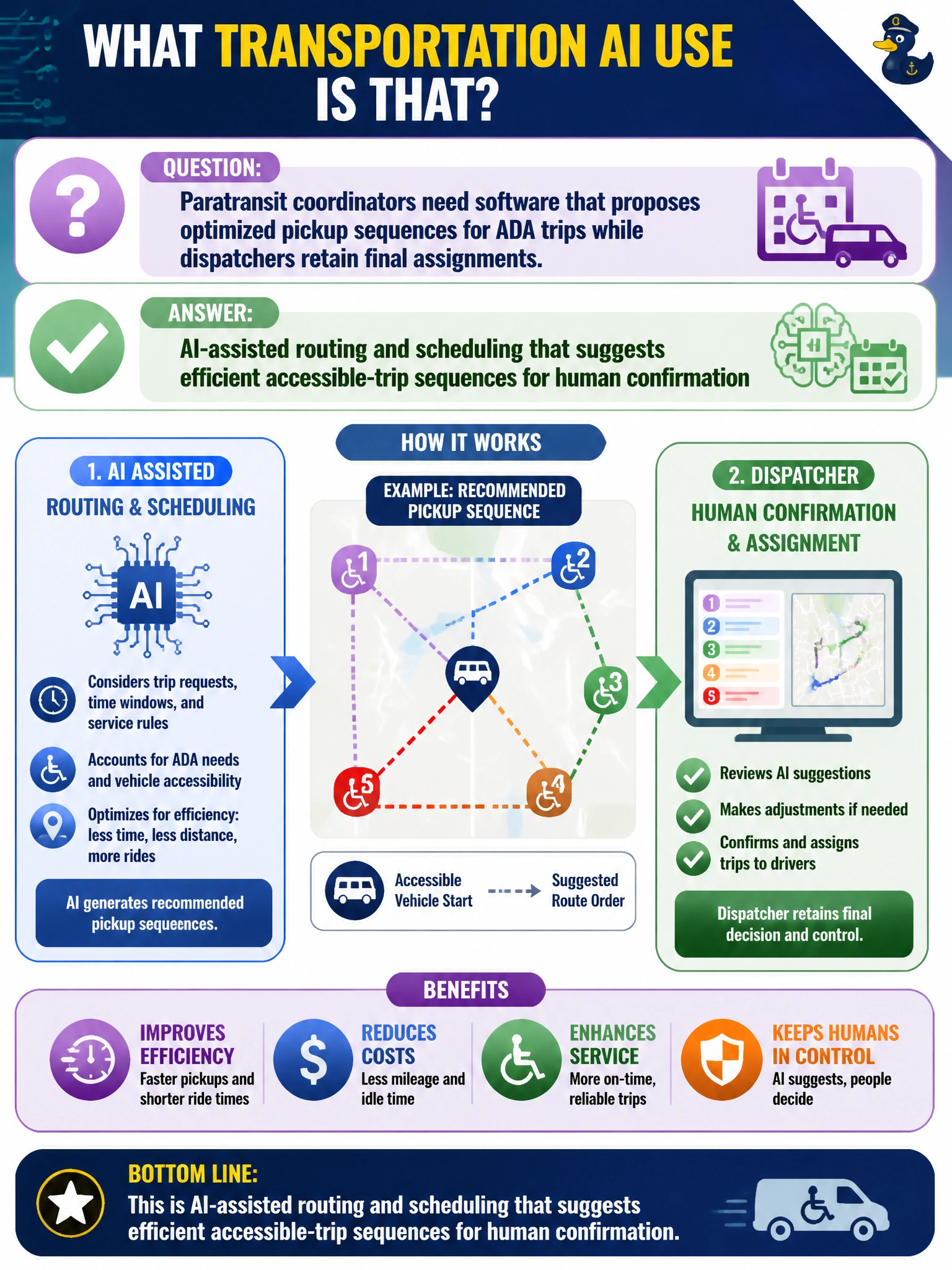
Paratransit coordinators need software that proposes optimized pickup sequences for ADA trips while dispatchers retain final assignments. What transportation AI use is that?
Select an answer to reveal the explanation.
Short Explanation
ADA trip boards are a puzzle of addresses and time windows—routing AI proposes a smarter order, then you'll still lock the plan. It's accessible transit scheduling help with dispatcher sign-off, and you'll see it's not fixed-route timetabling for bus corridors or crew rostering and run-cutting for driver shifts. Transit signal priority won't help you since it's about green lights at intersections, not daily pickup sequencing.
Full Explanation
Paratransit coordinators needing software that proposes optimized pickup sequences for ADA trips while dispatchers retain final assignments need AI-assisted routing and scheduling that suggests efficient accessible-trip sequences for human confirmation. Optimization can reduce deadhead miles and wait times by sequencing addresses and time windows, but eligibility, rider accommodations, and same-day exceptions require dispatcher judgment. The AI proposes; municipal staff assign. AI-assisted fixed-route timetabling that suggests efficient accessible-trip sequences for human confirmation plans regular fixed-route timetables rather than proposing optimized pickup sequences, and it does not sequence daily ADA addresses and time windows for dispatcher assignment. AI-assisted crew rostering and run-cutting that suggests efficient accessible-trip sequences for human confirmation assigns operators to shifts and runs rather than daily accessible-trip sequencing and does not honor individual ADA pickup addresses and time windows. AI-assisted transit signal priority that suggests efficient accessible-trip sequences for human confirmation adjusts traffic signals to prioritize transit vehicles at intersections rather than proposing optimized pickup sequences, so it cannot sequence daily ADA addresses and time windows for dispatcher assignment. Exam caveat: Accessible transportation AI is assistive scheduling with human confirmation. Wrong answers often swap in fixed-route timetabling, crew rostering and run-cutting, or transit signal priority with accessible-trip language instead of true routing and scheduling. Operational check: Preserve mobility and accommodation preferences in the optimizer inputs, require dispatcher lock before notifying riders, monitor on-time and no-show impacts, and keep same-day override paths for medical and weather disruptions.
Prefer to study offline? Printable PDF study book + test engine ($7.50, unofficial). These questions stay free here.