
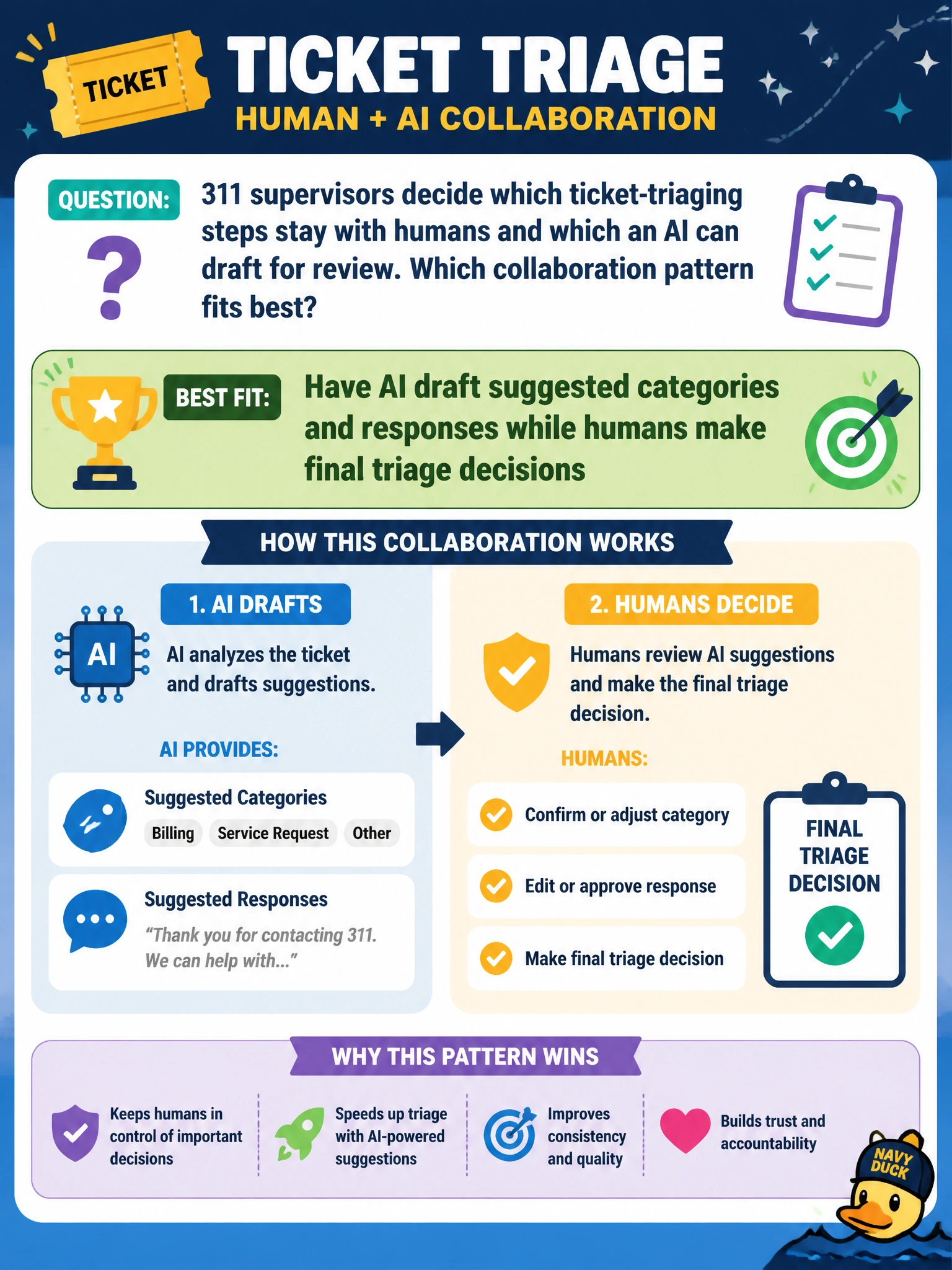
311 supervisors decide which ticket-triaging steps stay with humans and which an AI can draft for review. Which collaboration pattern fits best?
Select an answer to reveal the explanation.
Short Explanation
Think of the AI as a junior clerk who sorts the mail into piles—you still open the important envelopes. It drafts categories and reply starters so humans can decide faster. Final calls on resident tickets stay with the supervisors.
Full Explanation
311 ticket triage sits at the intersection of volume pressure and public accountability. The best collaboration pattern is to have AI draft suggested categories and responses while humans make final triage decisions. Drafting is a high-leverage assist: models can propose service categories, priority hints, and first-draft reply language from historical tickets, which reduces repetitive typing and speeds routing toward the right department. Supervisors and agents then confirm, correct, or escalate—especially when the ticket involves safety, equity-sensitive complaints, or ambiguous multi-issue narratives. That pattern preserves municipal accountability: the city, not the model, owns how a resident’s request is classified and closed.
Letting the AI close every ticket without review fails because automated closure skips verification, invites misrouting, and leaves no accountable human when a resident disputes the outcome. Banning AI drafting forever fails by refusing legitimate efficiency gains on low-risk, high-volume drafting work that still benefits from human confirmation. Replacing supervisors so residents never speak to staff again fails conceptually and politically: 311 is a civic contact channel, not a fully autonomous call center, and escalation paths require human authority.
Exam caveat: ‘humans make final triage decisions’ does not mean humans must rewrite every draft from scratch; it means decision rights and accountability stay with staff. Do not equate drafting assistance with unsupervised closure.
Operational check: define which ticket types AI may draft versus which require immediate human handling, log accept/edit/reject rates on AI suggestions, require dual control or supervisor review for safety and rights-related categories, and publish an escalation path when residents reject an AI-assisted reply.
Prefer to study offline? Printable PDF study book + test engine ($7.50, unofficial). These questions stay free here.