
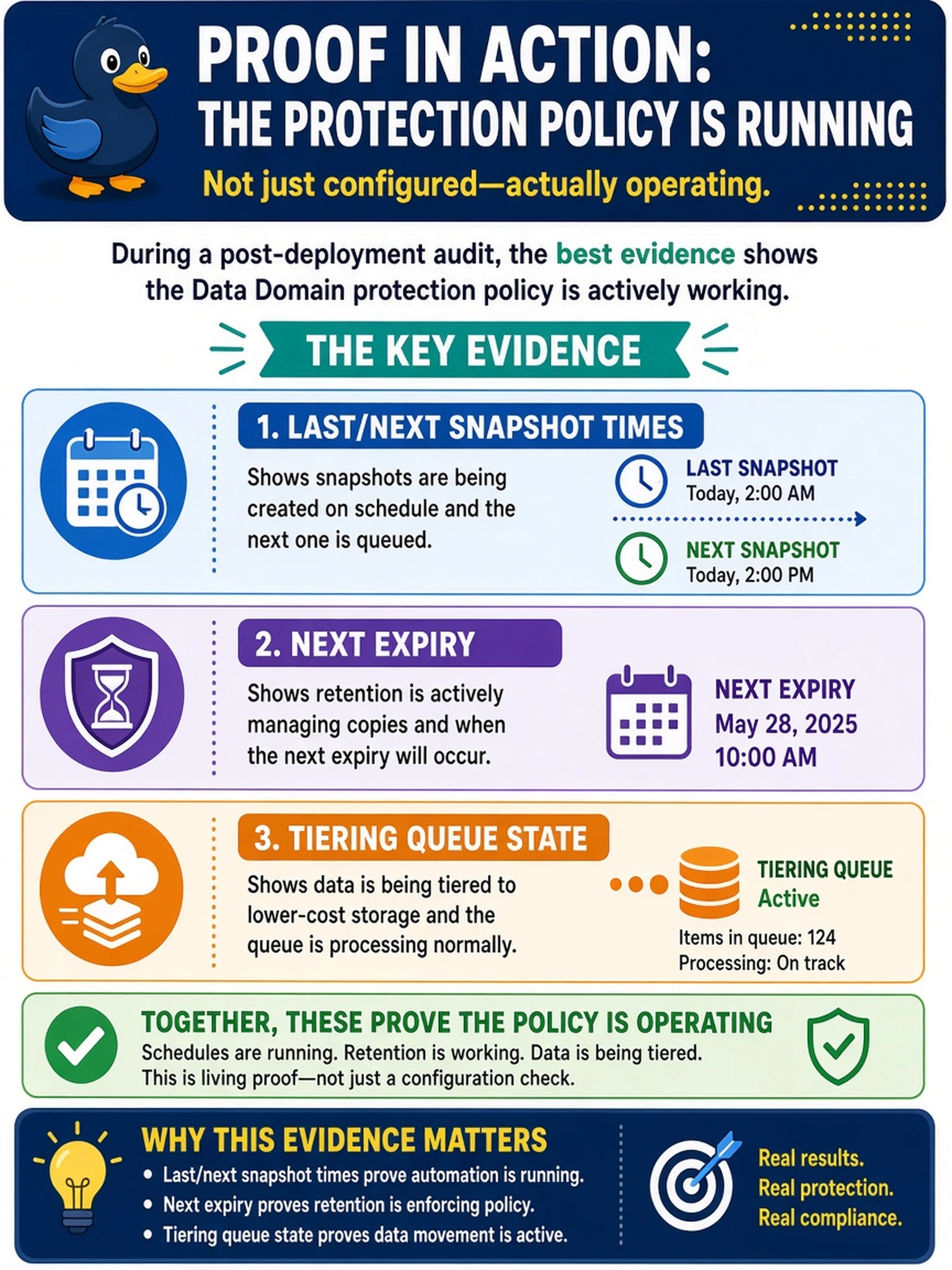
During a post-deployment audit, the customer’s auditor asks for proof that the Data Domain protection policy is actually running, not just configured. Which evidence best demonstrates that the policy is operating?
Select an answer to reveal the explanation.
Short Explanation
Think of it like this: a policy on paper is just a wish; live schedule times and queue state are the receipt. When an auditor asks if it is really running, you want the machine's current evidence, not a green checkmark. The trap is confusing configuration, assignment, or validation with actual execution.
Full Explanation
Policy verification is an operational activity, not a configuration review. On a Data Domain system, a protection policy is proven by evidence that the platform is executing the intended schedule and retention behavior: the last run time, the next scheduled run, the next expiry point, and the current state of tiering or replication queues. These values show the policy is not merely present, but is producing and aging data according to the rules. An enabled configuration screen confirms only that the policy definition exists and has retention or replication attributes; it does not show whether those attributes have been applied recently. A backup application assignment report shows that a workload was mapped to a policy, but mapping can exist while execution is paused, blocked, or misaligned with the appliance schedule. A validation report after saving confirms syntax and referential correctness, not runtime execution or queue health. Exam caveat: Dell expects candidates to distinguish configuration evidence from operational evidence when validating post-deployment policy behavior. Operational check: review the policy's current schedule status and queue indicators, then confirm the last run completed, the next run is scheduled, and expiry or tiering actions are progressing as expected.