
A deployment engineer creates a data-tiering policy on a PowerProtect Data Domain system, but the cloud/object-store destination was never configured or licensed. What must happen before the policy can be applied?
Select an answer to reveal the explanation.
Short Explanation
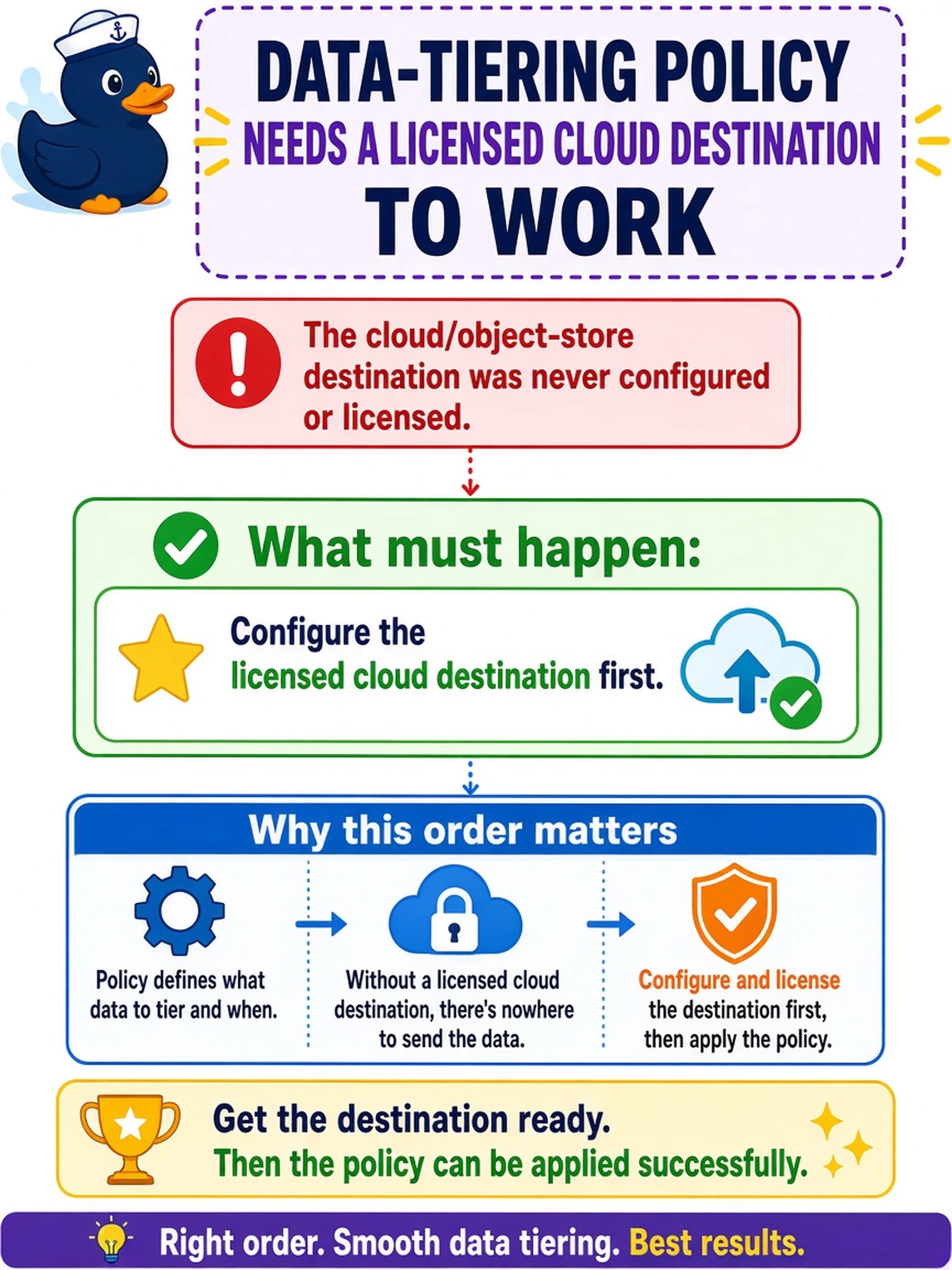
Think of tiering like sending files to a cloud vault you never actually unlocked: you can write a schedule, but there’s nowhere valid to ship the data. The system needs a configured and licensed object-store destination before it will honor the policy. Set the destination first, then schedule the tiering.
Full Explanation
Data Domain tiering policies move eligible data toward an external tier, such as an object store, only after the destination exists as a fully defined and licensed storage target. In practice, the appliance must recognize the cloud provider, endpoint, bucket or container, credentials, and entitlement as a valid destination before policy scheduling can reference it. This prevents a policy from being created in a dangling state where data has no legal or reachable landing zone. Enabling DD Boost on an MTree affects backup client acceleration and source-side processing, not cloud destination availability. Setting a schedule changes when evaluation occurs, but it cannot repair a missing destination or license. Creating a replication context is a separate disaster recovery or DR feature that copies data between Data Domain systems or supported targets; it is not the same as configuring a cloud tiering destination. Exam caveat: Dell deployment questions often test prerequisites rather than the visible GUI action, so look for the missing dependency before enabling a policy. Operational check: verify the cloud object-store target appears in the storage configuration with a licensed and reachable status, then attach it to the tiering policy and run a test move.