
A compliance rule requires seven years of monthly copies, but the oldest copies are almost never restored. After several years, primary capacity is filling up. Which Data Domain policy should be applied so long retention stops consuming primary space?
Select an answer to reveal the explanation.
Short Explanation
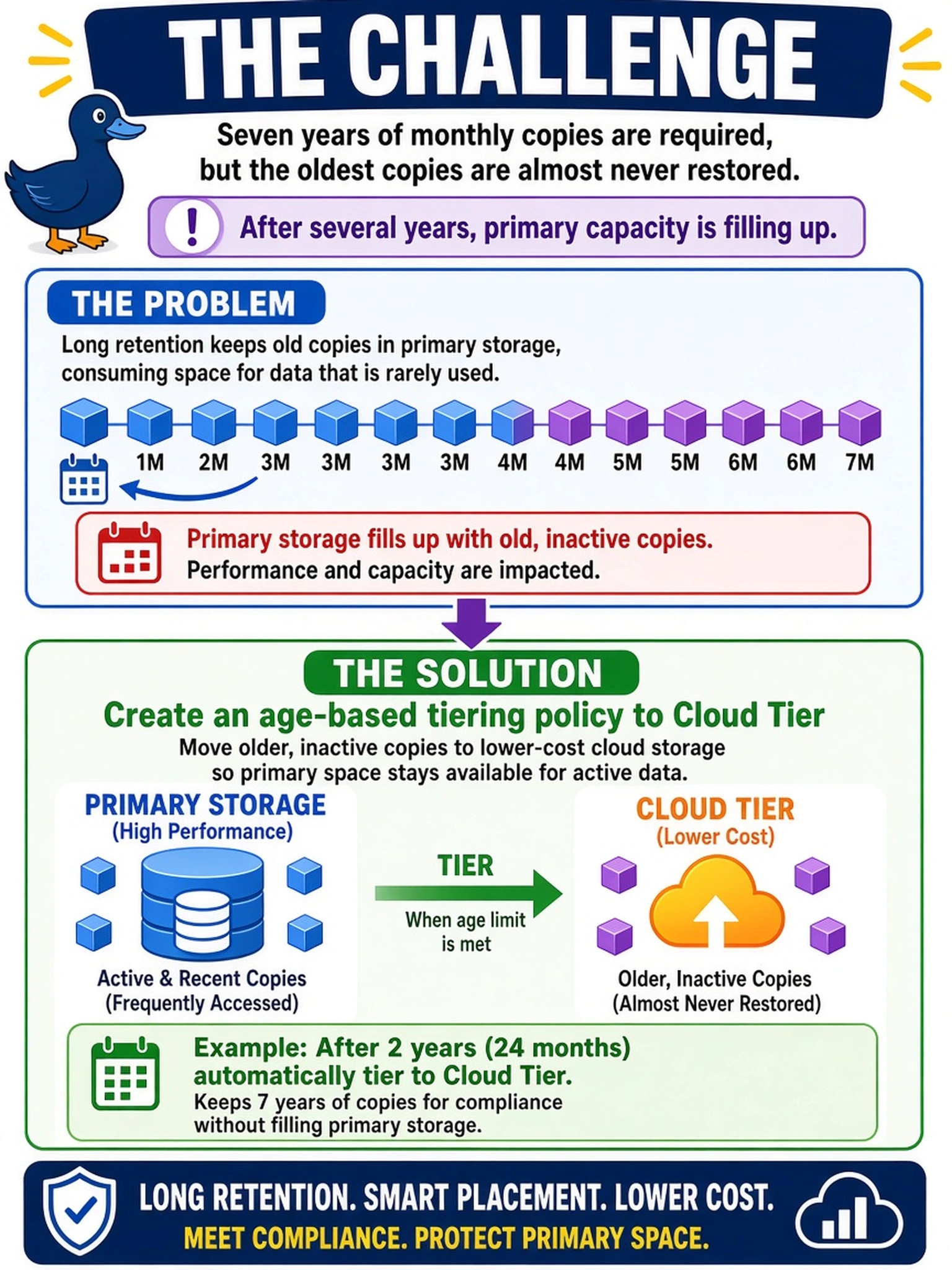
Think of old monthly copies like tax paperwork: you keep it, but you don't need it in your desk drawer. You need an age-based tiering policy that moves those copies to the object-store tier while leaving recent data on primary capacity. The trap is assuming retention lock or replication solves capacity — it doesn't.
Full Explanation
Data Domain tiering policies are designed to separate active working sets from long-retained copies. When compliance requires multi-year monthly retention but old copies are rarely restored, an age-based policy can move files past a specified age to the object-store tier, preserving logical retention and restore visibility while freeing primary capacity. This matches the requirement because the data remains under the same Data Domain management model and can be retrieved when needed, but it no longer consumes the faster, more expensive primary tier. A retention lock prevents deletion or modification of protected copies, but it does not relocate data or address capacity pressure. Replication to another Data Domain system creates an independent copy for disaster recovery or DRaaS, which increases total capacity demand rather than reducing primary footprint. DD Boost tuning improves backup client efficiency and load distribution, but it does not apply lifecycle placement rules to existing retained monthly copies. Exam caveat: choose the policy that changes storage placement by age, not the feature that merely protects, copies, or accelerates data. Operational check: review the MTree's tiering policy, confirm the age threshold and object-store target, then verify that older monthly copies appear as tiered while recent copies remain on primary capacity.