
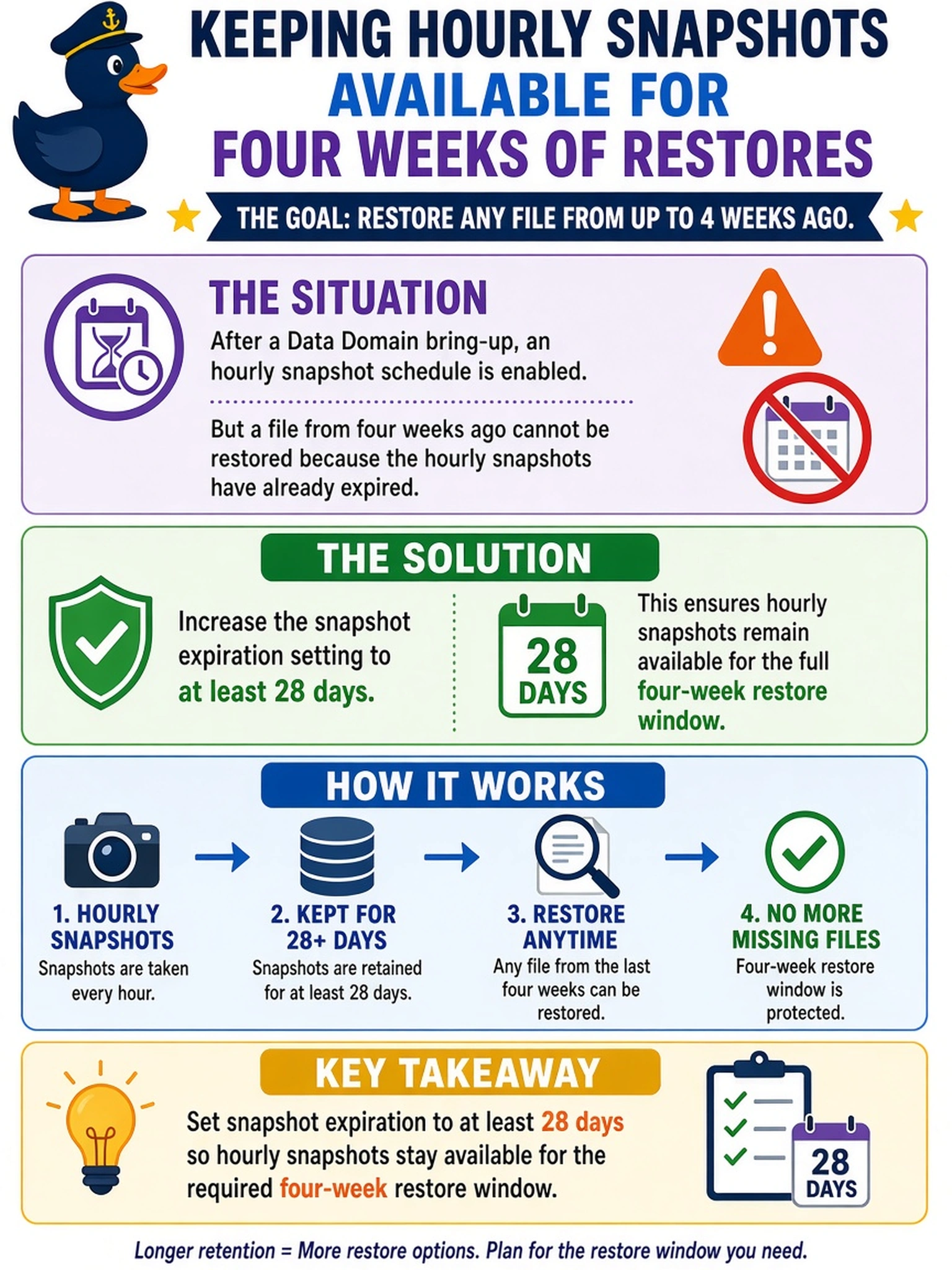
After a Data Domain bring-up, an hourly snapshot schedule is enabled, but a request for a file from four weeks ago cannot be restored. What policy change should be made to prevent this?
Select an answer to reveal the explanation.
Short Explanation
Think of snapshots like parking tickets: if they expire in a day, it doesn't matter how many you take. You need to set the expiration long enough to cover the restore window, not just make the schedule more frequent. The trap is confusing 'hourly' with 'kept for four weeks'.
Full Explanation
Snapshot schedules on Data Domain combine creation frequency with an expiration value. The frequency determines how often a point-in-time copy is created; expiration determines how long that copy remains eligible for restore. If the expiration is left at a short factory default, an hourly schedule only preserves the most recent hours or days, so an older restore horizon cannot be satisfied even though snapshots are being generated correctly. The corrective policy action is to set the snapshot retention or expiration to meet the required recovery window, such as at least 28 days, so the intended restore horizon is explicitly protected. Adding another weekly snapshot schedule does not fix the existing hourly schedule if its expiration still deletes copies before the requested date; it helps only if its own retention independently covers the horizon. Enabling DD Boost affects backup application integration, transfer efficiency, and data movement, but it does not extend snapshot lifetime or change expiration policy. Turning on retention lock protects snapshots from deletion within the locked period, but it does not create a longer retention value; if snapshots expire normally before lock applies or are not locked, the older copy may still be unavailable. Exam caveat: On the exam, separate the control that creates snapshots from the control that retains them; frequency is not retention. Operational check: Review the snapshot schedule details and compare the expiration value with the business restore window before declaring the policy complete.