
A DBA configures Oracle RMAN to back up to a PowerProtect Data Domain system. The first test writes a flat backup file to an NFS mount instead of using the appliance's optimized path. What should the RMAN channel use for supported database integration?
Select an answer to reveal the explanation.
Short Explanation
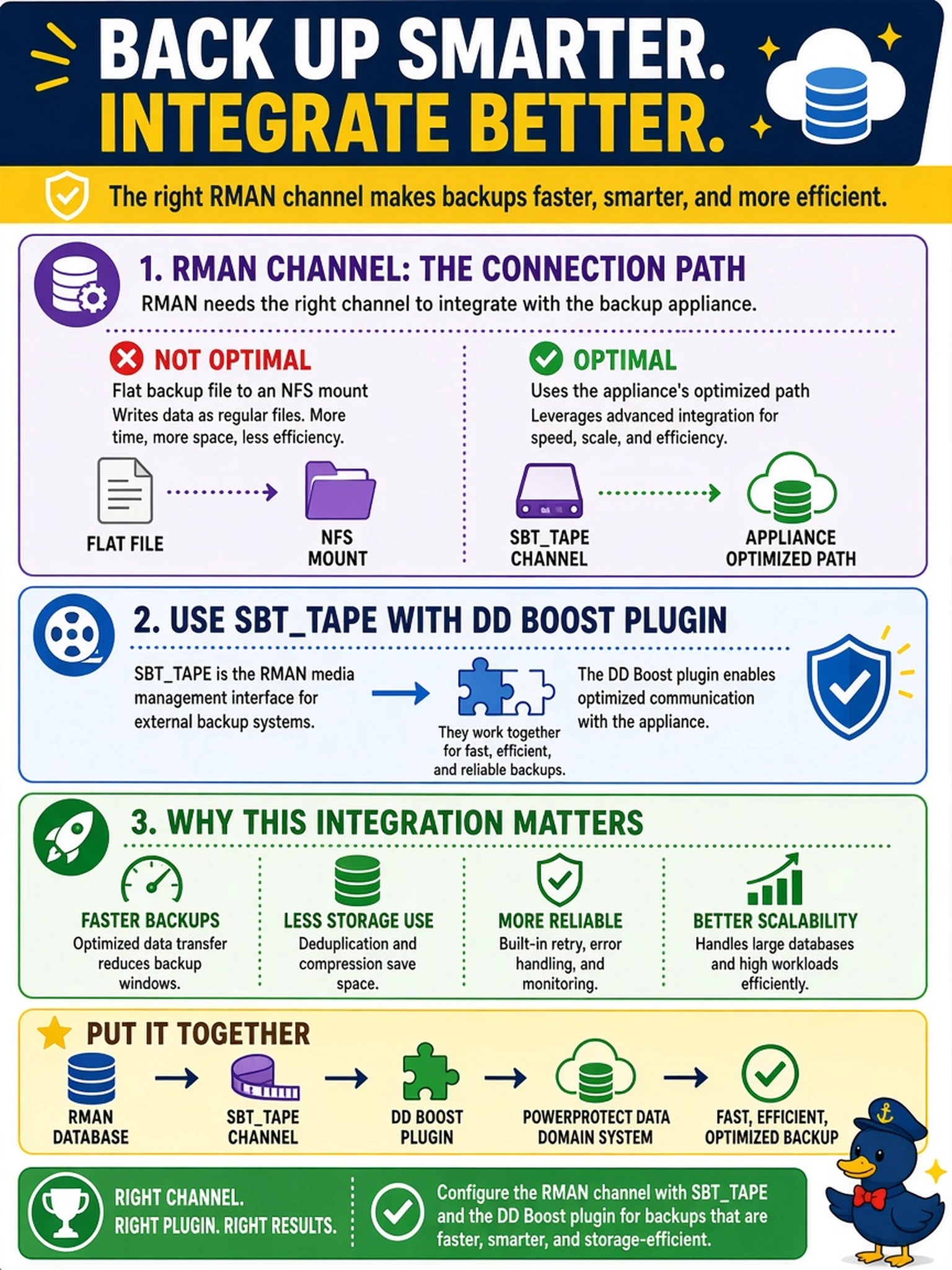
Think of RMAN like a delivery driver: it needs the right loading dock, not just a random curb. You want SBT_TAPE through the DD Boost plugin so backups flow down the optimized Data Domain path, not as a flat file parked on a mount. The trap is treating NFS or CIFS like database-aware integration.
Full Explanation
Oracle RMAN integrates with Data Domain through the Oracle SBT interface. The supported database path uses an SBT_TAPE channel backed by the vendor Data Domain DD Boost plugin, which hands backup pieces directly to DD OS over the optimized backup transport. This preserves the appliance's deduplication, compression, encryption and verification workflow, and it gives RMAN a tape-like target instead of a regular filesystem copy. A flat file written to an NFS mount is only a file copy; the backup application may succeed, but the database integration and optimized path are not being used. Mounting a CIFS share and using operating-system copy commands similarly bypasses RMAN's SBT plugin and the appliance's backup transport, producing a generic file rather than a managed RMAN backup piece. Using an NDMP host client for Oracle is not the supported Oracle integration point; NDMP is a NAS backup protocol, not the mechanism that lets Oracle RMAN stream backup pieces through the Data Domain plugin. Exam caveat: the blueprint tests the integration concept, so choose the database-aware SBT/DD Boost path over any mount or copy workaround. Operational check: run a small RMAN backup and confirm the channel is SBT_TAPE with the DD Boost plugin, then verify the backup appears through RMAN and the appliance's backup reporting rather than only as a file on a share.