
SupportAssist is configured on a new Data Domain and the support contract is on file, but the call-home connection has never been exercised. What is the correct finish for this item during bring-up?
Select an answer to reveal the explanation.
Short Explanation
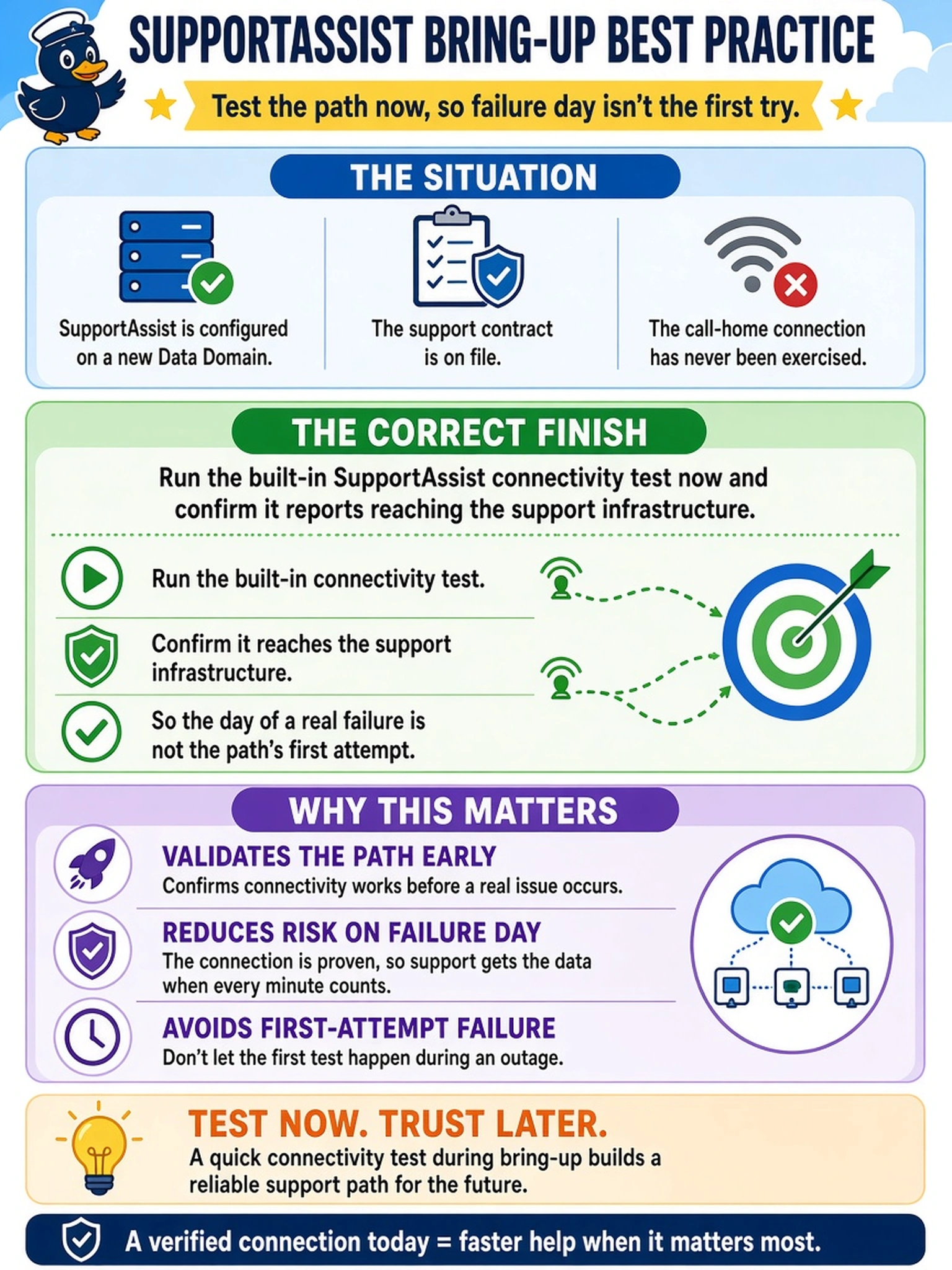
You don't want the first test of your smoke alarm to be a fire. The platform can test its own SupportAssist path on demand - run it now and watch it reach support. A contract number on file is paperwork, not proof; a delivered test is proof.
Full Explanation
The call-home path crosses several independently breakable layers - name resolution, a route or proxy through the firewall, endpoint acceptance on the support side - and the built-in connectivity test walks that chain deliberately, without manufacturing a fault or a ticket, reporting whether the appliance can actually reach support infrastructure. Running it during bring-up converts the path from assumed to evidenced while everything is still being verified. Waiting for the first real case guarantees the path's maiden voyage happens during the one window where its failure hurts most, and 'it will show us if we need it' is the acceptance equivalent of not testing your backups. Filing a synthetic support case burns real support capacity, pollutes case metrics, and still leaves the automated alerting path unverified - the built-in test exists precisely so the check needs no human paperwork. The stored contract number is input data the configuration accepted; it proves a form was saved, not that a single packet can leave the management network, and proxy-blocked egress is the classic bring-up fault that only a live test finds. Exam caveat: sites with authenticated proxies commonly fail this first try - a failed test now is a saved outage later. Operational check: connectivity test passes, result timestamped with the contract details on the acceptance record.