
On acceptance day, an admin opens the Data Domain's GUI from the operations floor using its full hostname for the first time. What is this test actually verifying?
Select an answer to reveal the explanation.
Short Explanation
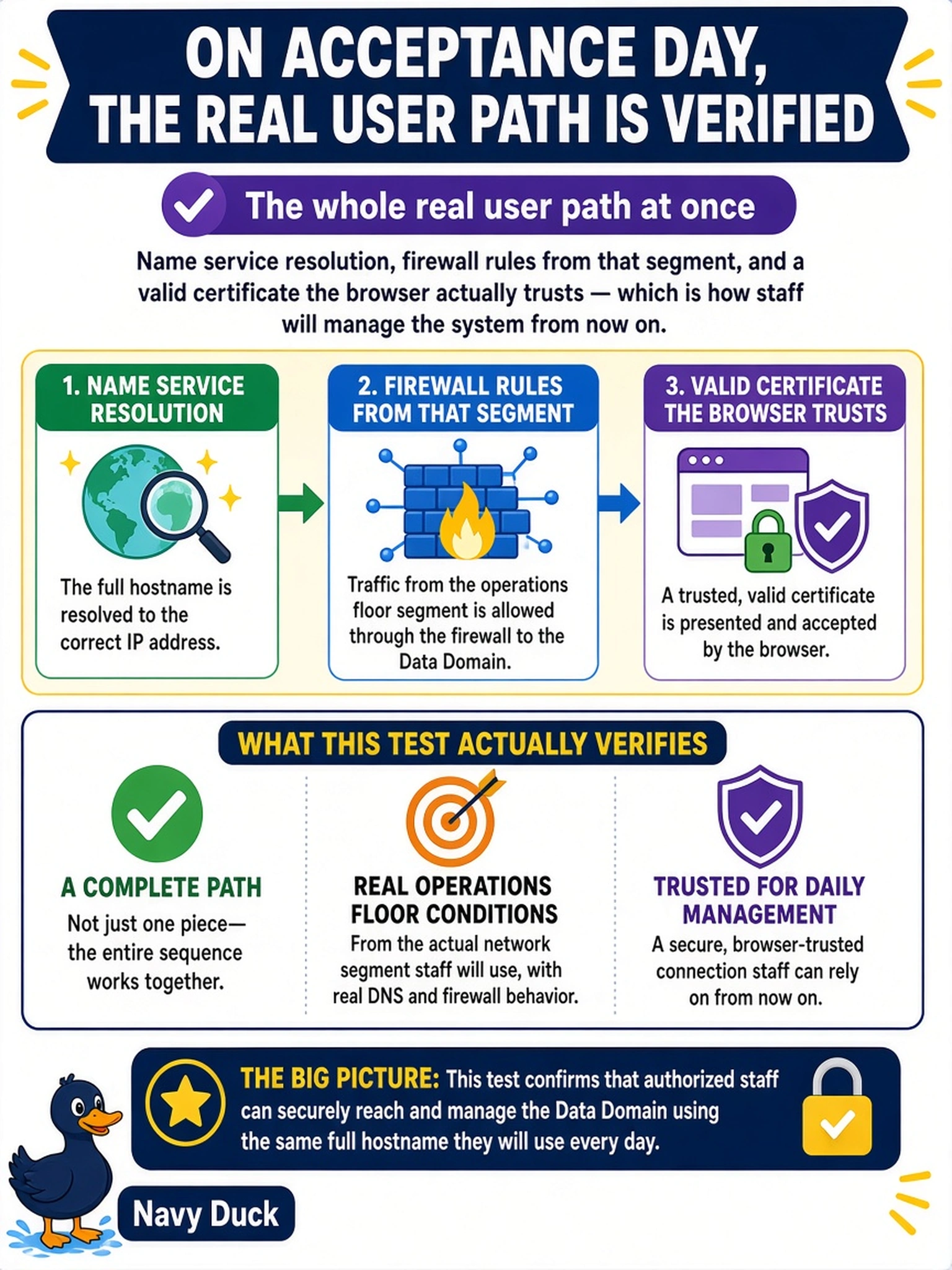
The first click from the real network is worth ten console checks. Loading the GUI by full hostname from the operations floor sweeps DNS, firewall, and certificate trust in one motion - and it's the exact way your team will log in forever after. Test the paths people actually walk.
Full Explanation
A single successful browser session quietly validates a chain of services: the appliance's FQDN must resolve from the client's name servers, a route and firewall policy must carry TCP 443 from the operations segment to the management address, and the served certificate must match the typed hostname and chain to something the browser trusts. Because staff will manage the system over exactly this path forever, testing it from a real workstation on a real segment is representative in a way the install console never was. Calling it a DNS test alone under-reads the stack - a name can resolve while the firewall drops the session or the certificate is untrusted, and each failure still reads as 'the GUI doesn't work' to whoever meets it first. The install laptop proved one source segment, one browser, and one trust store; other networks carry other firewall rules and other machines carry other certificate authorities, so that result does not generalize. The certificate-only framing is also false: browsers will happily load pages with the wrong name or an untrusted chain after a scary interstitial, so 'it loaded' is not 'it is trusted' - acceptance means it loaded with no warnings. Exam caveat: import the corporate CA once, properly, rather than teaching admins to click through warnings, which trains away the very signal this test produces. Operational check: a login from an operations-floor workstation by FQDN with no certificate warning, recorded on the acceptance sheet.