
An NDMP target is configured on a Data Domain and a filer's backups will run through it, but no NDMP job has ever been run. What proves NDMP connectivity in this situation?
Select an answer to reveal the explanation.
Short Explanation
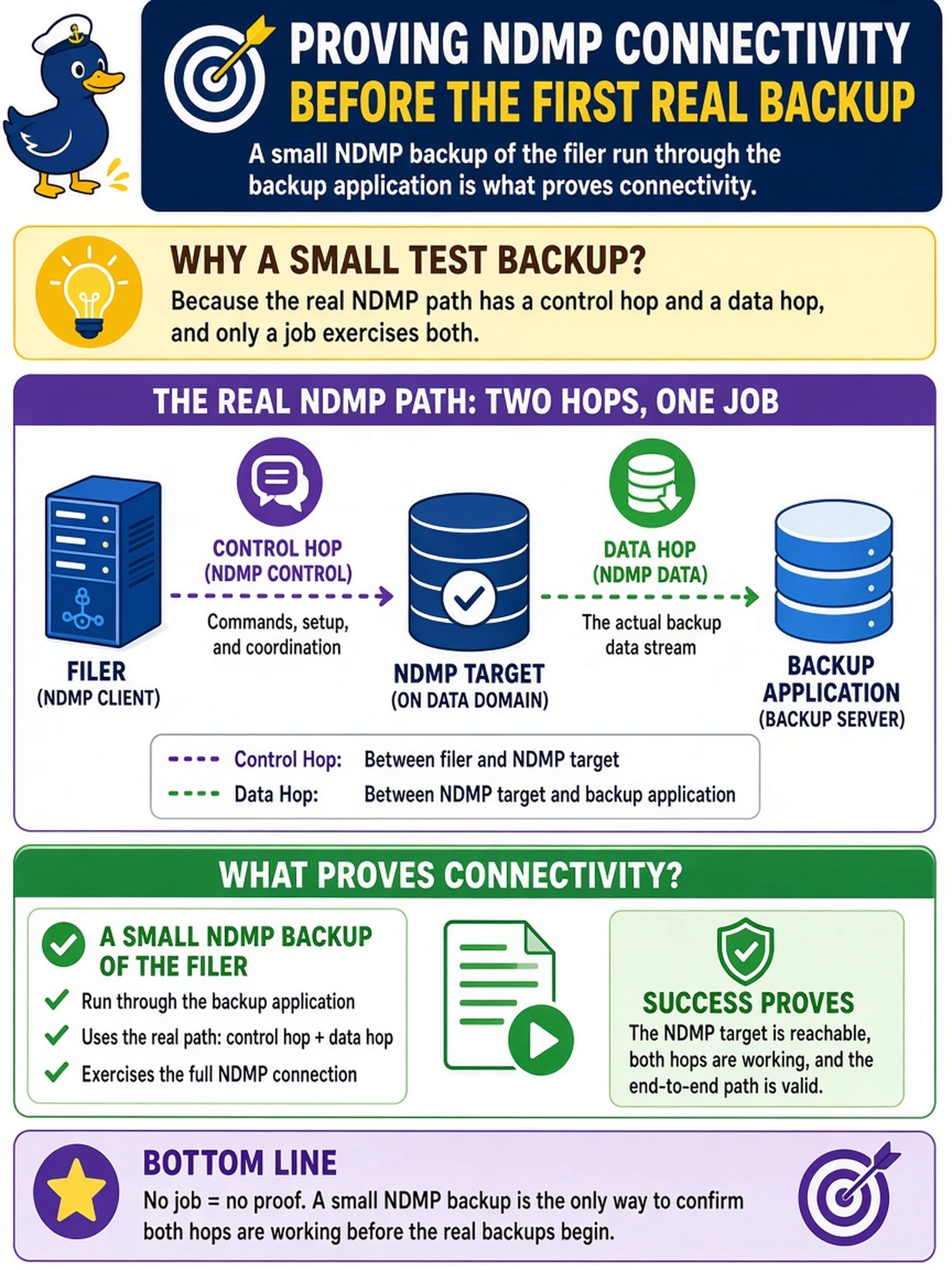
Two endpoints configured, zero sessions - that's Schrödinger's backup. NDMP earns its proof on a real job: the filer streams, the appliance receives, and the application brokers the exchange. Run one small job and you've turned the pairing from theory into fact.
Full Explanation
NDMP splits the work: control traffic runs between the filer and the backup application's media server side, while the backup data itself streams from the filer to the storage target. That two-hop architecture is why screenshots and pings prove so little - credentials, service enablement, reachability across each hop, and the write path all have to line up before data moves, and a real, small backup job is the one action that demands all of them simultaneously. A network test from the appliance toward the filer checks one address on one path and skips the protocol exchange entirely; NDMP sessions are negotiated between the participating services, so an ICMP-shaped answer answers nothing about the session layer. The appliance-side protocol setting is genuinely required but is half a handshake: the filer's own NDMP service, its authentication, and the media-server reachability are equally decisive, and none of them live in the appliance's protocol page. Mounting a CIFS share between the hosts confuses transport families once more - NDMP data does not ride file shares, and a successful mount is evidence about a path this backup method never uses. Exam caveat: validate the restore direction too - a small NDMP restore of one directory - because a backup that has never been restored proves half a lifecycle. Operational check: a completed NDMP job with the filer's own logs showing a successful session, plus a small restore, recorded on the acceptance sheet.