
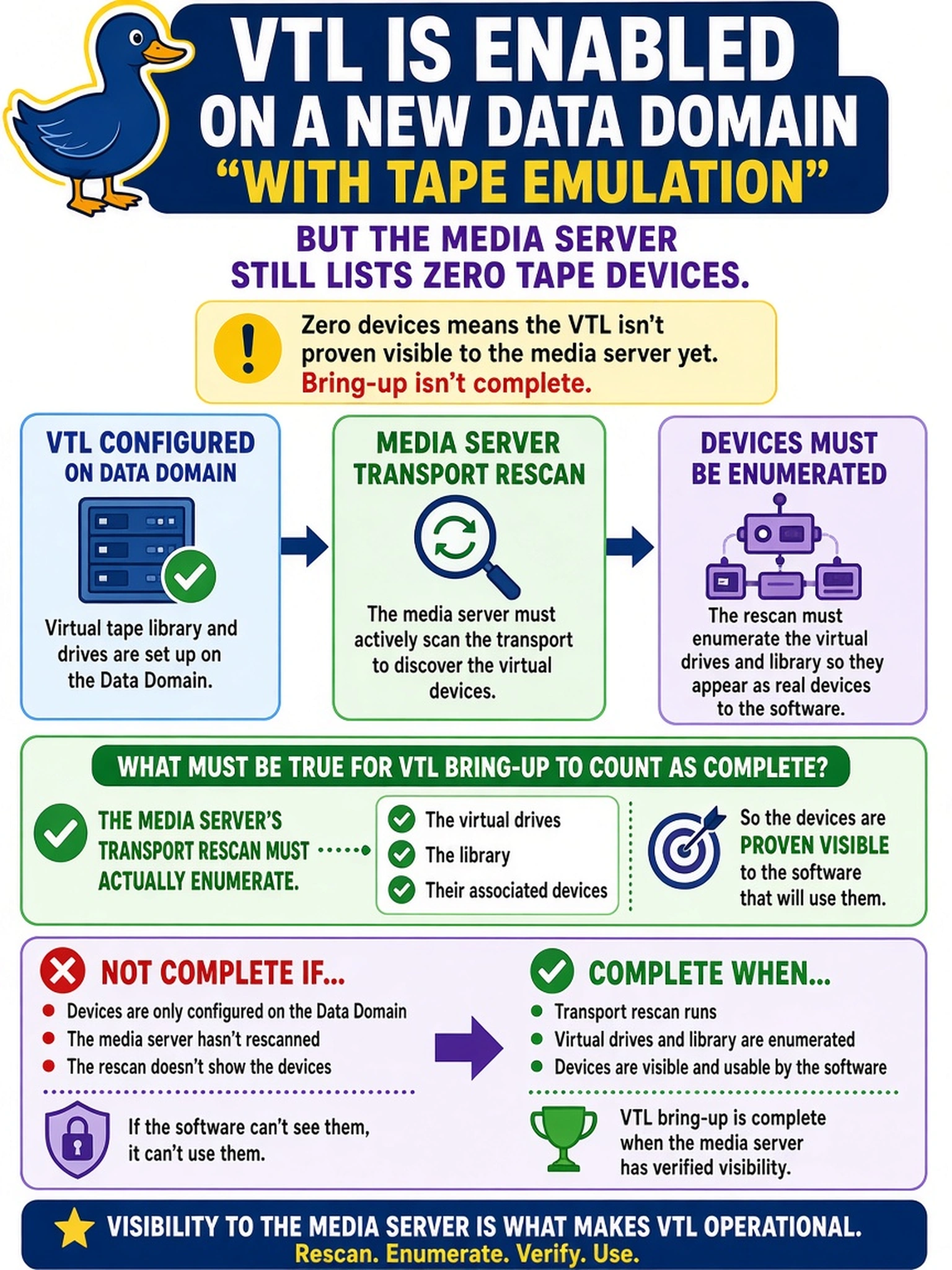
VTL is enabled on a new Data Domain with tape emulation configured, but the media server still lists zero tape devices. What must be true for VTL bring-up to count as complete?
Select an answer to reveal the explanation.
Short Explanation
A tape library your backup software can't see is a very expensive paperweight. The finish line isn't a green light on the appliance - it's the media server rescanning its bus and actually listing the drives. Go count the devices where they're supposed to live.
Full Explanation
VTL presents tape devices over a storage transport - fibre channel or iSCSI - and the consumer's view is the only one that matters for acceptance. A rescan on the media server that enumerates the expected virtual drives and library proves the whole chain: storage ports up, zoning or target mapping correct, LUNs presented, and drivers claiming the devices. Until that enumeration happens, a zero-device list is simply the untested state and says nothing either way. Mounting a filesystem share is answering a different question: VTL is not file service - confusing the protocol families means the tape path stays entirely unverified even though something mounted successfully. The appliance showing the service enabled is one half of a handshake; the most common bring-up faults - wrong zone, unmapped target, HBA on a different fabric - live on the consumer and transport side, exactly where an appliance-side check cannot reach. Blindly restarting media-server services to clear a phantom cache replaces diagnosis with superstition: if the transport genuinely is not presenting devices, a restart changes nothing, and if it does change something, you never learned what. Exam caveat: after enumeration, the drive and library names must also be bound correctly inside the backup application's own device configuration. Operational check: the media server lists the expected virtual drives and library after its scan, and a small write to a virtual drive completes.