
DD Boost is enabled and configured on a Data Domain, but the backup application side has not been tested yet. What completes verification of the optimized path?
Select an answer to reveal the explanation.
Short Explanation
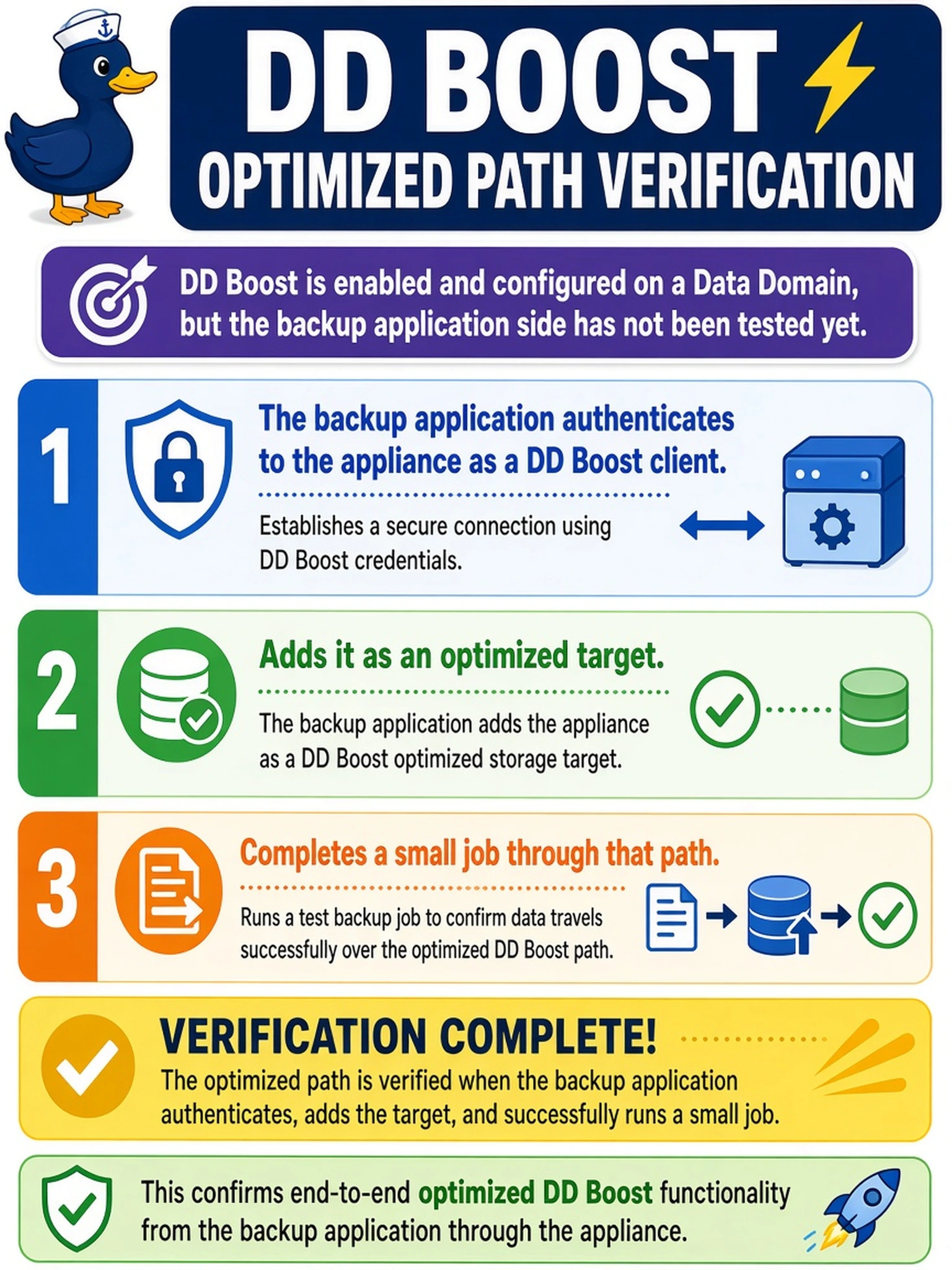
Boost is a two-way conversation and you've only said your half. The proof lands when the backup app authenticates to the Data Domain, picks it as an optimized target, and pushes a small job through. Until the application side says yes, the path is a wish, not a fact.
Full Explanation
DD Boost moves part of the deduplication work to the client side, so the path only exists when the application genuinely speaks to the appliance: a configured client or backup-host credential authenticates, the appliance registers as an optimized target inside the application, and data written through that relationship lands with the client-side processing the feature is named for. A small job through the optimized target proves credential agreement, storage-target assignment, and the running data path in one pass. Appliance-side filesystem-online state is a genuine prerequisite but says nothing about authentication or whether the application even sees the target; the most common failures - a mismatched client password, a target that never got added - are invisible from the storage end. Port-level reachability checks are a component of troubleshooting, not the definition of verification: an open port happily serves a rejected login. Licensing is an enablement precondition; the client negotiates with a live configured service, and a stored license key has never once authenticated a session on its behalf. Exam caveat: confirm the job actually took the optimized route - application or client logs naming the Boost path - because a completed job can silently fall back to a standard path and teach you nothing. Operational check: a small authenticated backup showing the optimized path in the application's job log, attached to the acceptance record.