
The firewall team files a ticket asking for "the Data Domain ports" for the upcoming deployment, and the engineer starts pasting the complete list of every port the appliance platform could possibly use, from documentation, into the request. What is the correct way to build that firewall request?
Select an answer to reveal the explanation.
Short Explanation
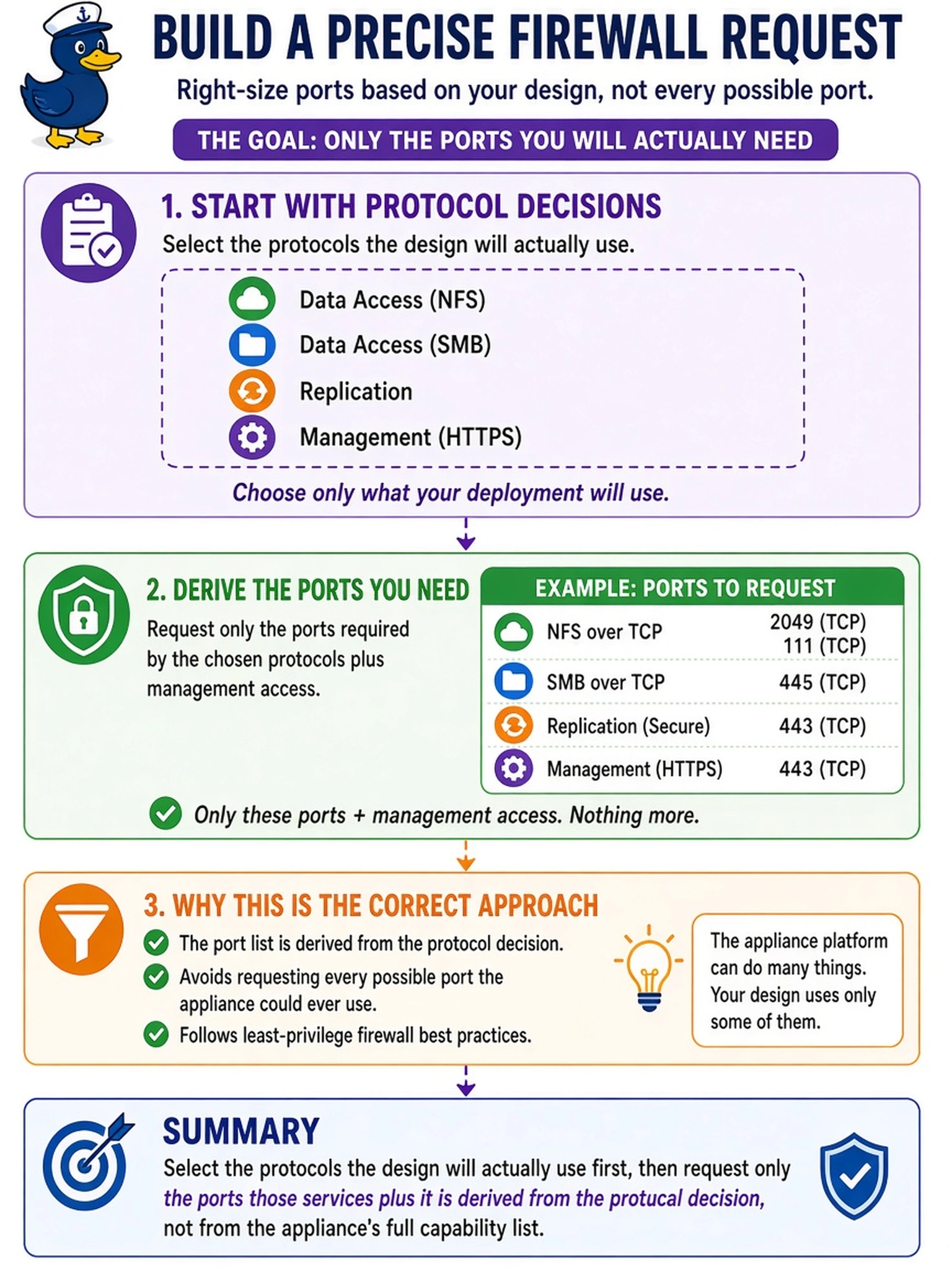
The firewall doesn't need every port your appliance could theoretically speak, only the ones it will actually say. Decide the protocols first, Boost here, CIFS there, S3 for the archive, add management access, and open exactly those and nothing else. Everything-from-the-manual is how a backup appliance quietly becomes the most exposed host in the datacenter.
Full Explanation
Connectivity design sits upstream of firewall policy: a deployment picks protocols per consumer, and the appliance only needs ports open for the services actually enabled plus the management paths administrators use. Deriving the request that way keeps unused listeners dark, reduces the attack surface of a system that holds every copy of the data, and makes the rule set auditable against the design document itself. Opening the entire documented set trades real security posture for convenience, since an unused service's listener is still a reachable attack surface regardless of the host's trusted role, and trust is not an access control. Data flows do not ride the management channel, so a management-ports-only request would silently break every backup path once traffic started, because each enabled service terminates its own protocol sessions. Relying on unspecified appliance-side filtering to neutralize overly open rules is an unverified assumption that contradicts least exposure, since open ports invite exactly the probing the filter would have to survive. Exam caveat: the request must also cover service dependencies such as DNS, NTP, directory, mail, SNMP, and replication peers. Operational check: after rules are applied, test one representative backup flow per enabled service and confirm an unused service is unreachable from a client.