
The cable dressing looks immaculate, except every hook-and-loop strap is cinched directly over the connector bodies 'so nothing wiggles.' What must be corrected in this dressing?
Select an answer to reveal the explanation.
Short Explanation
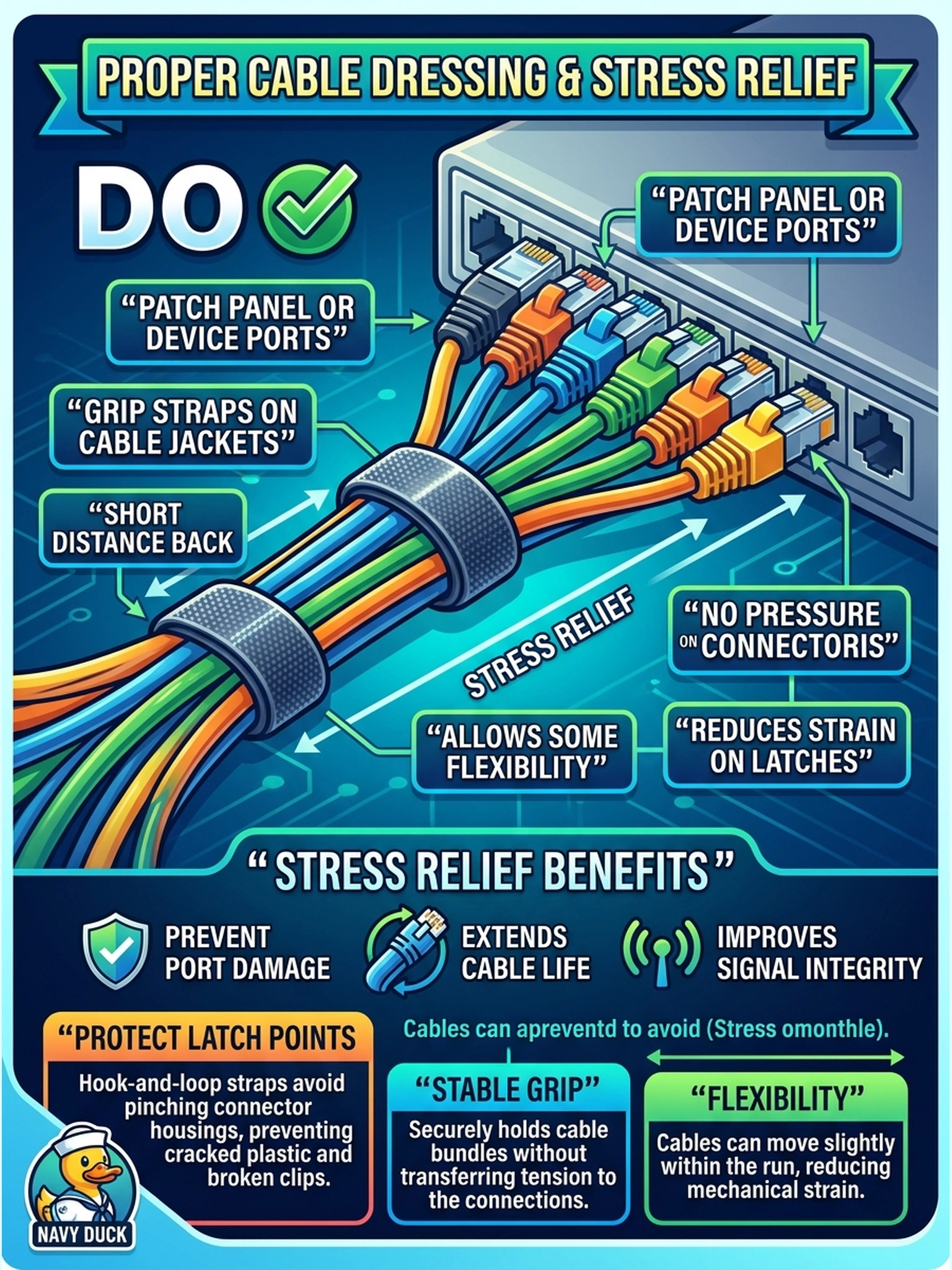
Straps hold bundles, not connectors. Cinch velcro over a connector body and every future service move pulls on the latch and housing instead of the jacket — that's how immaculate cable turns into an intermittent link. Dress the bundle and leave your connectors unstressed.
Full Explanation
The point of dressing is to keep tension off the connector-to-port interface. A strap cinched over a connector body transfers every future service action — pulling a shelf, tugging the bundle — into the latch and housing, which are exactly the parts holding the electrical contact, so a rack that looks immaculate today is being dressed toward intermittent links. Correct practice grips the cable jacket a short distance back from the connector, leaving housings free and latches reachable. Swapping hook-and-loop for zip ties fails because fastener type was never the problem: a rigid tie cinched over a body transmits the same force and adds a cutting hazard, while hook-and-loop remains the preferred reusable dressing material. Routing straps over the latch fails by concept: the latch provides connector retention against withdrawal, not strain relief for a bundle. Cinching tighter fails causally — walk-out is prevented by fully seated latches and managed slack, while a rigidly clamped bundle only increases the force delivered to the interface when anything moves. Exam caveat: dressing quality is part of the acceptance criteria for the cabling task itself. Operational check: walk every strap and confirm it sits on jacket, not hardware, and that each connector is reachable and serviceable without cutting into a loaded bundle.