
While dressing the rack you find the shelf interconnects bundled tightly along the PDU run, directly behind the power cords. What is wrong with this practice, and what should change?
Select an answer to reveal the explanation.
Short Explanation
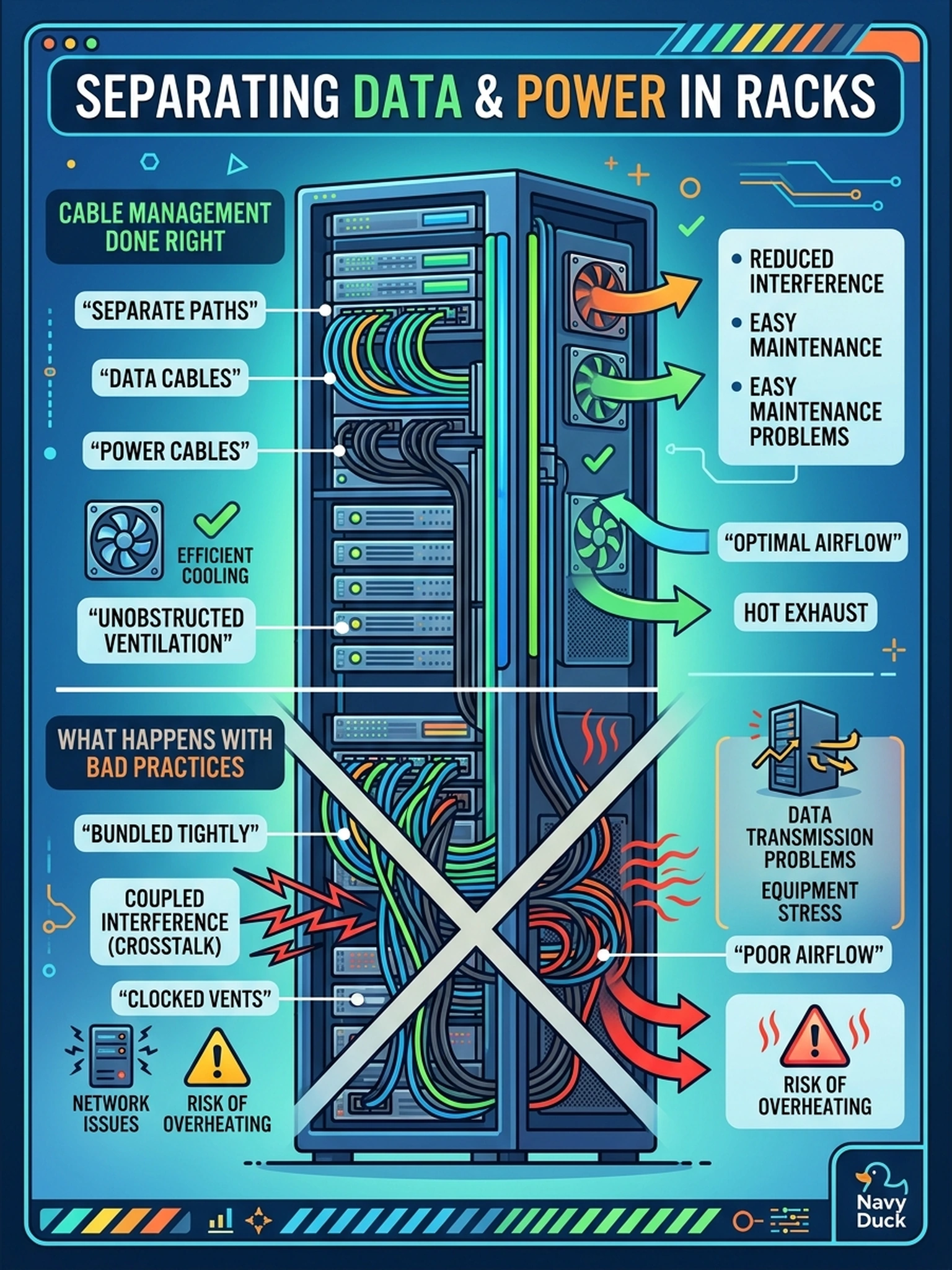
Cable dressing isn't cosmetics — it's part of the design. Bundling data in with the power run invites interference, and that fat wad hanging over the vents can rob your shelves of cooling. Give the interconnects their own path and let the cold air flow.
Full Explanation
Cable dressing exists for physical reasons, not aesthetic ones. Running interconnects tightly bundled alongside a PDU's power run places data conductors in the electromagnetic field of current-carrying conductors for the full length of the shared route, and a thick bundle dressed behind the cords hangs over shelf vents and shadows the cooling path the enclosures rely on. The practice keeps the two systems separate: data cabling rides its own management lane, dressed with bend radius preserved, clear of power hardware and of any vent or cold-aisle path. Claiming the strap type makes a shared run safe fails because no fastener shields — the concern is proximity, not the tie. Claiming interference radiates only upward fails by concept: coupled noise has no directional preference, it follows physics rather than rack layout. Claiming the placement is fine as long as connectors feel firm conflates two practices — connector strain belongs on the jacket, while bundle placement belongs in its own lane. Exam caveat: separation of data and power routes and clearance of airflow are checkable criteria at a rack build audit. Operational check: trace each dressed run from head to last shelf and confirm the interconnect bundles sit in a dedicated lane with every vent visibly unobstructed.