
A rail bracket arrives with a bent mounting flange, and the tech reaches for a rubber mallet to straighten it out and press on. What should happen instead?
Select an answer to reveal the explanation.
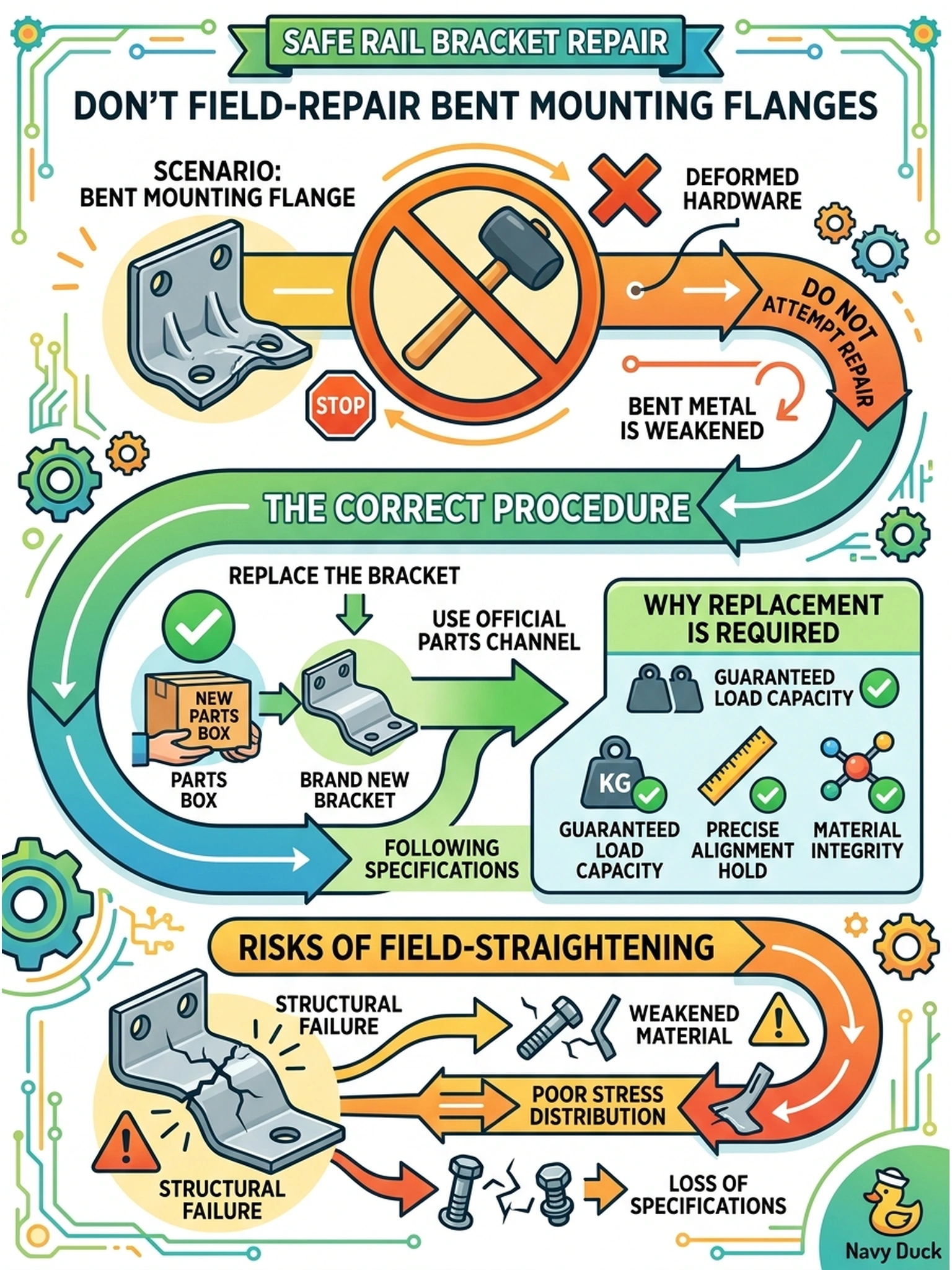
Short Explanation
A bent bracket isn't a puzzle for your mallet — it's a parts request. Cold-bent steel looks fine and holds nothing fine, and your rack doesn't know the difference until a unit drops. Swap it through the parts channel, write it in the log, and build it right the first time.
Full Explanation
A bent flange means the bracket took a hit between factory and site, and its structural geometry is already compromised. Straightening sheet metal with a mallet work-hardens and stretches it, leaves micro-cracks along the bend, and almost always leaves the mounting surface slightly out of flat — so the rail it carries sits at a subtly wrong height or angle and the load path the kit was certified for no longer exists. The documented path for damaged hardware is replacement through support or parts channels, with the installation record noting the damage, the parts request, and the deferral of that unit's mounting until the replacement arrives. The straightedge check fails by concept: flatness is visible, strength is not — fatigue and micro-cracking do not show up on a visual inspection. Sharing the load across the other three corners fails by concept: four-post support assumes every bracket meets spec, and an under-rated corner transfers force the others were never sized to carry. Trimming a flange creates an uncertified part with sharp edges next to hands and cables. Exam caveat: for rails, brackets, and chassis ears alike, damaged mounting hardware is replaced, never repaired. Operational check: inspect every rail-kit piece against the parts list at unbox, tag and bag anything damaged for the parts request, and hold the affected unit's mounting until the replacement lands.