
Racking is finished, and before cabling starts the project asks for proof of the final layout. What belongs in the installation record at this point?
Select an answer to reveal the explanation.
Short Explanation
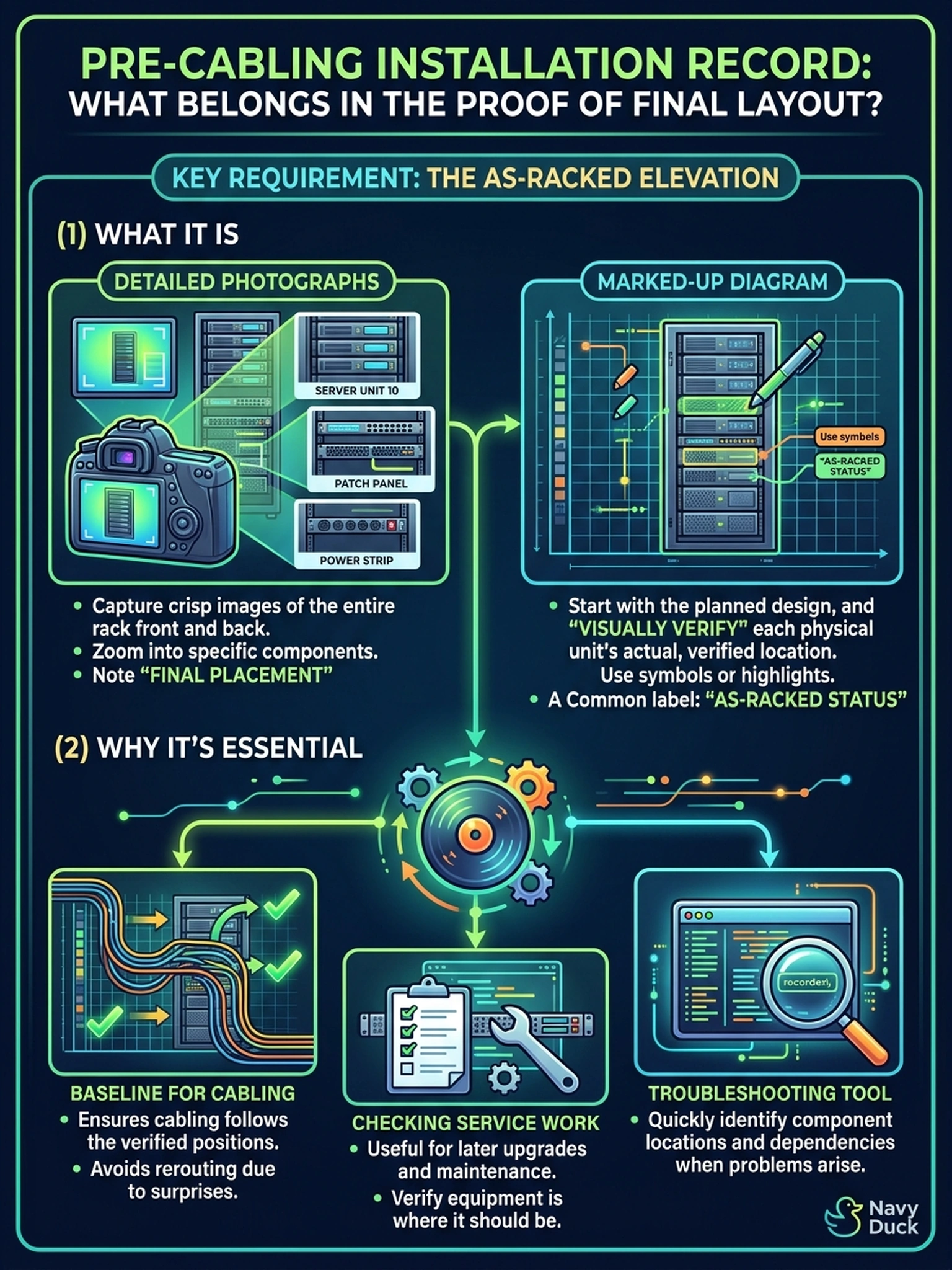
A rack you just finished is the easiest rack you'll ever photograph. Snapshot the elevation now — head, shelves, exact positions — because once the cables are in, that baseline gets buried and every future question becomes an argument. Documentation with a date on it beats memory with a grudge attached.
Full Explanation
An as-racked record converts the physical state of the install into verifiable documentation at the moment that state is true. Photographs or a marked-up elevation capture each unit's actual position, orientation, and rack context; the cabling plan is then written against what actually went in, and future service work compares itself to that baseline. Doing it before cabling is deliberate: empty racks photograph cleanly, unit identities are legible, and any mismatch between planned and actual elevations surfaces before cables commit the layout. The 'record only at the end' argument fails by concept — the as-racked baseline is the pre-cabling state, and waiting buries the evidence under dressed cable. A parts-tally is real paperwork but belongs to the inventory task, not the layout record. A neighbor-tenant signature is a facility access-policy matter, not a component of the installer's record. Exam caveat: installation documentation questions ask for the artifact tied to the task just completed — racking closes with an as-racked elevation. Operational check: photograph front and rear elevations with legible unit positions, annotate deviations from the planned elevation, and file the set in the install record before the first cable enters the rack.