
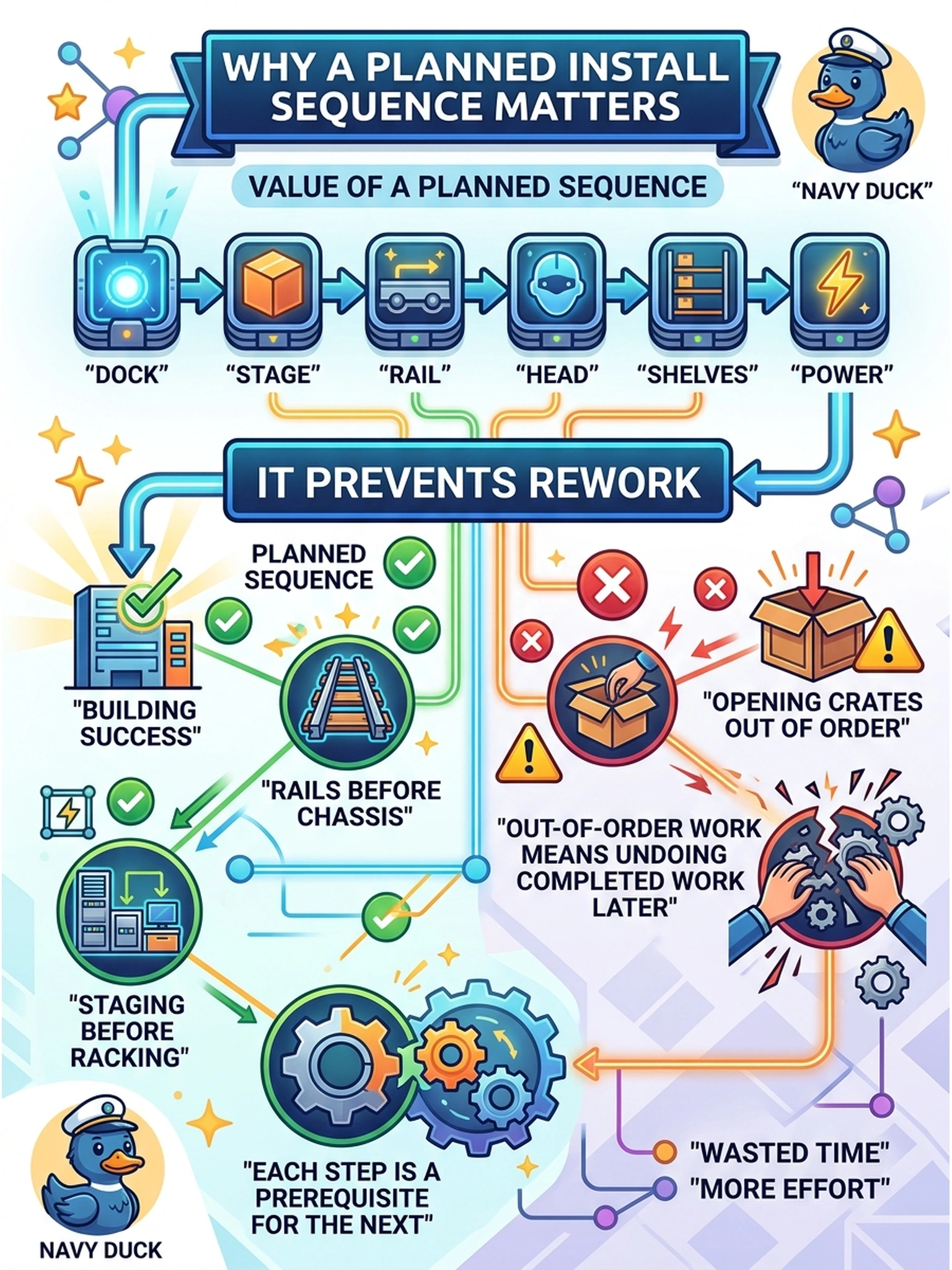
The install-day schedule lists dock, stage, rail, head, shelves, and power as ordered steps instead of letting the crew open whichever crate is handiest. What is the value of a planned install sequence?
Select an answer to reveal the explanation.
Short Explanation
Think of install day like a kitchen at dinner rush: you mise en place first, and nothing hits the pan before it's prepped. Dock, stage, rails, head, shelves, power — each step feeds the next, and skipping ahead just buys you expensive do-overs. The sequence isn't red tape; it's rework insurance.
Full Explanation
A racking project is a chain of dependencies: receive and inventory at the dock, stage and inspect on a bench, install rail kits, mount the head, mount the shelves, then power and network. A planned sequence exists because each step produces what the next consumes — racking a chassis before its rails are installed means unmounting it, cabling before mounting means re-dressing everything, and powering on before verification means debugging live in front of a customer. The lift-crew point fails by concept: safe lifting practice is governed by weight, and a schedule does not reduce the personnel a heavy lift requires. Skipping staging fails by concept for the same reason staging exists: the staged bench is where shipments are inspected, service tags are verified, and transit damage is found before it is bolted into a rack. Vendor witness-clock claims are invented — a planned sequence is installer quality control, not a billing mechanism. Exam caveat: on 'which order' questions, test each option against prerequisite logic; wrong answers routinely place a dependent step before its dependency. Operational check: at the end of each phase confirm its output — rails verified, head secured, shelves secured — before starting the next phase.