
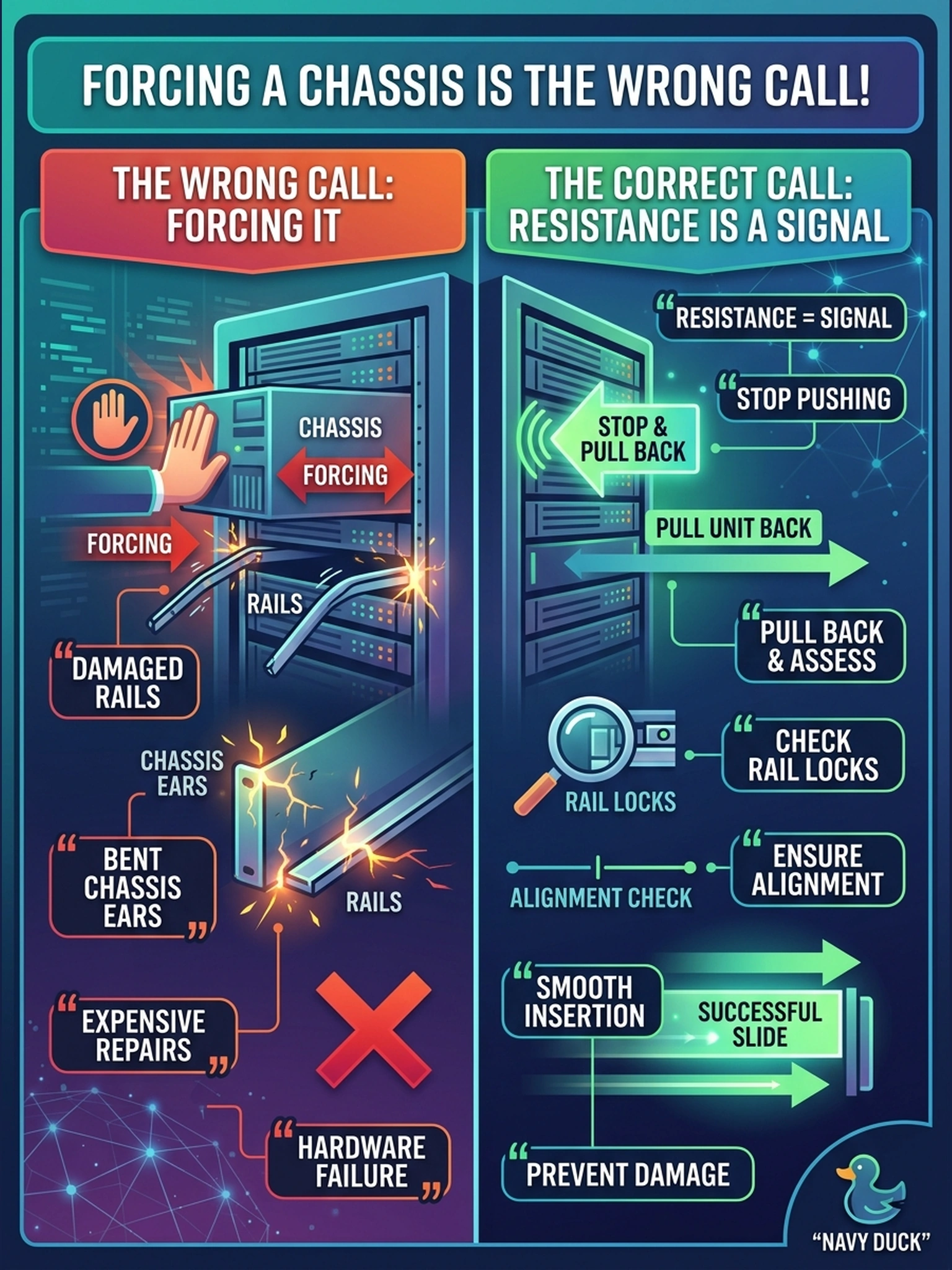
Mid-slide, a Data Domain head meets firm resistance, and the team leader tells the crew to 'push through it.' Why is forcing the chassis the wrong call?
Select an answer to reveal the explanation.
Short Explanation
Hardware should click and slide, not grind. When a chassis binds, your first instinct — push harder — is exactly what bends a rail kit. Pull it back, find the catch (locks, level, clearance), and then it'll seat clean.
Full Explanation
A chassis on correctly installed rails moves with modest, even force. Firm resistance mid-travel means something is out of phase: a rail lock not dropped into position, a chassis not level, an obstruction behind the unit, or rails mounted on mismatched holes. The disciplined response is to stop, retract the unit a few inches, inspect what is engaging, correct it, and retry. Momentum is the worst available tool: rail members bend, chassis ears deform, lock hardware cracks, and a forced unit can sit in the rack under hidden stress long after installation. The 'warm the rails / gentle force is sanctioned' story is invented — nothing in a rail procedure involves thermal preparation or permitted impact seating. A running start does not remove misalignment; it drives through it and converts a correctable condition into damaged hardware. Removing drives changes weight, not alignment, and a properly railed unit is rated to slide at its normal configuration. Exam caveat: any 'resistance during installation' scenario — chassis, cards, carriers — has the same answer shape: stop, verify, then proceed. Operational check: before the retry, confirm rail locks are seated, both rails share matching hole positions, the slide path is clear, and the chassis is level as it is offered.