
Once the head and all three shelves are mounted, a reviewer notices the installed total exceeds the rack manufacturer's published static load rating. What does that rating mean in this situation?
Select an answer to reveal the explanation.
Short Explanation
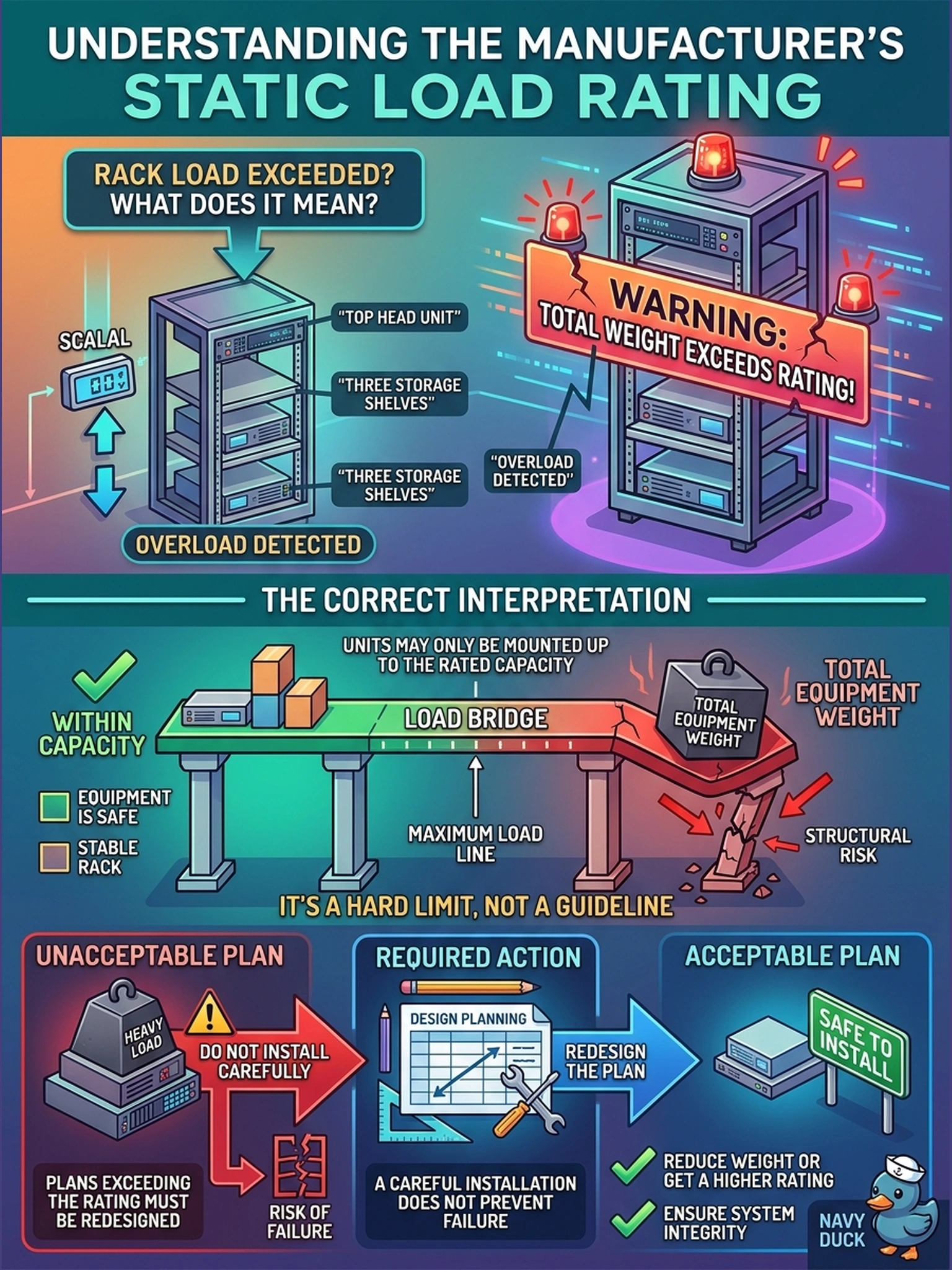
A weight limit is a weight limit, not a performance target. If the loaded rack's math blows past the manufacturer's rating, careful workmanship won't fix the math — you move units or you move racks. Check the rating plate first and let the numbers decide what goes where.
Full Explanation
A rack's published load rating is the manufacturer's certified ceiling — the mass the frame, posts, and mounting surfaces are tested to carry, usually with separate static and dynamic figures, the dynamic one lower and covering handling. Exceeding the static rating means the rack is being used outside its tested envelope, full stop. The remedy is redesign: fewer units, a lighter configuration, a second rack, or an engineering assessment from the rack manufacturer before installation proceeds. 'Bolting it down replaces the rating' fails by concept: anchoring controls tip-over, not frame capacity. 'Concentrating mass low raises the limit' inverts the physics — low loading is a best practice for stability, but the total ceiling comes from the frame's certification, not from clever placement. Treating the rating as only a dynamic figure is a misreading: the static number exists precisely for the loaded, stationary condition, which is how the rack will live. Exam caveat: when a scenario states the installed total exceeds the rating, the correct response is re-planning; compensation answers are wrong. Operational check: total the installed weight, compare it against the nameplate or spec sheet, and document the redistribution — with the arithmetic — in the installation record.