
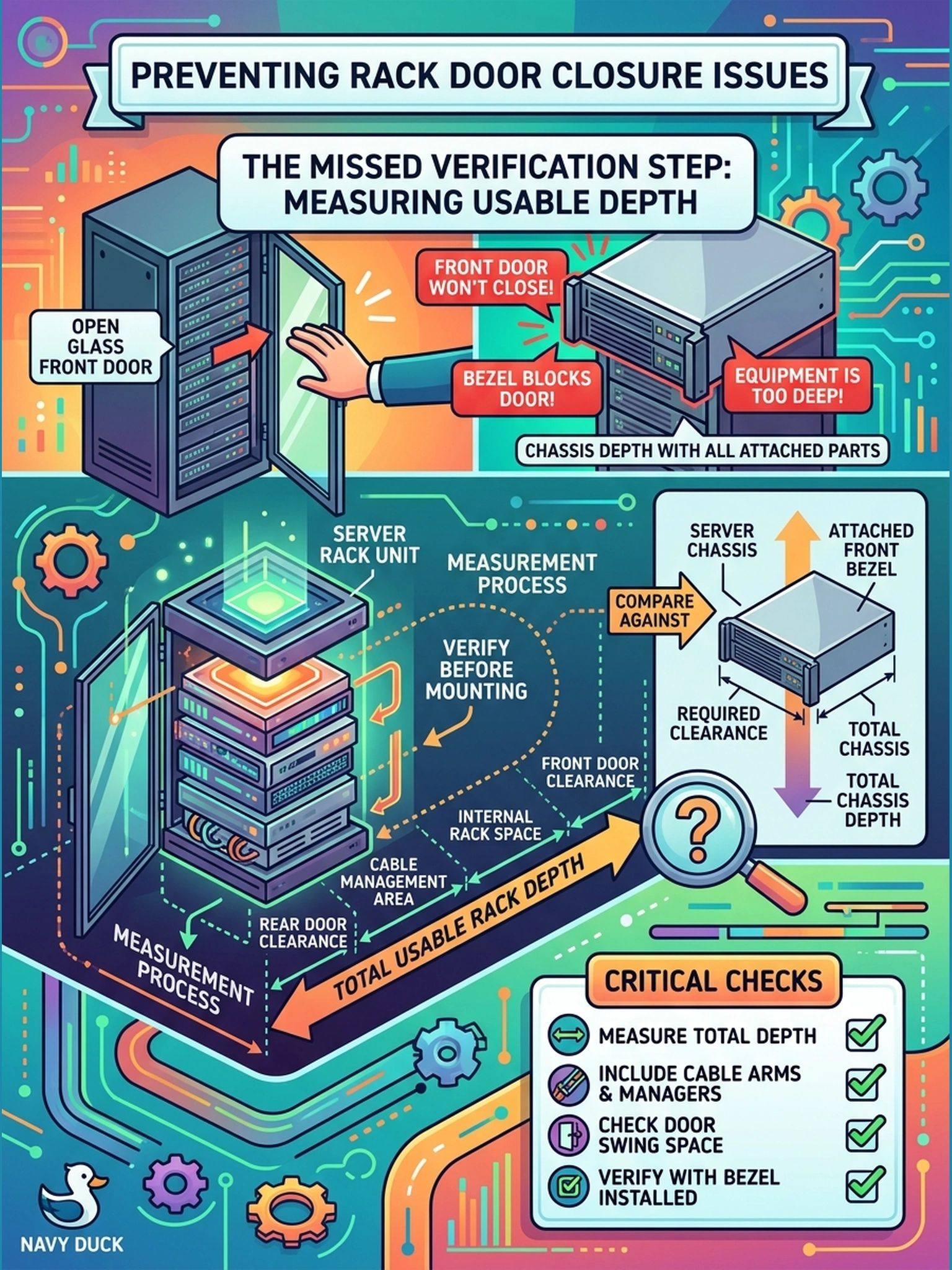
After the unit is mounted with its bezel attached, the rack's glass front door will not close. Which verification step was missed before mounting?
Select an answer to reveal the explanation.
Short Explanation
Here's the deal: the chassis is a box, the bezel makes it a longer box, and the rack's door is a very unforgiving deadline. You check the depth math—box plus bezel plus doors—before anything gets fastened. Ten minutes of measuring today beats a de-rack job tomorrow.
Full Explanation
A rack's usable depth is the post-to-post distance minus everything occupying the corridor—cable management and the doors' closing planes—while the chassis's depth includes every attached part such as the bezel. Depth verification before mounting exists to compare those two numbers while a position change is still free, which is exactly the check that was skipped here. Bezel removal as a universal rule fails by concept: the bezel is part of the supported configuration, and altering equipment to suit an unplanned rack puts improvisation before verification. Condemning the door is a category error—swapping glass for mesh changes the rack's depth envelope, security and airflow; a correct depth check avoids the debate. Testing the door after cabling reverses the order of operations: if the chassis fouls the door, late discovery turns a five-minute plan change into undressing cabling to re-rack. The mechanical section places rack-versus-chassis depth near the front for exactly this reason. Exam caveat: some racks list door-closed and door-swing depths separately—the verification uses the closed-door envelope. Operational check: measure the rack's door-closed clearance, compare against the specification's chassis depth including bezel, and record both numbers on the checklist's mechanical items before mounting.