
A fully populated head unit sits at the dock and a single customer technician offers to carry it to the rack 'like a web server.' The installation checklist lists the loaded chassis weight. What do the handling rules require?
Select an answer to reveal the explanation.
Short Explanation
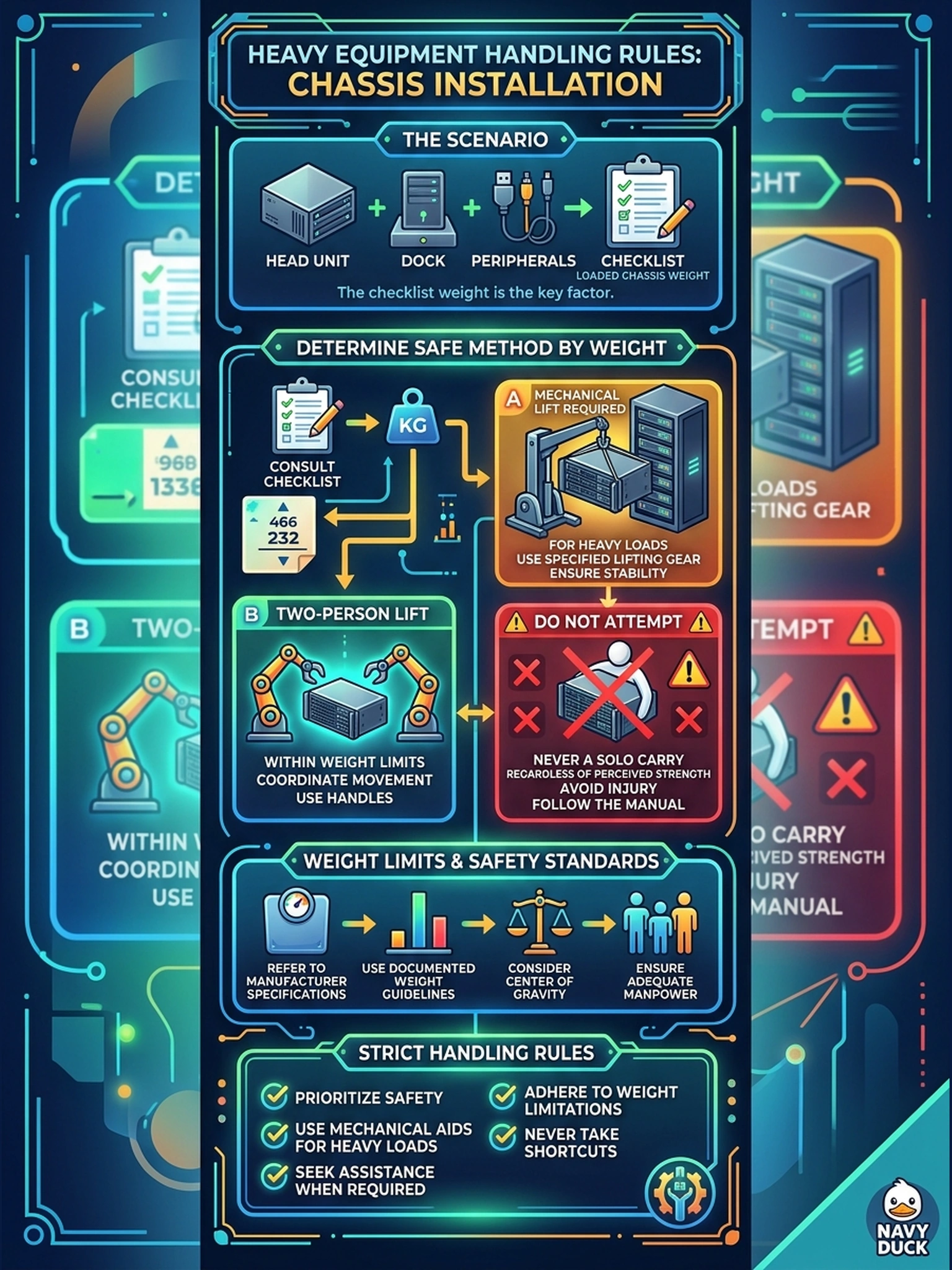
Physics doesn't negotiate at the dock. The loaded weight on your checklist exists so you pick the right number of hands—or the lift—before the unit leaves the pallet. 'Let me carry it' is the three most expensive words on an install day.
Full Explanation
Handling guidance for Data Domain chassis is written around the weight of the system as configured, because a fully populated head unit exceeds what one person should carry, and a dropped or shifted chassis injures people and destroys the equipment the whole visit exists to install. The checklist's role is to surface that weight before handling begins so the method—mechanical lift, or two-person lift within stated limits—is chosen deliberately rather than improvised. A short solo carry fails by concept: a weight limit does not become safe over fewer steps; the hazard is the peak load on one person at the moment the unit leaves the pallet. Trusting the rails to make carrying safe fails because a rail rating describes the static, installed load path—the transfer from hands to rails is precisely the dynamic event the rails' rating does not cover, and it is where an unrated handling method fails. Claiming limits begin at the rack inverts the facts: most installation injuries happen moving gear from dock to rack, which is exactly the interval handling rules govern. Exam caveat: loaded versus unloaded weight changes the class of the lift—drives and blanking hardware count; consult the weight for the configuration actually being moved. Operational check: read the loaded weight from the checklist, verify the lift's rated capacity or brief both lifters and clear the path, and stage the route before anything is lifted.