
At the staging area before racking, the checklist calls for unpack-and-inspection steps and handling-equipment guidance. The team's lift is rated below the loaded chassis weight and someone suggests 'being careful instead.' What does correct staging practice require?
Select an answer to reveal the explanation.
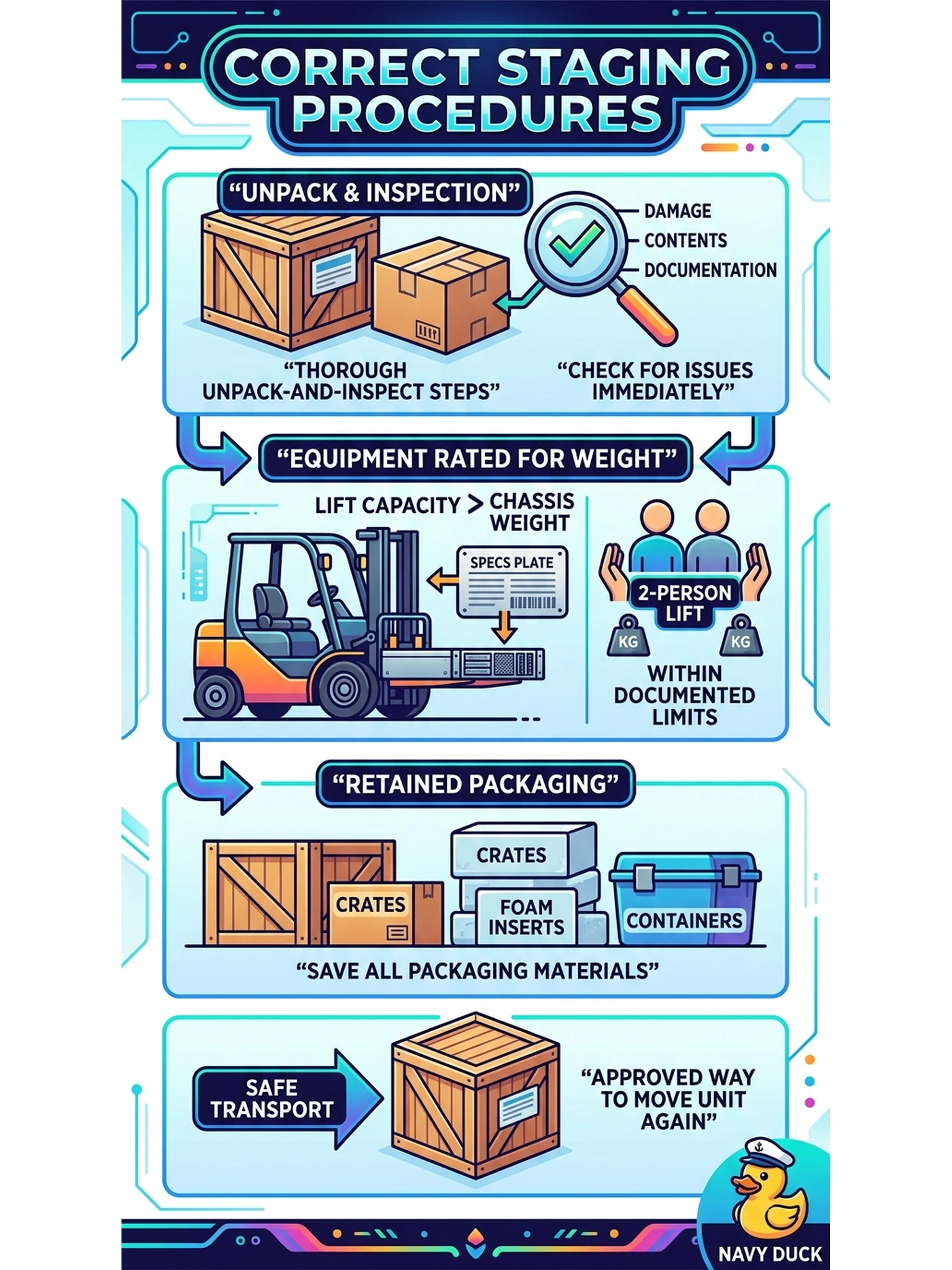
Short Explanation
The staging area is where the safety items on the checklist earn their keep. A lift rated below your chassis weight is a no in disguise—use gear rated for the job, keep the box, and let the unpack-and-inspect step catch shipping damage before the rack ever does.
Full Explanation
Staging separates inspecting heavy hardware from moving it in a tight aisle; the unpack-and-inspection steps catch shipping damage, confirm contents, and read the listed weight before handling. Handling follows the numbers: lifting equipment must be rated for the loaded weight, and where the documentation permits a two-person lift within limits, that method—not improvisation—is the procedure. Skipping inspection fails by concept: damage found after racking becomes a disputed claim, and the step captures evidence while packaging and shipping indicators are still available. Discarding packaging fails because the original materials are the tested means of shipping the unit later; without the box, a future move starts with improvised packing and fresh damage risk. Treating careful lifting as exempt inverts the purpose of a rating, which exists for load shifts and pinch points that care cannot eliminate. Believing opened cartons 'void claims' is backwards—the receiving record is what supports a claim. Exam caveat: packaging retention follows site fire codes and checklist guidance; the box never belongs in an egress path. Operational check: compare the lift's placarded capacity against the loaded weight on the checklist, stage on clear floor, and photograph shipping indicators before any disposal decision.