
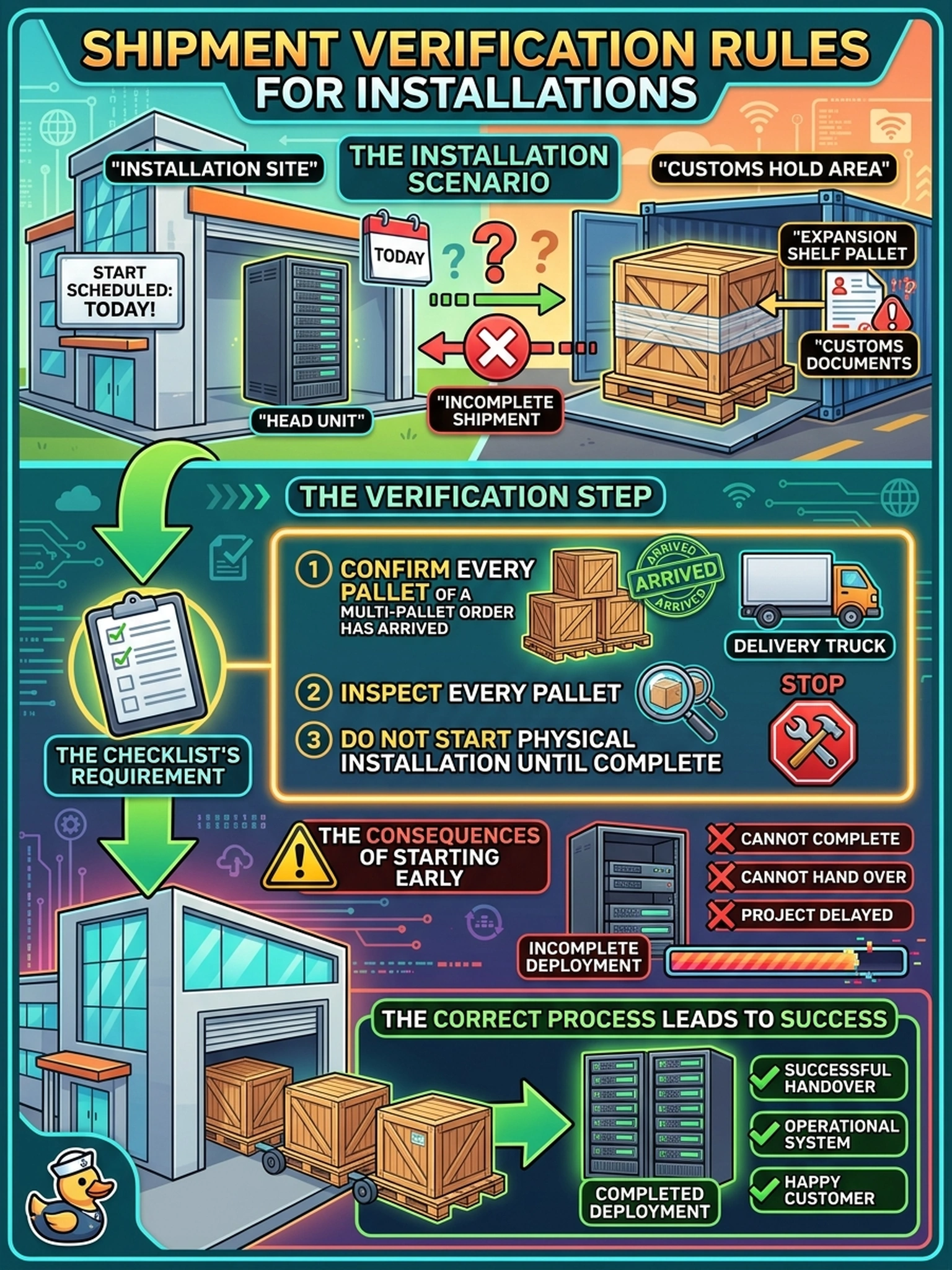
On install morning the head unit is staged and the schedule says start today, yet the paperwork shows the expansion shelf's pallet is still sitting in customs. What does the installation checklist's shipment-verification step call for?
Select an answer to reveal the explanation.
Short Explanation
A rack-and-stack is only done when the whole stack is there. The checklist wants every pallet on the dock and inspected before the first rail goes up, because a head mounted with no shelf behind it is a promise you can't test. Check the paperwork, then the crates.
Full Explanation
Multi-pallet orders ship on separate waybills, so one pallet can clear a port while its companion lags; the checklist's shipment-verification step exists for this: reconcile delivery against order, confirm every pallet arrived and was inspected, then start. Beginning the install while part of the system is missing inverts the dependency—the head's position, cabling plan and configuration work are sized by the final layout, and an incomplete install records a system nobody bought. Racking the head and finishing the shelves after handover fails by concept because reopening a delivered system drags access, change-control and risk back onto it. Ordering a duplicate shelf from another warehouse fails because a customs hold is a delay, not a loss; replacing hardware before the documented process declares it lost is an inventory error. Refusing the delivery fails proportionality—the checklist escalates and reschedules rather than treating a held pallet as a failed shipment. Exam caveat: carrier vocabulary varies; the tested principle is verifying delivery before installing. Operational check: list expected pallets against delivery waybills, log the delayed pallet's tracking reference and the escalation notice to the named contacts, and reschedule the install rather than start half a system.