
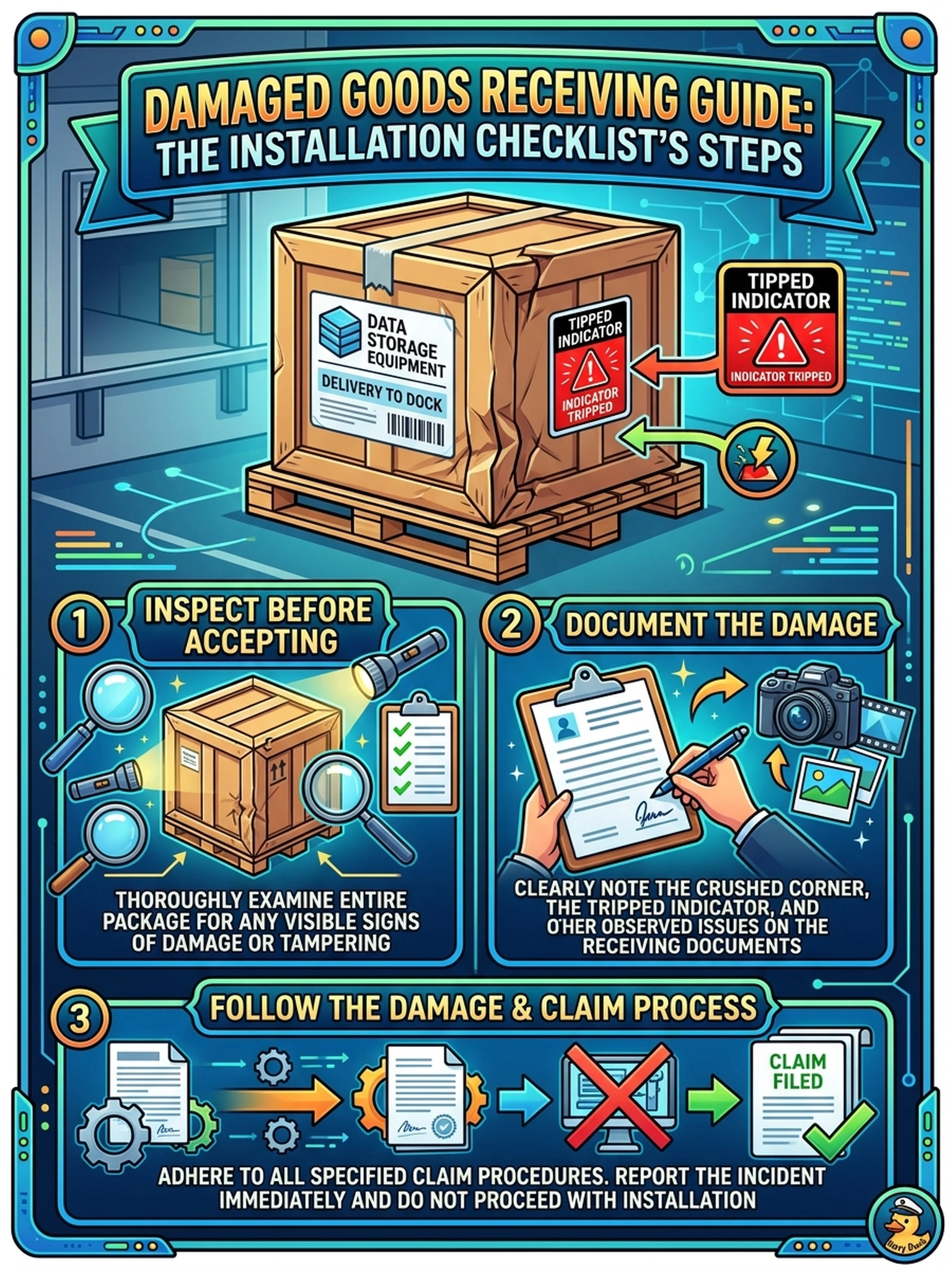
At the dock, a carton holding new Data Domain gear shows a crushed corner, and the tipped-package indicator on its side has tripped. The carrier driver waits for a signature. What does the installation checklist's receiving step tell the engineer to do?
Select an answer to reveal the explanation.
Short Explanation
Think of that tipped-package indicator as a witness that saw exactly what the driver won't admit. You inspect, document, and file per the checklist before signing anything clean—the process exists so a crushed carton becomes a replacement instead of a mystery failure six weeks from now. Sign first, and the witness never gets to speak.
Full Explanation
Shipping indicators and carton condition are time-sensitive evidence: the tilt or impact indicator records a handling event, and the receiving step of the installation checklist is to inspect before signature, document what is found—photographs, indicator status, carrier paperwork—and invoke the documented damage and claims process, so the vendor and carrier own a potentially compromised unit instead of the site discovering it weeks later as an unexplained fault. Signing cleanly fails as practice because the signature certifies intact arrival, converting a vendor responsibility into the site's problem once the paperwork trail is closed. Refusing the entire delivery over one damaged carton fails proportionality by concept—the checklist targets inspection and documentation of the affected unit, not blanket rejection of unrelated crates. Taping the damage quietly fails because it destroys the evidence the claim depends on and hides a possible internal fault from the receiving inspection. Exam caveat: some processes require a signed delivery note annotated with the damage, for example a noted or clause-signed receipt, and the exact local wording matters. Operational check: photograph carton, labels and indicator before opening, log the claim reference against that unit's service tag, and quarantine the carton until vendor guidance arrives.