
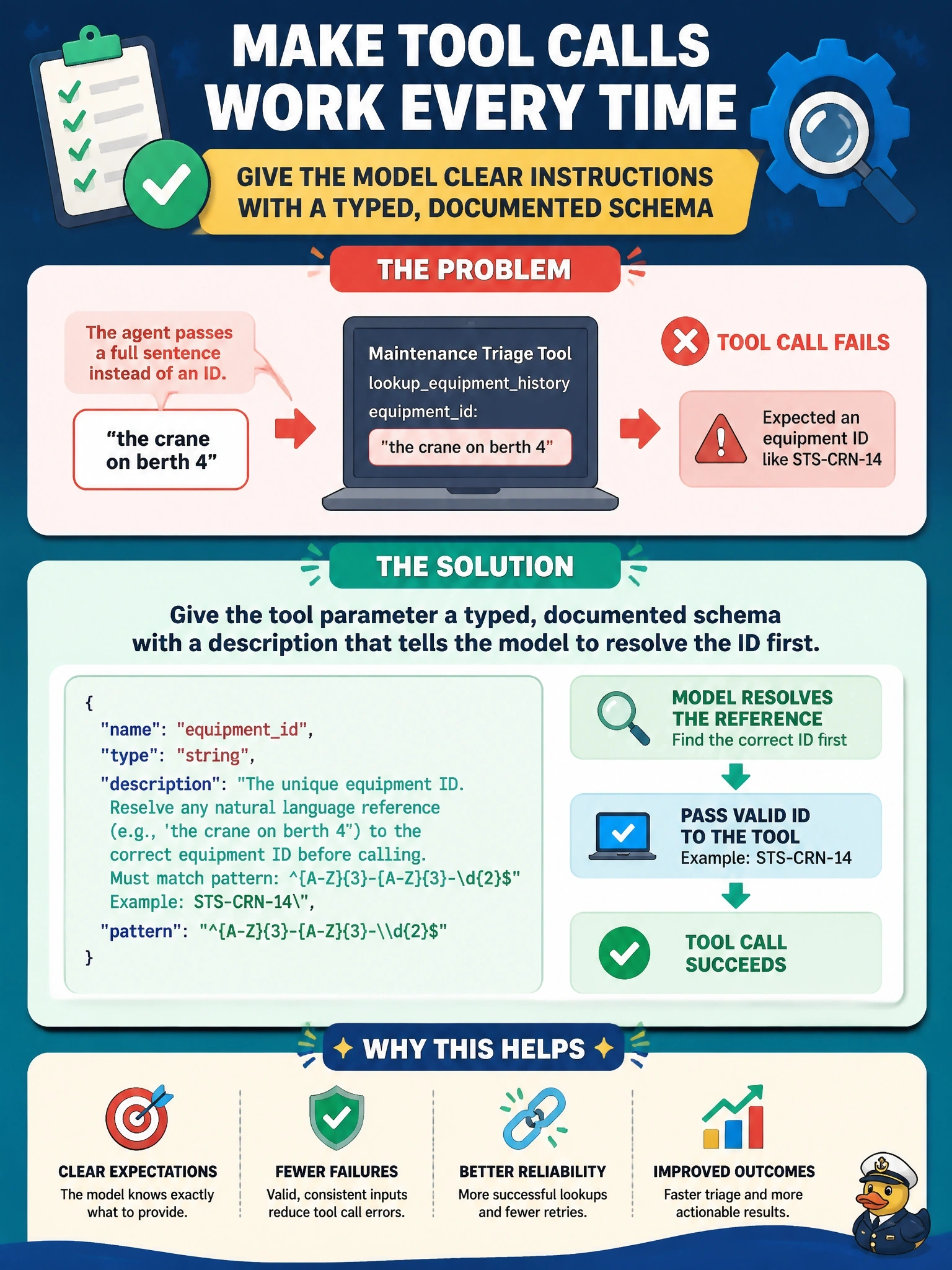
A maintenance-triage tool that looks up equipment history accepts an 'equipment_id' argument, but the agent sometimes passes a full sentence like 'the crane on berth 4' instead of an ID such as 'STS-CRN-14', and the tool call fails. What should the engineer change to reduce this?
Select an answer to reveal the explanation.
Short Explanation
If the schema doesn't say 'this has to be an equipment ID, not a description of one,' the model will hand you whatever's easiest to produce. Type the parameter, name it precisely, and describe the expected format -- the schema is doing half the teaching.
Full Explanation
A tool's parameter schema is part of its interface: a typed, well-described parameter tells the model exactly what shape of value is expected, and a documented format constraint (an equipment-ID pattern rather than free text) steers the model to resolve a vague reference into the correct value before calling, often by consulting an equipment-lookup tool first. Silently swallowing exceptions hides the failure from both the user and any monitoring, and does nothing to make future calls succeed -- it just converts a visible error into a silent wrong answer. Retrying blindly does not address the root cause; if the model does not know the expected format, a second attempt is just as likely to fail, and this wastes a model call for no benefit. Converting the tool into prose inside the prompt discards structured argument validation entirely, which is the mechanism that would have caught the malformed input in the first place. Exam framing: developing tools for an agent to call includes designing precise, typed parameters and descriptions, not just deciding that a tool should exist -- a loosely specified interface is a common source of failed multi-step reasoning.