
Inside a dental X-ray tube, high-speed electrons travel from the cathode and strike a small tungsten target embedded in the anode. Why is tungsten specifically chosen for this target material?
Select an answer to reveal the explanation.
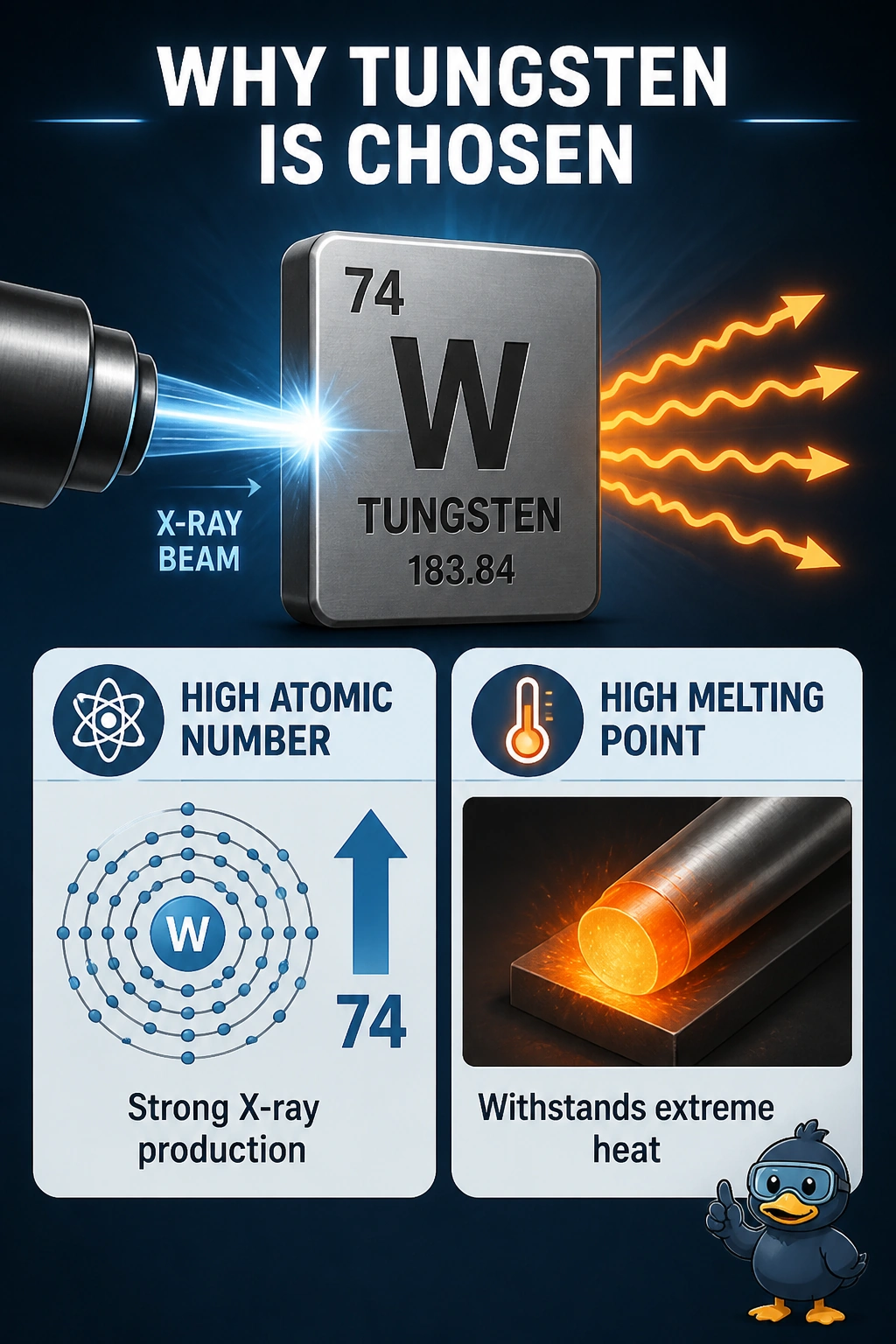
Short Explanation
Think of the anode target as a heavy-duty anvil taking a relentless barrage of high-speed electrons that mostly turns into heat. You need a metal dense enough to generate X-rays efficiently and tough enough not to melt, which is where tungsten shines.
Full Explanation
When electrons decelerate against the anode target, over 99 percent of their kinetic energy converts to heat, so It has a high atomic number and a high melting point explains why tungsten is ideal for efficient bremsstrahlung X-ray production without melting under thermal stress. Saying It absorbs all low-energy photons before they exit the tubehead confuses the target with the aluminum filtration disk placed in the path of the primary beam. Claiming It provides complete electrical insulation inside the glass envelope confuses the tungsten target with the surrounding vacuum and insulating oil inside the metal housing. Suggesting It focuses the electron stream tightly onto the cathode reverses both direction and component, because the negatively charged molybdenum focusing cup at the cathode directs electrons toward the anode. Caveat: tungsten alone dissipates heat relatively slowly, which is why the small target wafer is embedded in a copper anode stem to conduct heat away between exposures. Operational check: respect the X-ray unit's duty cycle and allow brief cooling intervals during full-mouth series so repeated exposures do not overheat the anode target.
Prefer to study offline? Printable PDF study book + test engine ($7.50, unofficial). These questions stay free here.