
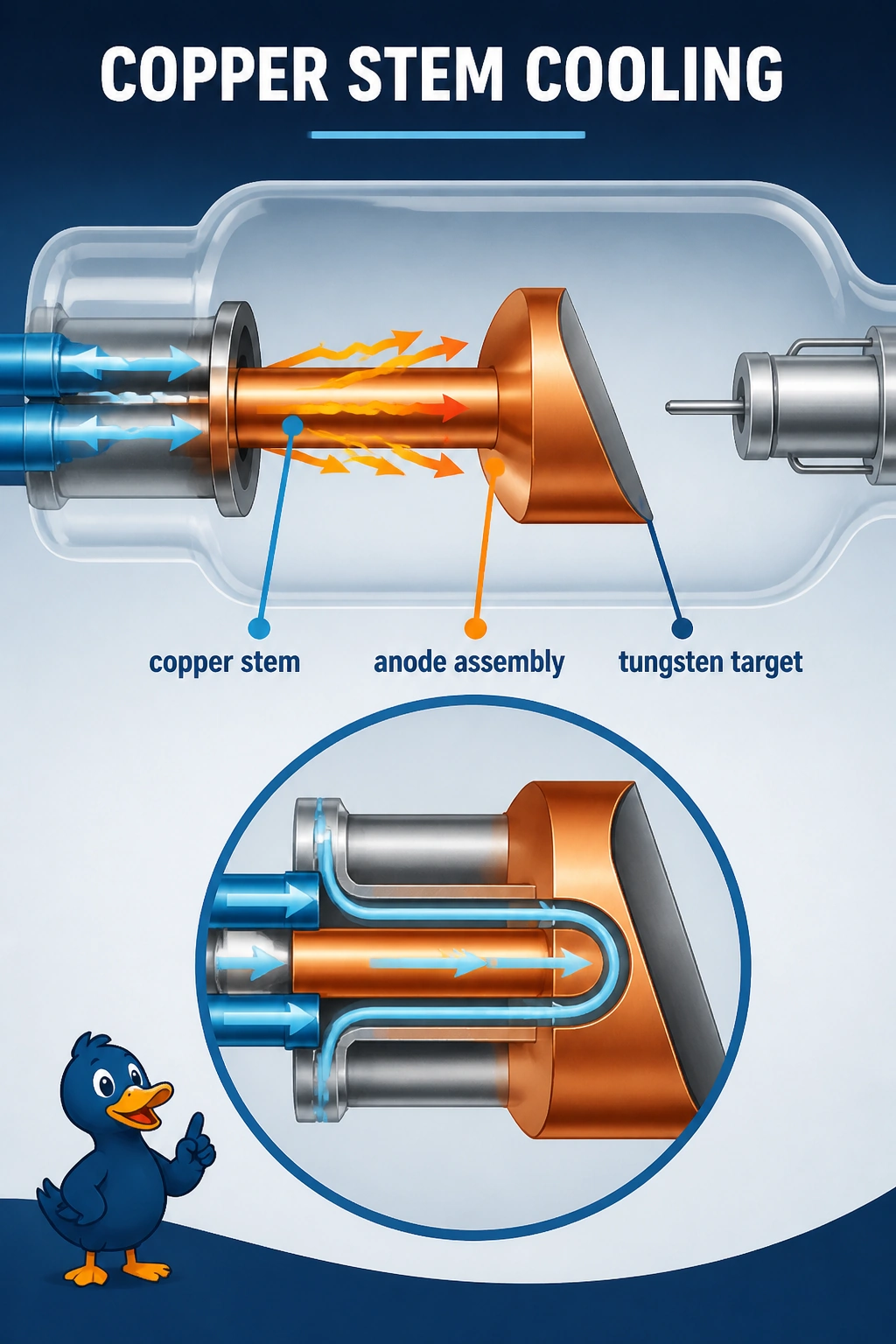
Inside a dental X-ray tube, most of the kinetic energy from high-speed electrons striking the tungsten target converts into heat rather than X-ray photons. Which component is embedded around the tungsten target specifically to conduct this heat away and prevent melting?
Select an answer to reveal the explanation.
Short Explanation
Tungsten handles extreme heat, but it still needs a metal highway to carry that thermal energy out of the target before it melts. The trap is pointing to the aluminum filter or cathode focusing cup, which handle the beam and electrons instead. Remember that you rely on the copper stem at the anode to pull heat away.
Full Explanation
Because nearly all electron kinetic energy at the anode converts to heat, The copper stem attached to the anode assembly is bonded to the tungsten target to rapidly conduct thermal energy out of the glass X-ray tube and into the surrounding insulating oil. The focusing cup surrounding the cathode filament is negatively charged to electrostatically focus free electrons into a tight stream toward the anode, not to dissipate target heat. The aluminum disk placed inside the tubehead port filters out low-energy X-ray photons from the primary beam to protect the patient's skin, playing no role in anode cooling. The lead collimator diaphragm at the PID base restricts the size and shape of the exiting X-ray beam to reduce tissue volume irradiated, rather than managing heat inside the tube. Caveat: taking rapid, back-to-back exposures without allowing brief cooling intervals can still overheat the tubehead and shorten tube life. Operational check: follow the manufacturer's duty-cycle recommendations and monitor the unit for error codes or thermal lockout warnings during heavy scheduling.
Prefer to study offline? Printable PDF study book + test engine ($7.50, unofficial). These questions stay free here.