
A pediatric patient with involuntary head tremors needs a digital periapical radiograph after a previous exposure showed motion blurring. Assuming the X-ray unit allows independent adjustment of milliamperage (mA) and exposure time, which adjustment reduces motion artifacts while keeping total X-ray quantity (mAs) constant?
Select an answer to reveal the explanation.
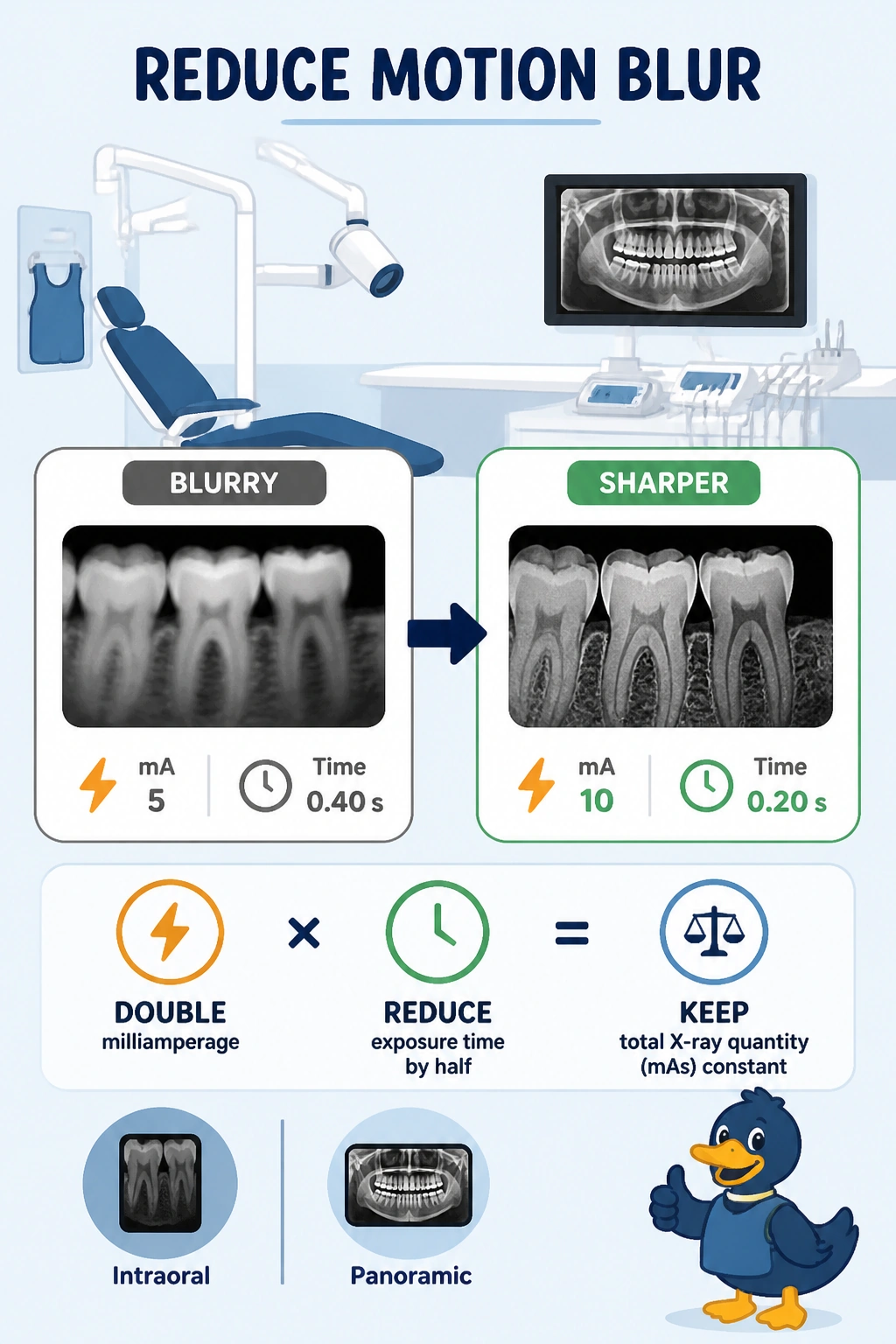
Short Explanation
Think of snapping a photo of a moving toddler: you need a faster shutter speed, so you open the lens wider to let the same amount of light in. The trap is doubling the exposure time instead, which gives the patient twice as long to wiggle and blur your image.
Full Explanation
Total X-ray beam quantity is proportional to the product of milliamperage and exposure time (mAs). Selecting Double the milliamperage and reduce the exposure time by half maintains the exact same mAs reaching the digital sensor while cutting the window for patient movement in half. Choosing Double the exposure time and reduce the milliamperage setting by half preserves mAs in the wrong direction, doubling the time during which tremors can blur the radiograph. Picking Lower the kilovoltage peak while keeping the exposure time unchanged does not shorten the exposure duration and reduces beam penetration and underexposes the image (mAs unchanged). Opting to Increase the distance between the PID and the patient's face to limit scatter reduces beam intensity by the inverse square law without addressing motion blur. Keep in mind that many modern digital dental X-ray units use fixed mA settings, so this reciprocity adjustment applies only to units with selectable mA controls. Before re-exposing, verify the unit's mA and time readout to confirm the calculated mAs matches the original diagnostic exposure.
Prefer to study offline? Printable PDF study book + test engine ($7.50, unofficial). These questions stay free here.