
During a dental radiation safety training session, a dental assistant asks what the term latent period describes after a patient receives a diagnostic X-ray exposure. Which definition accurately explains this biological concept?
Select an answer to reveal the explanation.
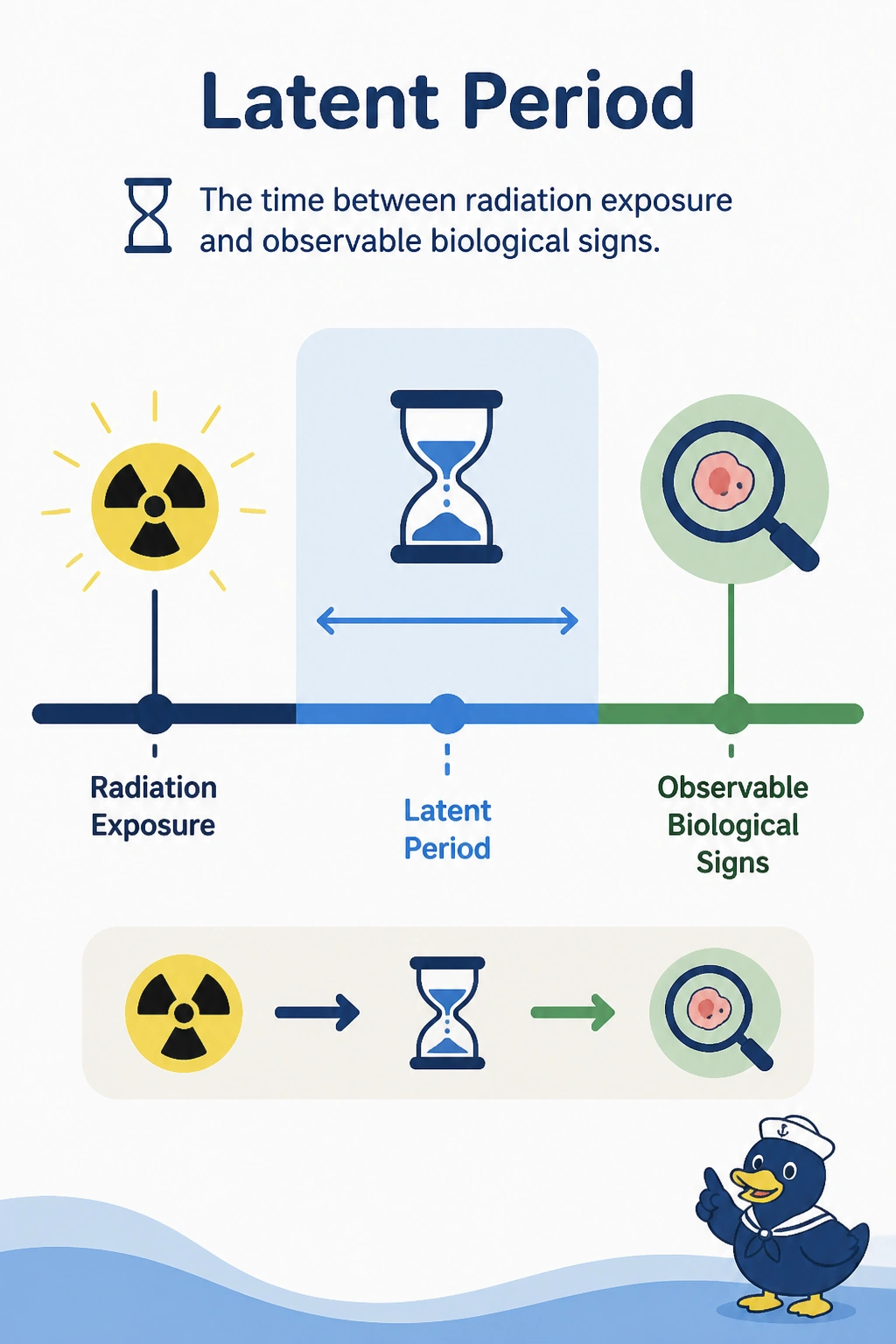
Short Explanation
Radiation biology works on a delayed fuse, so what happens at the moment of exposure does not show up right away for your patient. The trap is mixing up this silent waiting window with cellular repair or cumulative lifetime dose. Remember that the latent period is strictly the gap before clinical signs appear.
Full Explanation
Ionizing radiation deposits energy in tissues almost instantaneously, triggering ionization and free-radical formation that can alter cellular molecules long before any physical symptoms emerge. The time between radiation exposure and observable biological signs is defined as the latent period, which can span hours for high acute doses or many years for stochastic effects such as radiation-induced carcinogenesis. The brief recovery phase during which damaged cellular DNA repairs itself describes the recovery period that follows cellular injury, not the interval preceding observable effects. The cumulative radiation dose absorbed by sensitive organs over a lifetime refers to total accumulated dose rather than a time interval between exposure and clinical expression. Likewise, the time required for a digital sensor to convert X-ray photons into an image is an electronic readout and processing interval unrelated to human tissue response. Keep in mind as a caveat that higher radiation doses generally shorten the latent period, whereas low diagnostic doses carry long, variable latent intervals. To reinforce ALARA during patient education, document every exposure's clinical justification in the chart so cumulative exposures stay necessary.
Prefer to study offline? Printable PDF study book + test engine ($7.50, unofficial). These questions stay free here.