
During a busy morning of digital full-mouth series, a dental assistant notices their disposable surgical mask has become damp from breathing and patient saliva spatter, though the exterior looks intact. According to CDC dental infection control guidelines, when must the assistant replace this mask?
Select an answer to reveal the explanation.
Short Explanation
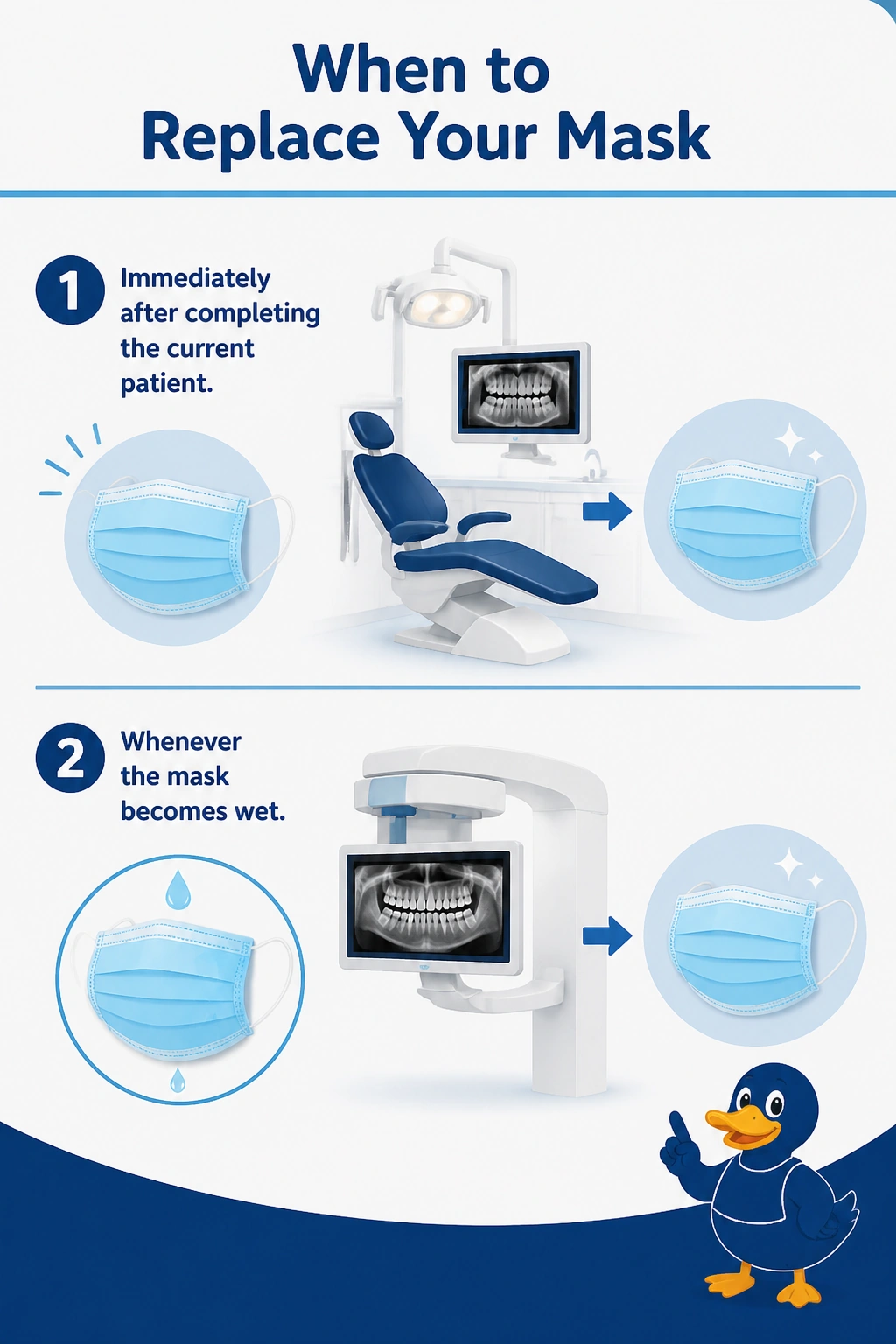
When your disposable mask becomes damp, moisture can compromise its ability to block microbes and may carry contamination toward your face. CDC guidance is to replace it after the current patient and whenever it becomes wet, even if the outside looks intact. Moisture matters.
Full Explanation
According to CDC dental infection control guidance, replace a disposable surgical mask immediately after completing the current patient and whenever it becomes wet. Moisture from breathing or saliva spatter can saturate the filter media, compromise its electrostatic barrier, and create a wicking pathway that reduces respiratory and mucous-membrane protection. Keeping the mask until the end of the morning session unless visible blood appears overlooks contamination that may not be visible and risks carrying oral microorganisms between patients. Wiping the outer surface with an alcohol pad and letting it air-dry briefly is not a safe way to reuse the mask: alcohol can degrade filter fibers, and wiping does not sanitize porous material. Limiting mask changes to surgical extractions rather than routine intraoral imaging ignores that sensor placement can trigger coughing, gagging, and saliva spatter. An exam caveat: never wear a used mask dangling around your neck between patients, because its inner surface can pick up contaminants from your clinic gown. As a practical check, inspect for dampness after each radiographic series, remove the mask by its ear loops or ties without touching the front, and perform hand hygiene before donning a fresh one.
Prefer to study offline? Printable PDF study book + test engine ($7.50, unofficial). These questions stay free here.