
After a busy morning of full-mouth digital series, a dental assistant cannot immediately clean several contaminated reusable plastic sensor aiming rings and bite blocks in the instrument processing area. According to CDC dental infection control guidelines, what should the assistant do to make subsequent cleaning easier and prevent saliva and blood from hardening on the holders?
Select an answer to reveal the explanation.
Short Explanation
Dried saliva and blood turn into stubborn crust that shields microbes from steam sterilization later. When your schedule backs up, a quick presoak keeps debris soft so the ultrasonic cleaner can actually do its job.
Full Explanation
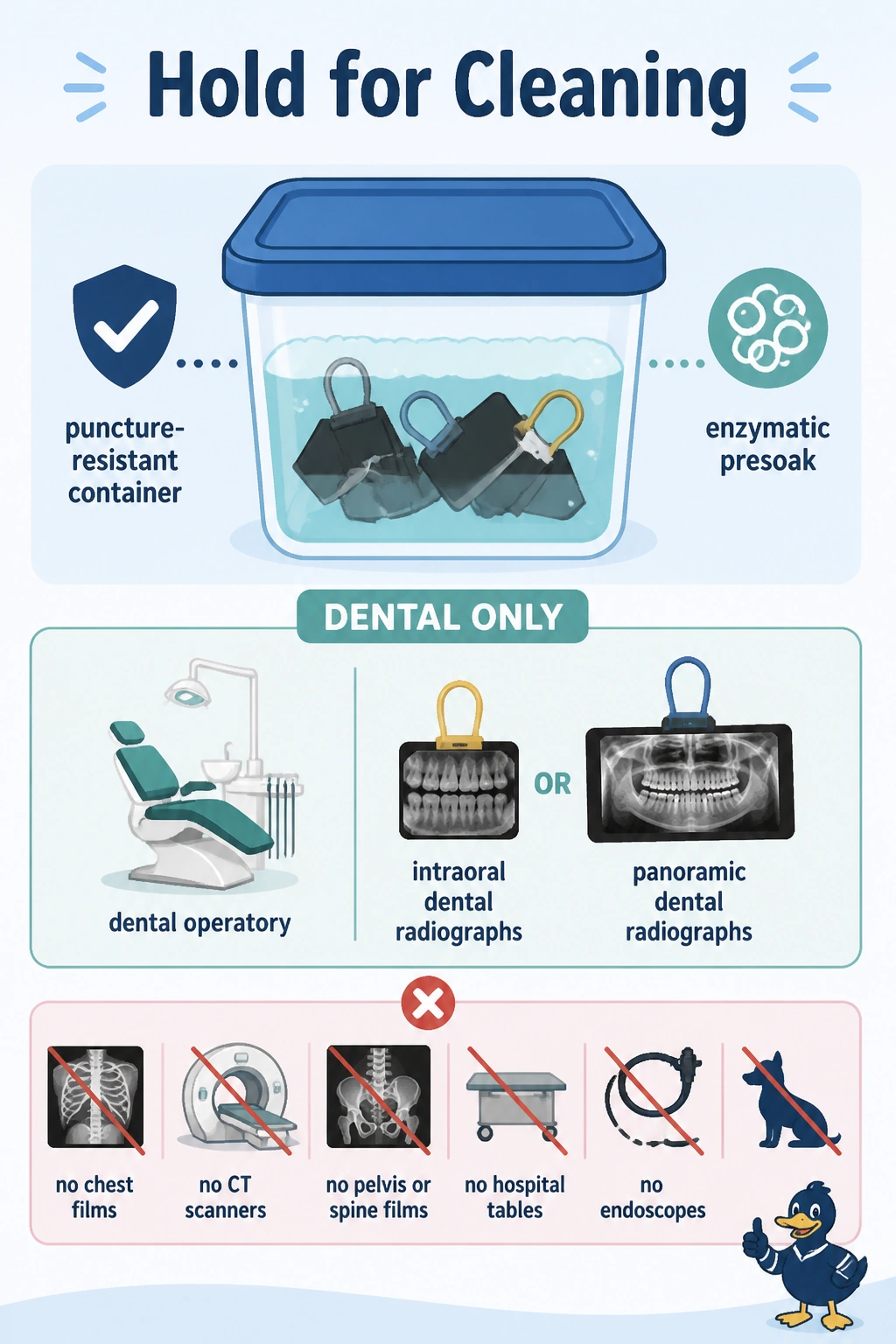
Under CDC infection control guidelines, if immediate cleaning is not possible, you should Place the holders in a puncture-resistant container with an enzymatic presoak so organic soil stays moist, proteins break down, and later ultrasonic or manual cleaning removes debris effectively. Choosing to Allow the holders to air-dry uncovered on the contaminated counter until afternoon lets blood and saliva bake onto crevices, making removal difficult and risking sterilization failure. Choosing to Place the uncleaned holders directly into sterilization pouches to keep them moist traps organic bioburden inside the pouch, because steam sterilization cannot penetrate dried or caked debris. Deciding to Rinse the holders briefly in cold tap water and store them in a dry drawer leaves residual biofilm that dries in storage and contaminates the drawer. Caveat: an enzymatic presoak is a holding and pre-cleaning aid only, never a substitute for full cleaning, rinsing, drying, packaging, and heat sterilization. Operational check: wear heavy-duty utility gloves when transferring holders from the enzymatic holding container into the covered ultrasonic cleaner, then rinse and dry them thoroughly before pouching.
Prefer to study offline? Printable PDF study book + test engine ($7.50, unofficial). These questions stay free here.