
After a dental assistant completes the Hepatitis B vaccination series and a post-exposure evaluation following a saliva splash during intraoral radiography, how must the clinic maintain these employee medical records under the OSHA Bloodborne Pathogens Standard (29 CFR 1910.1030)?
Select an answer to reveal the explanation.
Short Explanation
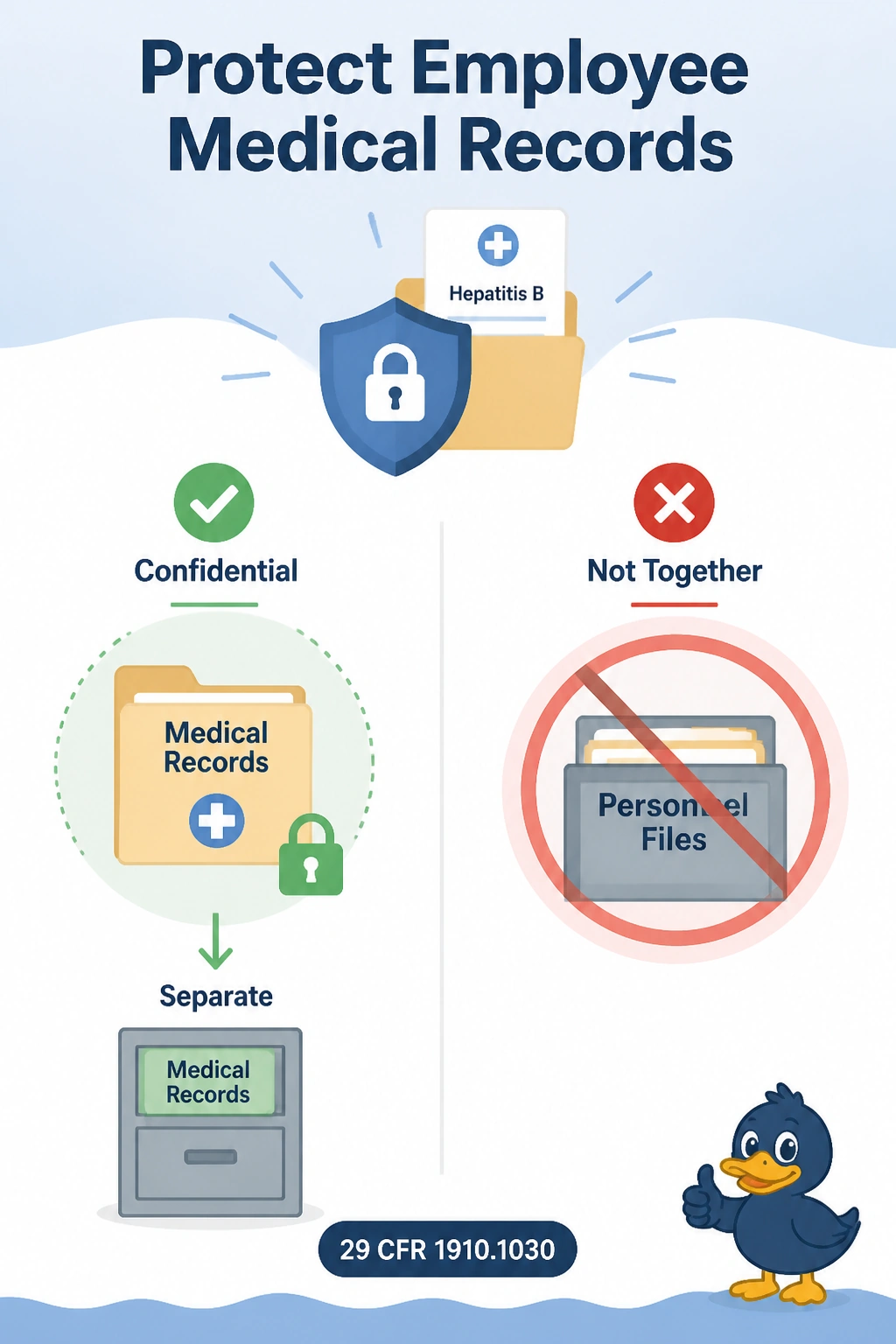
Employee health records are private medical files, not routine office paperwork you can tuck into a standard HR folder. Under OSHA rules, your clinic must lock them down separately to protect staff medical privacy.
Full Explanation
Under the OSHA Bloodborne Pathogens Standard (29 CFR 1910.1030), employers must Maintain the records confidentially and separate from general personnel files so vaccination status, antibody results, and post-exposure medical evaluations are not exposed to unauthorized staff. Choosing to File the records in the employee's regular human-resources personnel folder for easy access violates medical confidentiality rules because supervisors or payroll staff could view private health information. Choosing to Enter the employee's vaccination and lab details into the exposed patient's clinical chart mixes employee occupational health records with patient dental records and breaches privacy for both parties. Choosing to Discard the medical records once the employee completes annual bloodborne pathogens training violates OSHA retention rules, which require preserving employee exposure and medical records for the duration of employment plus decades afterward. Caveat: training records and medical records are tracked separately, and only the employee, authorized healthcare professionals, and OSHA representatives may inspect confidential medical files without written consent. Operational check: store employee Hepatitis B and post-exposure records in a locked or password-protected occupational health file distinct from general HR folders.
Prefer to study offline? Printable PDF study book + test engine ($7.50, unofficial). These questions stay free here.