
A dental assistant who wears personal prescription eyeglasses prepares to expose a digital full-mouth series on a patient with a strong gag reflex and frequent coughing. According to CDC dental infection control guidelines, what eye protection is required?
Select an answer to reveal the explanation.
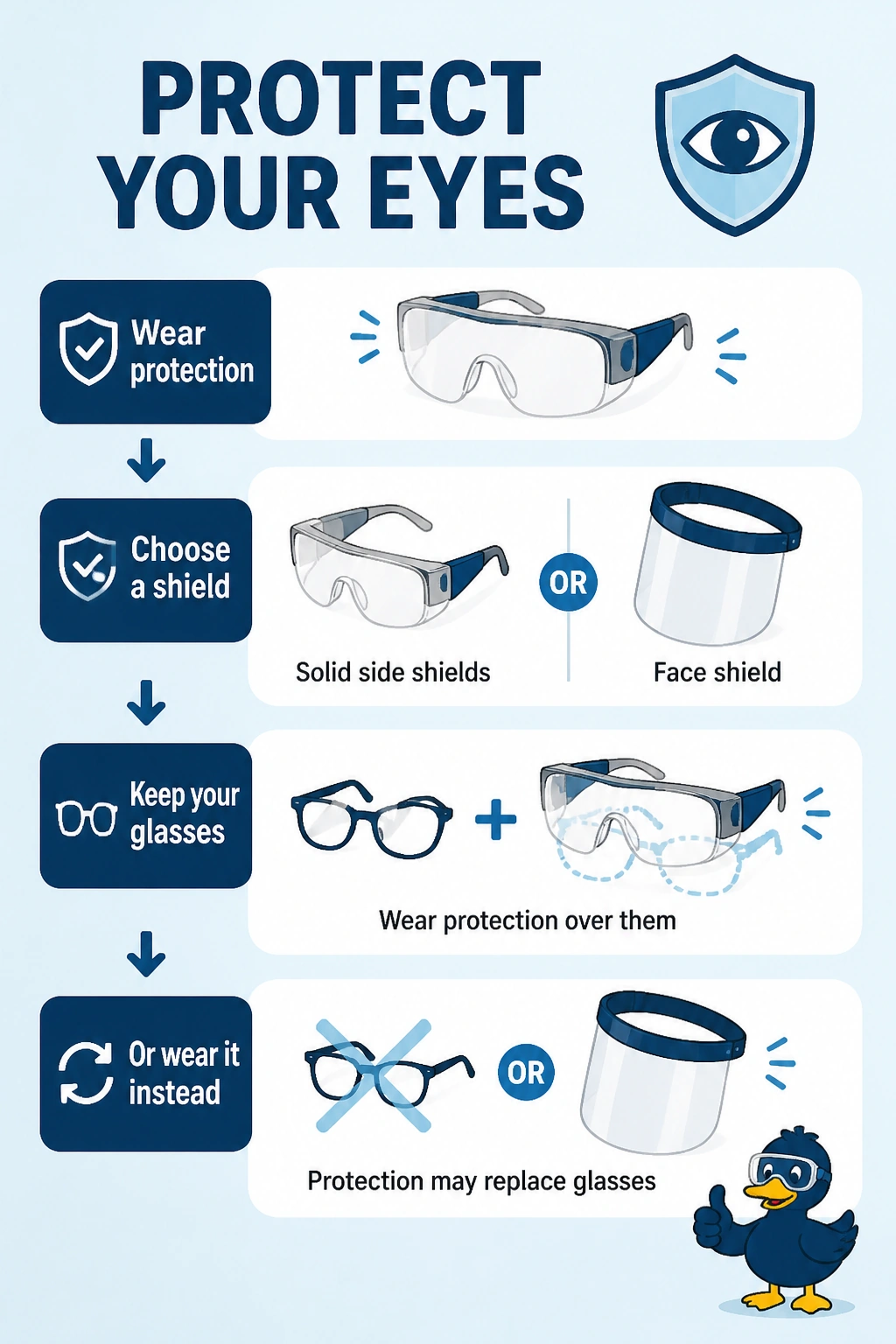
Short Explanation
Your everyday prescription glasses might feel like a windshield, but without side shields, droplets from a coughing patient can curve right around the edges. Don't assume regular lenses or a quick wipe-down meets CDC standards—always add solid side shields or a face shield.
Full Explanation
According to CDC dental infection control guidelines, "Protective eyewear with solid side shields or a face shield must be worn over or instead of glasses" whenever spatter or aerosols of saliva and blood may occur, such as when a gagging or coughing patient undergoes intraoral radiography. Relying on "Personal prescription eyeglasses alone are sufficient because the lenses block direct anterior spatter" fails because standard frames leave open gaps above, below, and laterally where droplets can enter the eye. Similarly, "Personal prescription eyeglasses may be worn if they are wiped with surface disinfectant between patients" addresses only surface cleaning after use and still lacks the physical side-shield barrier required during exposure. The idea that "Eye protection is unnecessary during intraoral radiography unless surgical bone removal is performed" ignores the risk of mucosal splash from coughing, gagging, and saliva-coated sensor holders. As an infection-control caveat, protective eyewear must also be cleaned and disinfected between patients or whenever visibly soiled. As an operational check before seating a coughing patient, confirm that your protective eyewear fits snugly with solid side shields or pair your prescription glasses with a full-length face shield.
Prefer to study offline? Printable PDF study book + test engine ($7.50, unofficial). These questions stay free here.