
After cleaning reusable plastic digital sensor aiming rings and bite blocks in an ultrasonic cleaner, a dental assistant prepares to seal them in paper-plastic sterilization pouches for steam autoclaving. Which step is required before placing the holders into the pouches?
Select an answer to reveal the explanation.
Short Explanation
Think of ultrasonic detergent like soap on a dinner plate—you would never put a soapy dish straight into a cabinet. Skipping the rinse or sealing wet holders traps chemical residue and creates damp pouches that compromise sterility after the cycle.
Full Explanation
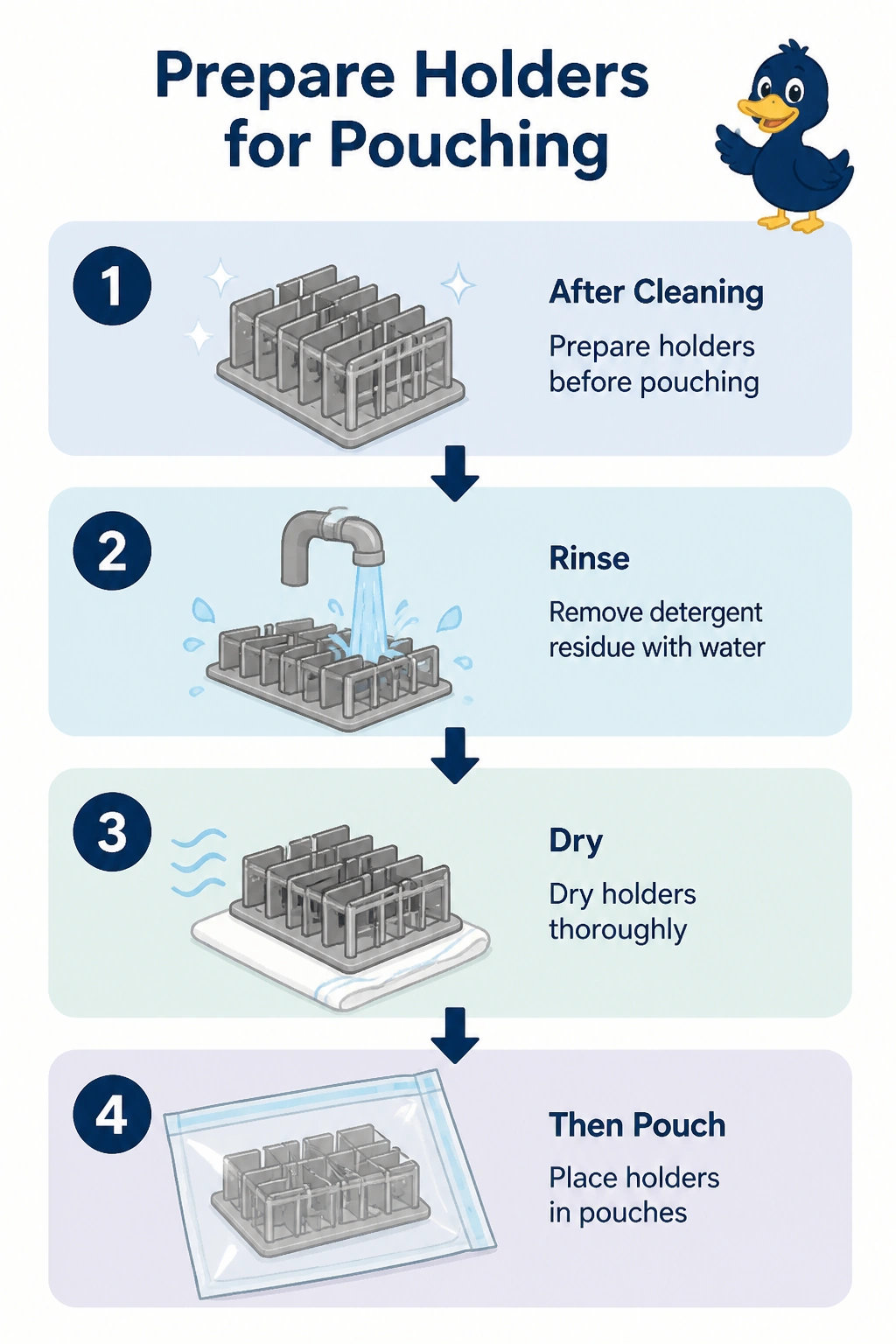
Per CDC dental infection control guidelines, the required step is to Rinse off detergent residue with water and dry the holders thoroughly before pouching. Ultrasonic cleaning leaves behind dissolved debris and enzymatic or detergent chemicals that can stain plastic, corrode metal components, or interfere with steam contact if not rinsed away, and excess water inside a sealed pouch causes wet packs that allow wicking of microorganisms after autoclaving. Choosing to Soak the holders in 70% isopropyl alcohol for 10 minutes to accelerate drying introduces a flammable chemical into the autoclave and is not an approved pre-packaging step. Choosing to Seal the holders in the pouches while still wet so extra moisture aids steam penetration causes moisture pooling that weakens paper seals and compromises sterility. Choosing to Wipe the holders with an EPA-registered surface disinfectant instead of rinsing with water leaves disinfectant residues behind and skips the necessary water rinse. One caveat is to wear heavy-duty utility gloves throughout rinsing and drying to prevent percutaneous injury or contamination. As an operational check, inspect each cleaned holder under good lighting for residual debris and confirm it is completely dry to the touch before sealing the pouch.
Prefer to study offline? Printable PDF study book + test engine ($7.50, unofficial). These questions stay free here.