
While removing a photostimulable phosphor (PSP) plate from its disposable barrier envelope after a bitewing exposure, a dental assistant notices a tear in the envelope and visible saliva on the plate surface. According to CDC and manufacturer infection control principles, how should the assistant handle the plate?
Select an answer to reveal the explanation.
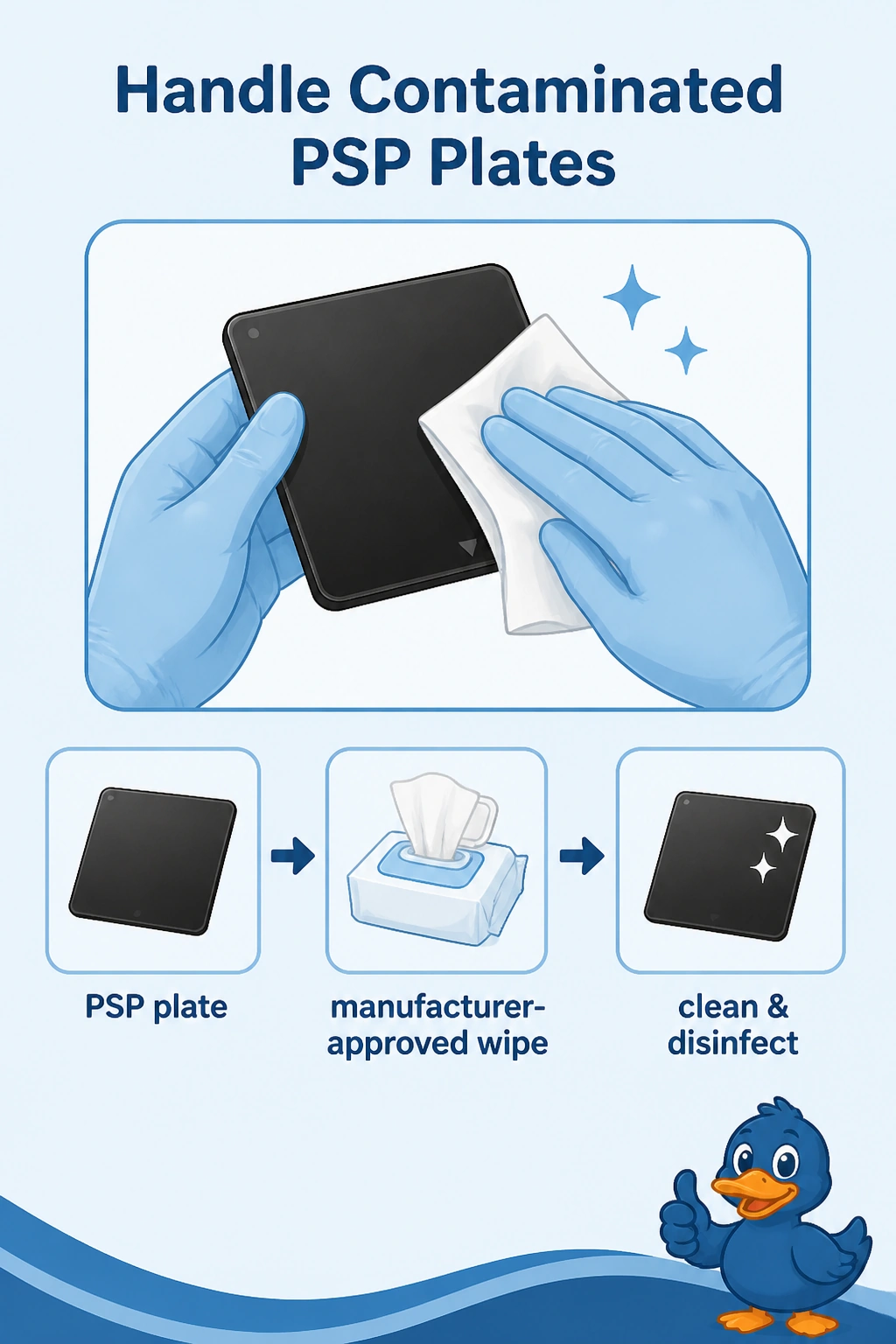
Short Explanation
When saliva reaches your PSP plate, use only a manufacturer-approved wipe; heat and soaking can damage this delicate imaging receptor. The scanner’s erasure light clears the latent image, but it does not disinfect the plate, so don’t scan it while wet.
Full Explanation
When a torn barrier envelope exposes a PSP plate to saliva, clean and disinfect the plate using only a manufacturer-approved wipe, without immersion or autoclaving. PSP plates are heat- and moisture-sensitive imaging receptors, so wiping with the cleaner or disinfectant specified in the manufacturer’s instructions removes bioburden without delaminating or scratching the phosphor layer. A sterilization pouch and standard steam autoclave cycle expose the plate to heat that can melt and permanently destroy it. Submerging the plate in an EPA-registered intermediate-level liquid disinfectant for 10 minutes can let fluid seep beneath the protective coating and ruin the phosphor screen. Scanning the wet plate immediately can contaminate the scanner’s internal rollers and laser optics; its erasure light clears residual latent images but does not disinfect the coating. As an exam caveat, a plate with a scratched or peeled protective surface, or one that cannot be cleaned according to the manufacturer’s instructions, should be discarded and replaced. As a practical check, inspect every barrier envelope seal for tears before inserting a PSP plate into the patient’s mouth.
Prefer to study offline? Printable PDF study book + test engine ($7.50, unofficial). These questions stay free here.