
A newly hired dental assistant who will expose intraoral digital radiographs declines the employer-offered Hepatitis B vaccination series for personal reasons. According to the OSHA Bloodborne Pathogens Standard (29 CFR 1910.1030), what must the employer do?
Select an answer to reveal the explanation.
Short Explanation
Under OSHA rules, declining the Hepatitis B vaccine is your right, not a one-way door that locks you out forever. The trap is thinking a verbal refusal is enough or that changing your mind later means paying out of pocket.
Full Explanation
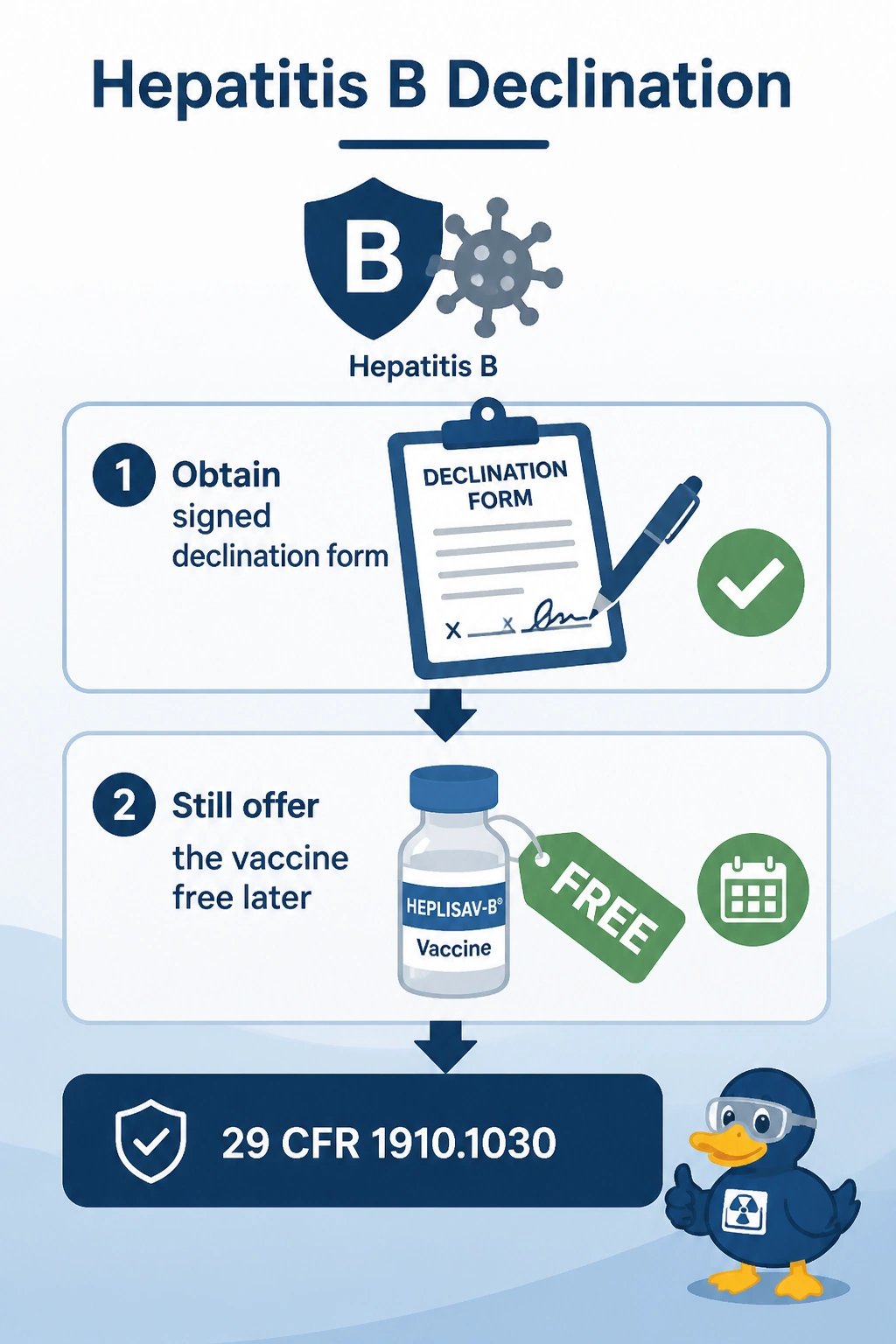
Under the OSHA Bloodborne Pathogens Standard (29 CFR 1910.1030(f)(2)(iv)), the employer must Obtain a signed declination form and still offer the vaccine free later. Employees with occupational exposure cannot be forced to take the Hepatitis B vaccine, but the employer must obtain the mandatory written declination statement and keep the offer open at no cost if the employee later decides to accept it while still covered. The employer should not Prohibit the assistant from exposing intraoral radiographs until vaccinated, because declining the vaccine does not disqualify an employee from performing radiographic duties with Standard Precautions. Nor may the employer Require the assistant to pay for the vaccine if they request it later, since the standard mandates free vaccination whenever a covered employee chooses to accept it. Finally, choosing to Note the verbal refusal on the clinic schedule and delete medical files violates both the mandatory signed declination format and OSHA medical recordkeeping requirements. One caveat is that medical records, including vaccination status and signed declinations, must be kept confidential and retained for the duration of employment plus 30 years. As an operational check, confirm the signed declination uses the exact wording specified in Appendix A of 29 CFR 1910.1030.
Prefer to study offline? Printable PDF study book + test engine ($7.50, unofficial). These questions stay free here.