
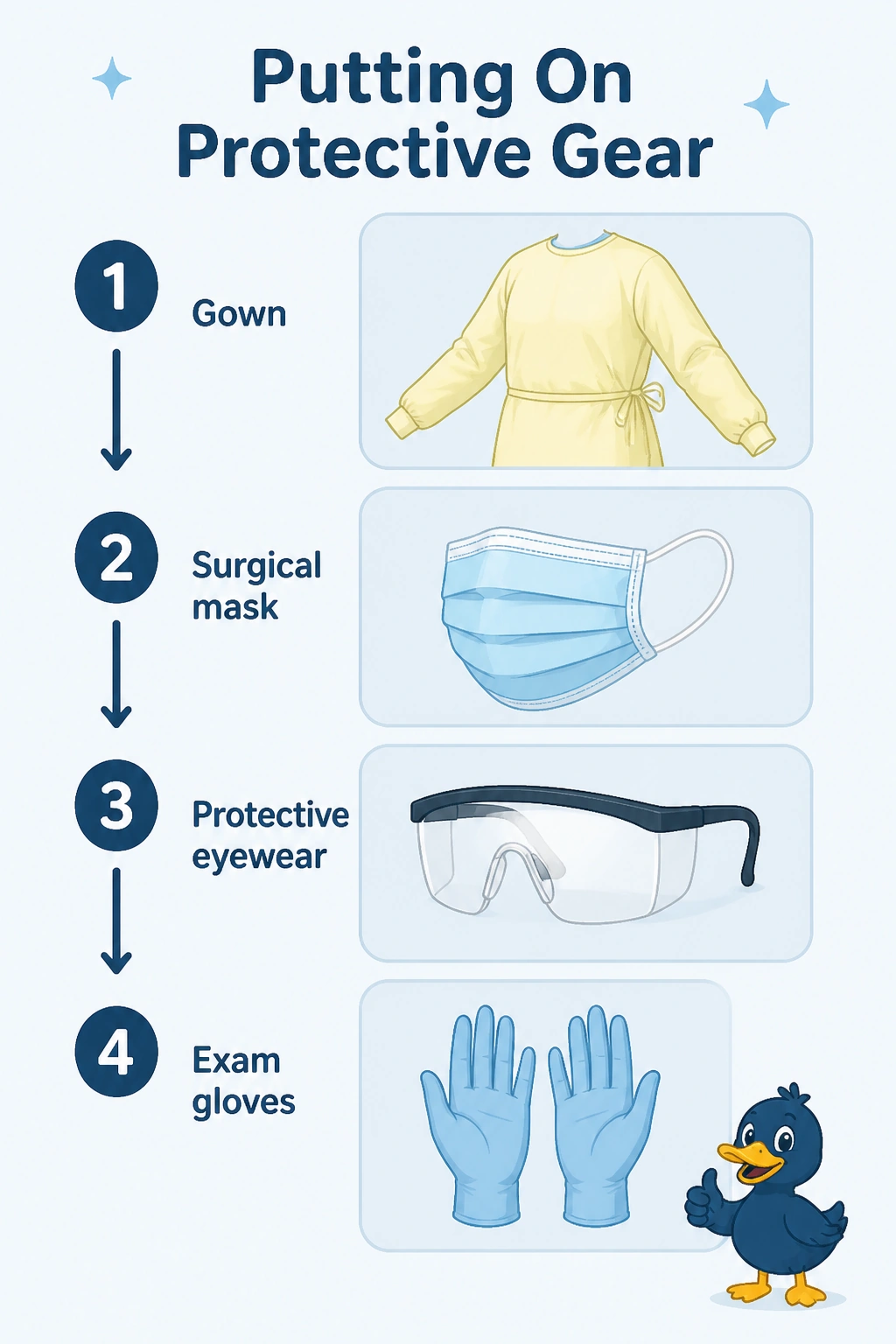
Before seating a patient with a persistent cough for a full-mouth intraoral digital radiographic series, a dental assistant gathers a disposable gown, surgical mask, protective eyewear, and exam gloves. According to CDC infection control guidelines, in what order should these items be put on?
Select an answer to reveal the explanation.
Short Explanation
Putting on PPE is like getting dressed for a rainstorm: you put on your coat and hood before sliding on your gloves so your hands stay clean until the last second. Putting gloves on too early is a classic trap because you end up contaminating them while adjusting your mask and eyewear ties.
Full Explanation
According to CDC infection control guidelines, the correct donning sequence is Gown first, then surgical mask, protective eyewear, and exam gloves. Putting on the protective gown first covers clothing and skin, followed by securing the surgical mask and protective eyewear so the nose, mouth, and eyes are shielded before hand hygiene and gloving. Donning gloves last ensures they remain clean and intact when touching the patient or barrier-wrapped digital sensor. Choosing Exam gloves first, then protective eyewear, surgical mask, and gown forces gloved hands to touch hair, face, and gown ties, contaminating the gloves before patient contact. Similarly, Protective eyewear first, then exam gloves, gown, and surgical mask places gloves on too early and risks dislodging eyewear while pulling on a gown. Likewise, Surgical mask first, then gown, exam gloves, and protective eyewear leaves eyewear to be adjusted with gloved hands. As an infection-control caveat, the donning order is the reverse of the removal sequence, where the most contaminated items—gloves—come off first. Before entering the operatory, verify in a mirror that the mask fits snugly over the nose bridge and that eyewear side shields sit flush against the face.
Prefer to study offline? Printable PDF study book + test engine ($7.50, unofficial). These questions stay free here.