
When opening a steam-autoclaved pouch containing a reusable digital sensor aiming ring and bite block, a dental assistant notices that the internal chemical indicator strip failed to change color. According to CDC dental infection control guidelines, what should the assistant do?
Select an answer to reveal the explanation.
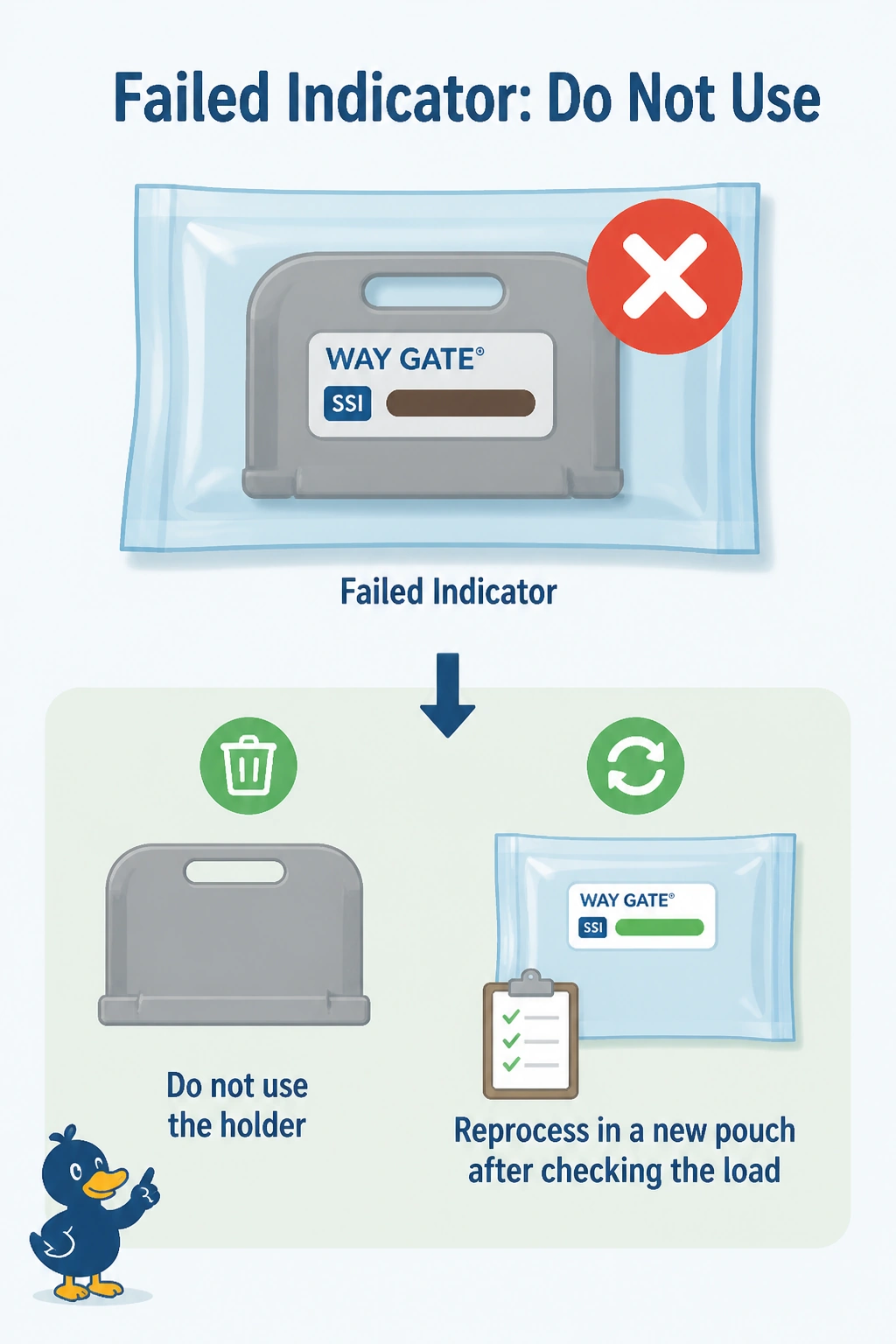
Short Explanation
You can rely on the internal indicator to show whether steam reached inside the pouch, not just whether the outside was exposed to heat. If it fails to change color, treat the holder as unsterile and reprocess it in a new pouch after checking the load. Trust the inside indicator, not the outside tape, when they disagree.
Full Explanation
When an internal chemical indicator fails to show the expected color change, do not use the holder; reprocess it in a new pouch after checking the load. The internal indicator verifies that sterilizing conditions penetrated the packaging, so failure can signal inadequate steam penetration, pouch overcrowding, or a cycle fault. Using the holder because the external pouch tape changed color is unsafe: external indicators confirm that a package was exposed to a heat cycle, not that sterilizing conditions reached its contents. Wiping the holder with an EPA-registered surface disinfectant and using it is also inappropriate because heat-tolerant semicritical receptor holders must be heat-sterilized rather than surface-disinfected. Running the same unopened pouch through the autoclave a second time is improper because single-use pouches degrade after one cycle, and the cause of the failure, such as improper loading, must be corrected first. As an exam caveat, if multiple pouches fail, stop using the sterilizer until mechanical logs and a biological spore test are verified. For a practical check, inspect both the internal chemical indicator and the pouch seal integrity before placing any holder on the tray.
Prefer to study offline? Printable PDF study book + test engine ($7.50, unofficial). These questions stay free here.