
While escorting a post-extraction patient out of the radiography area, a dental assistant notices a small visible blood spill on the tiled operatory floor. According to CDC and OSHA guidelines, what is the proper decontamination sequence?
Select an answer to reveal the explanation.
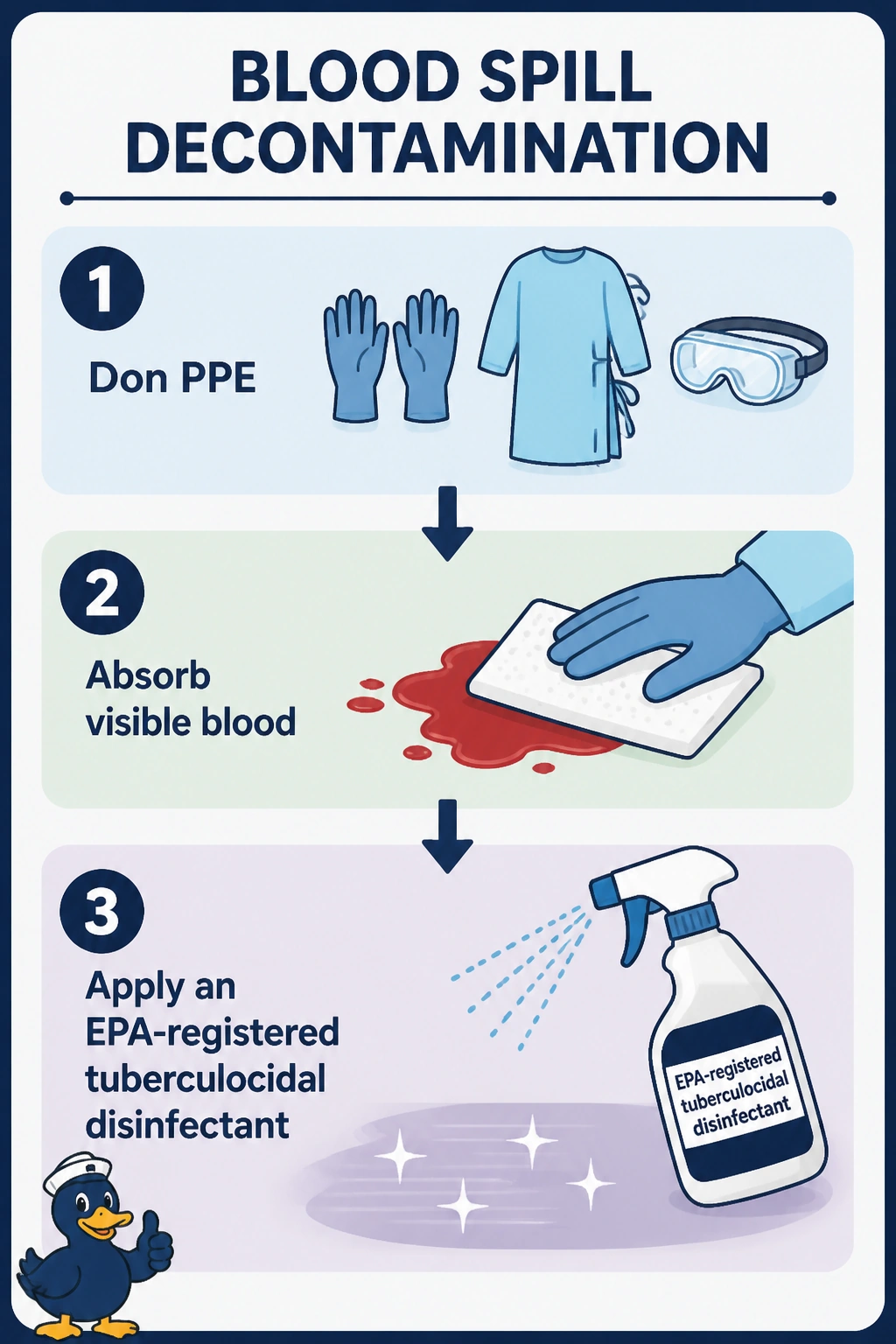
Short Explanation
Blood on the floor is not a routine housekeeping job—you must treat it as potentially infectious material right away. The classic trap is spraying disinfectant straight onto wet blood or skipping the cleaning step, which inactivates the chemical before it can work.
Full Explanation
Don PPE, absorb visible blood, then apply an EPA-registered tuberculocidal disinfectant follows OSHA Bloodborne Pathogens Standard (29 CFR 1910.1030) and CDC dental guidelines, because organic matter must be removed before an intermediate-level disinfectant can achieve its required wet contact time on the surface. Mop the area immediately with plain soap and water, then allow the floor to air-dry completely is appropriate for routine housekeeping surfaces without blood, not for visible blood contamination. Spray the blood directly with a surface disinfectant first and wipe it dry immediately fails twice: heavy organic debris neutralizes most disinfectants, and wiping immediately prevents the necessary contact time. Cover the spill with a disposable plastic barrier until the evening housekeeping crew arrives leaves a biohazard unaddressed and exposes staff to accidental contact. As a caveat, discard blood-saturated absorbent towels in regulated medical waste only if they are dripping or caked with blood per OSHA rules. As an operational check, wear utility or exam gloves during cleanup, check the disinfectant label for exact contact time, and perform hand hygiene afterward.
Prefer to study offline? Printable PDF study book + test engine ($7.50, unofficial). These questions stay free here.