
Between morning digital radiography patients, a dental assistant brings an open iced coffee cup into the imaging alcove and applies lip balm while waiting for the next patient. Which rule from the OSHA Bloodborne Pathogens Standard (29 CFR 1910.1030) does this practice violate?
Select an answer to reveal the explanation.
Short Explanation
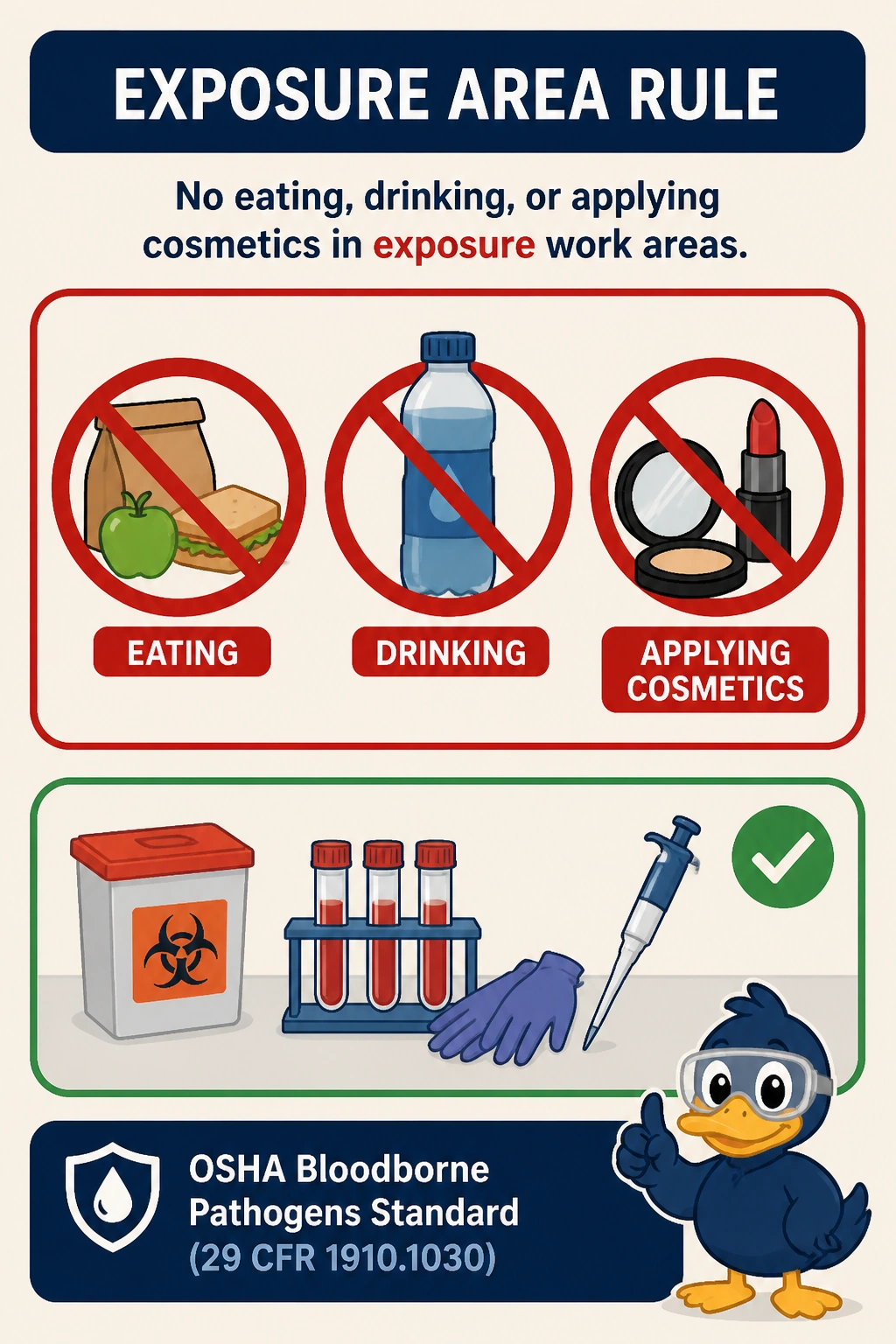
Bringing coffee or lip balm into an X-ray alcove is an open invitation for oral and mucous-membrane exposure to invisible saliva droplets. Under OSHA Bloodborne Pathogens rules, you are strictly prohibited from eating, drinking, applying cosmetics, or handling contact lenses in any work area with potential exposure. Don't assume a quick sip between patients is harmless—keep personal items in the break room.
Full Explanation
Under the OSHA Bloodborne Pathogens Standard (29 CFR 1910.1030), work-practice controls are designed to prevent accidental ingestion or mucous-membrane contact with blood, saliva, and other potentially infectious materials. Specifically, The prohibition against eating, drinking, or applying cosmetics in exposure work areas applies to any clinical operatory, radiography alcove, or instrument processing room where occupational exposure is reasonably anticipated, including handling contact lenses or storing food and beverages. The requirement to store all sterile pouches in locked cabinets is inaccurate because CDC guidelines require dry, dust-free, enclosed storage rather than locked cabinets. The requirement to store sealed beverages in the operatory refrigerator with dental materials is wrong because the standard also prohibits storing food and beverages in refrigerators or other storage where blood or other potentially infectious materials are present, even if sealed. The rule requiring biological spore testing of operatory counter surfaces is incorrect because biological spore indicators monitor heat sterilizers, not environmental countertops. Caveat: even sealed water bottles must stay out of clinical radiography zones and designated sterilization counters. Operational check: designate a clean staff break area outside all clinical and imaging zones for beverages, snacks, and personal cosmetics.
Prefer to study offline? Printable PDF study book + test engine ($7.50, unofficial). These questions stay free here.