
A dental clinic is reorganizing its central sterilization room where reusable digital sensor aiming rings and bite blocks are reprocessed. According to CDC dental infection control guidelines, how should the workspace be arranged to prevent cross-contamination?
Select an answer to reveal the explanation.
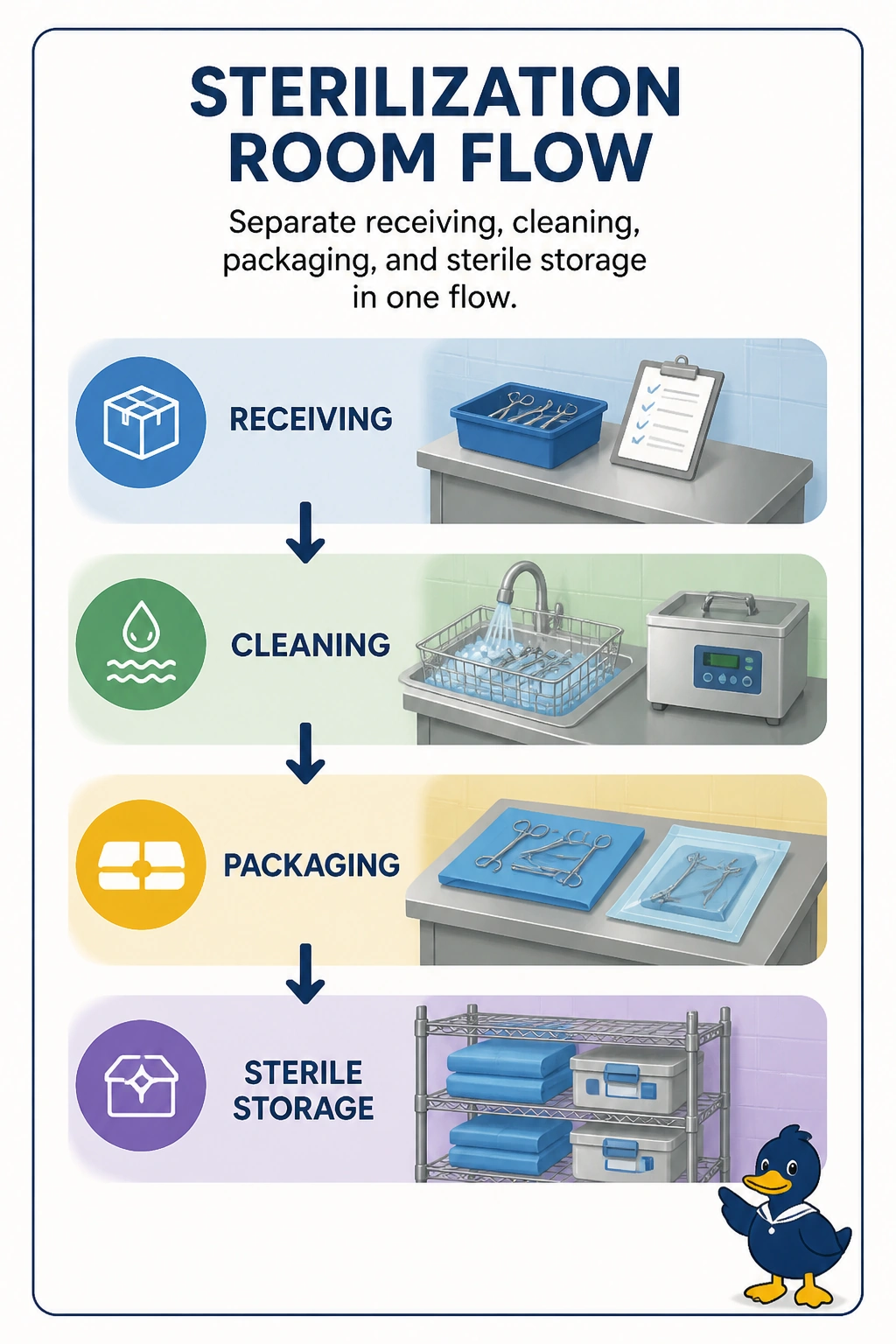
Short Explanation
You can picture the sterilization room as a one-way flow: used holders move from receiving through cleaning and packaging to sterile storage without crossing back. Keep sterile packages away from splash and moisture so convenience doesn’t compromise their sterility.
Full Explanation
Separating receiving, cleaning, packaging, and sterile storage in one flow follows CDC infection control guidance: contaminated reusable sensor aiming rings and bite blocks should progress from dirty to clean areas without re-contaminating processed or packaged items. Storing sterile pouches next to the ultrasonic cleaner risks exposing them to splashes or droplets, which can compromise package sterility. Drying scrubbed holders on the same towel used for contaminated trays can transfer bioburden back to the cleaned items before packaging. Placing the autoclave exhaust directly above the clean packaging countertop exposes dry pouches and supplies to heat and moisture; damp packaging can allow microbial wicking. As an exam caveat, a compact clinic does not necessarily need separate rooms, but physical dividers or clearly marked countertop zones must preserve the one-way separation. As a practical check, trace a used sensor holder from drop-off to closed-cabinet storage and confirm that no clean or sterile step backtracks into the receiving area.
Prefer to study offline? Printable PDF study book + test engine ($7.50, unofficial). These questions stay free here.